Despite its traditional culture of free diving, Japan has always been interested in technological developments in the field of diving activities. Although the Tokugawa Shogunate maintained a policy of relative isolation until the mid-nineteenth century, the government, industrialists, and especially the military, well aware of recent progress beyond their borders, began substantial imports of diving equipment as early as 1857. The first officially recorded use of diving equipment dates back to 1866, when a diver named Mankichi Ueda carried out an underwater operation to repair a British ship. During this period, like many other navies of the time, the Japanese navy also equipped itself with the Rouquayrol-Denayrouze underwater breathing apparatus, a demand-regulator breathing system that could be operated either as a surface-supplied unit via an air hose or as a self-contained apparatus, as described in detail in the article published in these pages in May 2024.
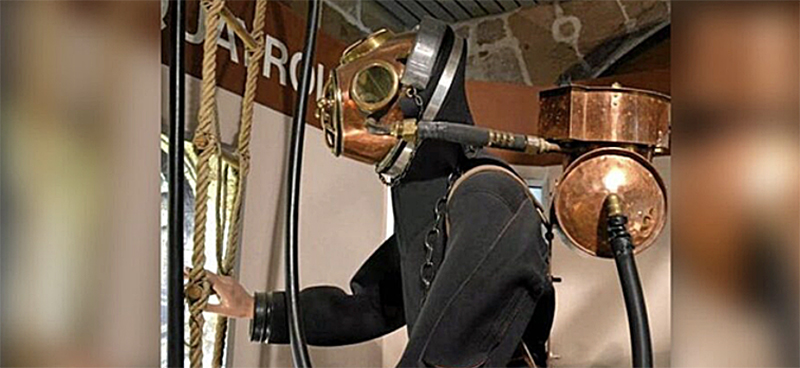
1 - French Rouquayrol-Denayrouze breathing apparatus from 1864 |
With the Meiji Restoration in 1868 and the consequent opening of the borders, diving equipment began to be imported not only by government agencies but also by private individuals such as the aforementioned Mankichi Ueda, who in 1872 purchased 10 English-made diving sets for commercial use. It was not long before, driven by the growing demand for the highly prized abalone molluscs, some diving systems began to be produced directly in Japan, especially after 1877.
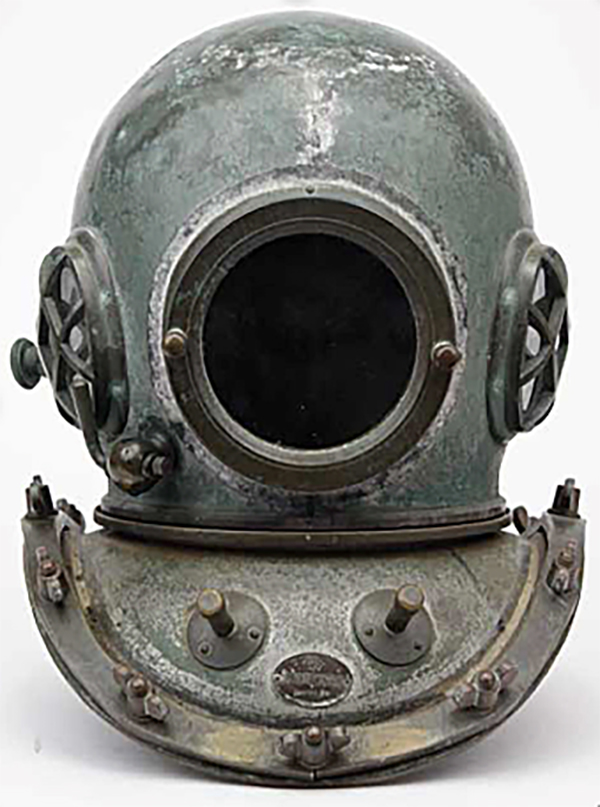
2 - Japanese made Kimura diving helmet |
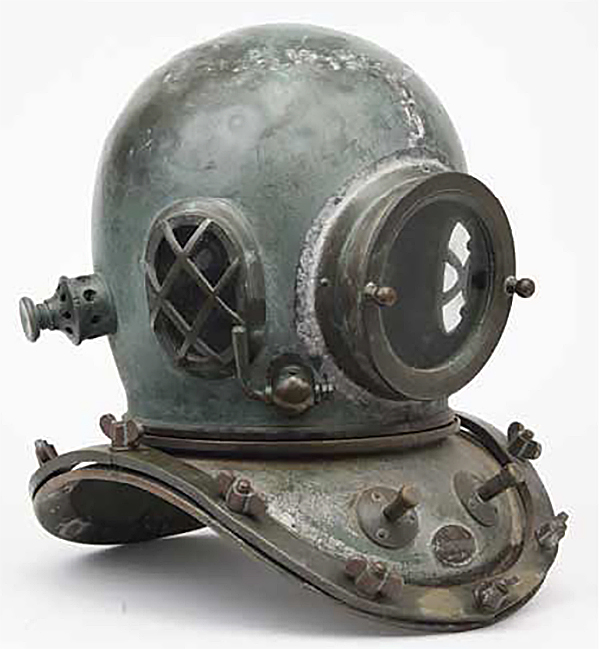
3 - Japanese made Kimura diving helmet |
Most of the Japanese-made helmets were built based on the design of the English Siebe helmets and were made entirely by hand until the mid-1900s. Another major factor driving the increase in demand for professional divers, and consequently for diving equipment, in the Land of the Rising Sun came from the rapid development of artificial pearl oyster farming. Pearl cultivation techniques had been developed in the Kansai region since the late nineteenth century, alongside the establishment of large-scale aquaculture operations, such as those on Mikimoto Island in Toba, which became renowned as the "Pearl Island."
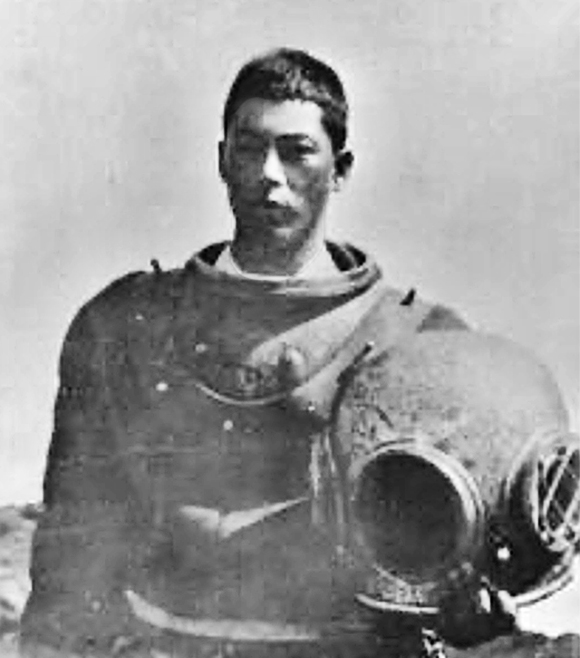
4 - Japanese pearl and abalone fisherman, 1905 |
The problem that emerged with the expansion of pearl farming and the resulting increase in production was that standard divers, encumbered by their cumbersome and heavy equipment, proved too slow to carry out the delicate tasks of seeding and tending the valuable molluscs. As a result, these highly specialized operations were increasingly entrusted to the Ama breath-hold divers, whose greater agility made them particularly well suited to large-scale pearl cultivation. During the same period, largely as a consequence of these significant developments in the pearl industry, Japan also became a centre of innovation in diving technology. In 1884, a pair of low-volume diving goggles known as the Mīkagan (ミーカガン) was developed in Okinawa by Yasutarō Tamagusuku. Later, experimental versions incorporating a pressure-equalization mechanism consisting of two flexible rubber bulbs were introduced, allowing divers to reach greater depths.
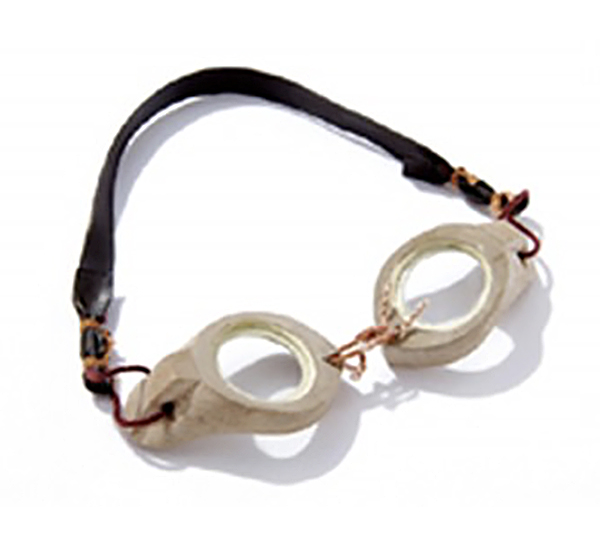
5 - Original Mikagan goggles |
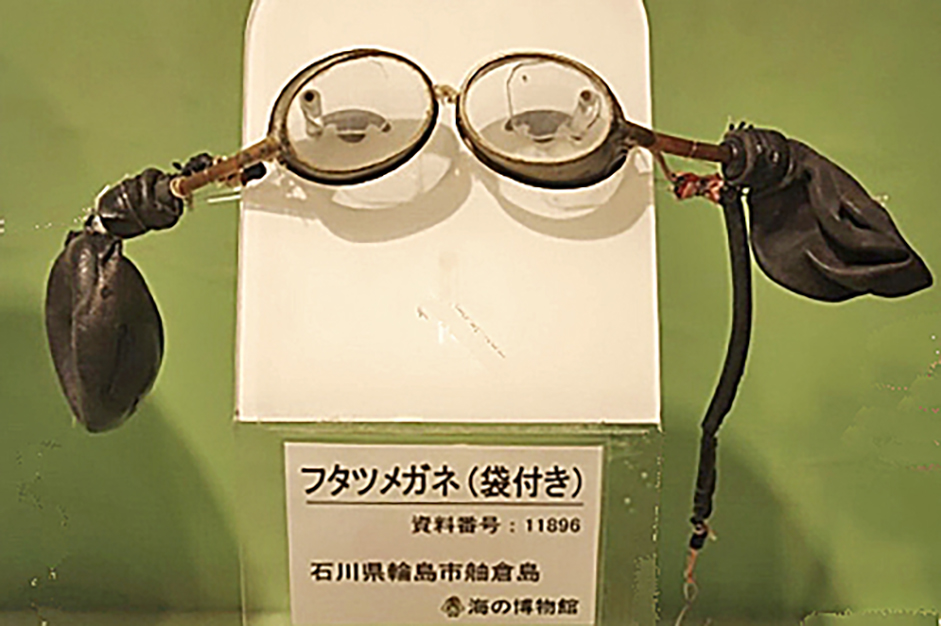
6 - Goggles with a pressure equalization system |
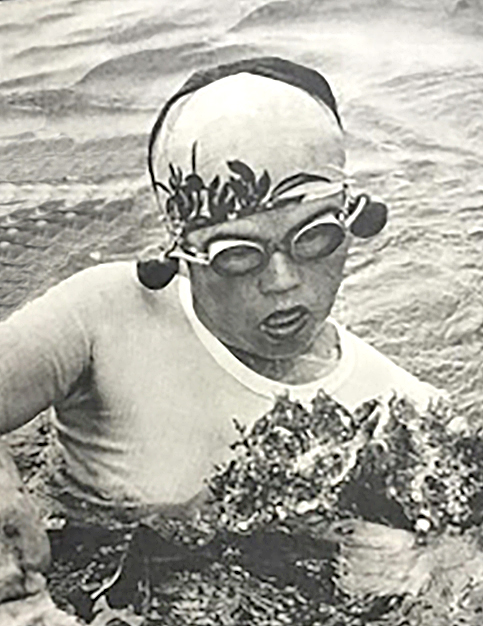
7 - Goggles with rubber bulbs |
As previously noted, standard diving equipment had been available in Japan and was already being used in pearl cultivation by the late nineteenth century. Although it enabled divers to remain underwater for longer periods and to operate at greater depths, there was a constant search for a lighter and more practical alternative, since most pearl-diving operations were carried out in relatively shallow waters. The prospect of extending dive times was certainly attractive; however, in addition to its high cost and the limited mobility it afforded, standard diving equipment required a substantial surface support crew. This not only increased operating costs but also significantly reduced the number of workers available for other tasks. For these reasons, pearl farm owners increasingly turned to Ama breath-hold divers. Although their productivity was inherently constrained by the short duration of their dives, typically around one minute underwater followed by one minute of recovery at the surface, they were numerous, inexpensive, and, above all, highly agile. This growing pressure to increase productivity stimulated the search for new diving technologies capable of bridging the gap between the mobility of the Ama and the underwater endurance provided by standard diving equipment, while avoiding many of the latter's practical limitations. It was in this context that, in 1916, the pearl entrepreneur Riichi Watanabe, most likely influenced by the limited endurance of the Rouquayrol-Denayrouze apparatus used by the Imperial Japanese Navy, and perhaps also by his familiarity with the Fernez breathing devices exhibited at industrial fairs during the same period, joined forces with his friend, the engineer Iwao Ōgushi, to develop a lightweight underwater breathing apparatus that could operate either independently or while connected to a surface air supply. Since neither man was a diver, they invited the professional diver Captain Yumihachi Kataoka to participate in the project. Drawing on his practical experience, they soon developed a demand valve actuated by the diver's teeth, an ingenious solution that left the diver's hands free while eliminating the need for cumbersome equipment. Captain Kataoka personally tested the apparatus, diving to depths of 60 metres in the dark waters off the port of Yokosuka and later in the islands of the South Pacific, then possessions of the Japanese Empire. In 1918, he founded the Tokyo Submarine Industrial Company Inc. to manufacture the Ōgushi breathing apparatus for both the Japanese and international markets.
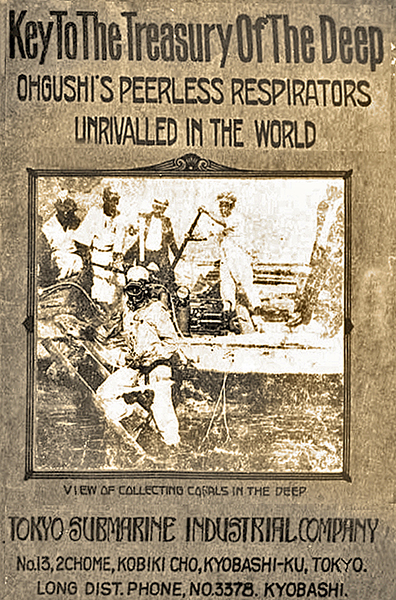
8 - Advertisement for Tokyo Submarine Industrial Company Inc. |
The apparatus was named after its inventor, Iwao Ōgushi, and was first patented in Japan in 1918. It was subsequently patented abroad in 1920: in the United Kingdom (Patent No. 131,390), the United States (Patent No. 1,331,601), France (Patent No. 496,716), and Italy. An especially intriguing sistorical detail is that the first person to describe the operation of the Watanabe–Ōgushi apparatus to the Western world was, in all likelihood, an Italian naval officer, Lieutenant Umberto Cugia di Sant'Orsola. Serving as Italian Naval Attaché in Tokyo from 1919 to 1921, he published a detailed account of the apparatus in the journal La Marina Mercantile Italiana upon his return to Italy. The system was subsequently adopted by several organisations in different countries, most notably by the Soviet Navy during a well-documented salvage operation. It is also worth noting that, in Japan, another breathing apparatus, closely resembling the original and frequently confused with it, was patented at roughly the same time. This was the Yamamoto breathing apparatus, also known as the Yamamoto-shiki sensui no tomo. Although less well known today than the Ōgushi design, it was in fact more widely used. This was presumably because it incorporated a full-face mask and a demand-valve mechanism that, while conceptually similar, proved more comfortable than that of the Ōgushi apparatus. It is also noteworthy that Captain Kataoka was certainly acquainted with Yamamoto, the inventor of the Yamamoto-shiki breathing apparatus, suggesting that some form of direct relationship may have existed between these two remarkably similar and contemporaneous devices.
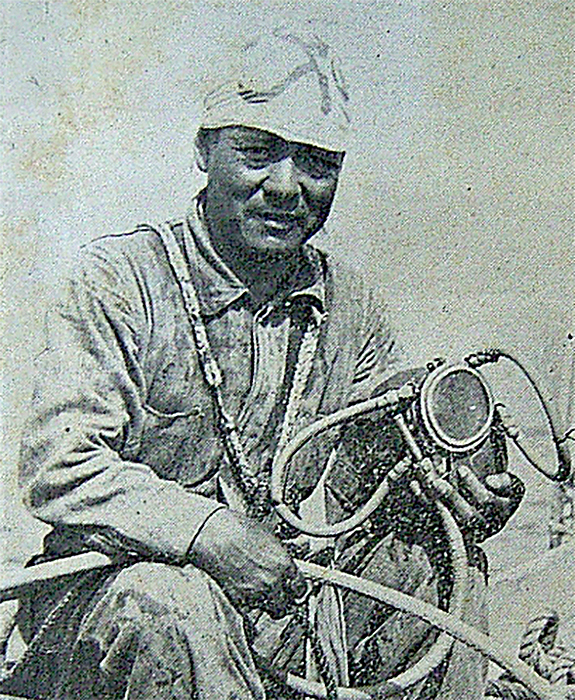
9 - Yamamoto's Sensui no Tomo breathing apparatus |
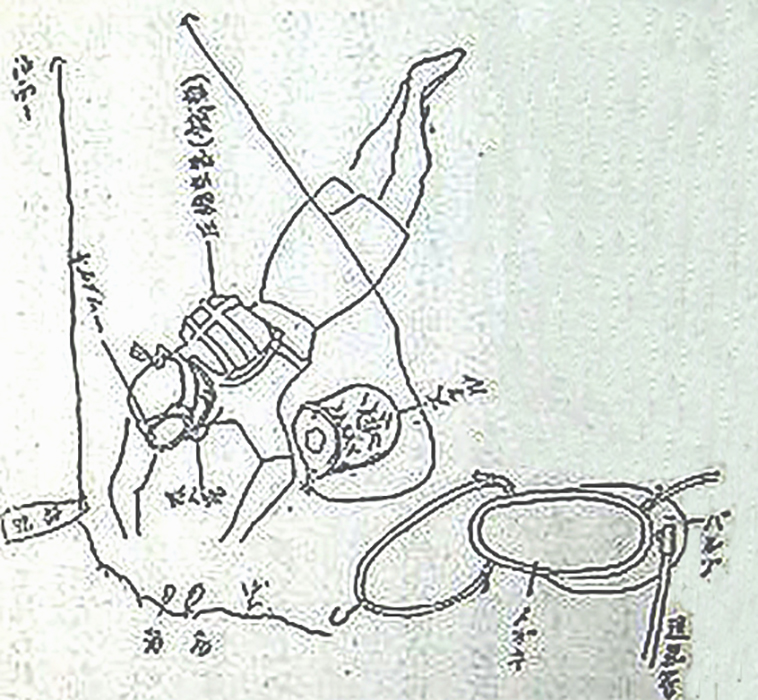
10 - Schematic of Yamamoto's Sensui no tomo breathing apparatus |
That said, the Watanabe–Ōgushi apparatus is particularly noteworthy for its design, which incorporated several genuine technical innovations. Moreover, its development was closely tied to its original purpose, reflecting the specific needs of the rapidly expanding pearl cultivation industry. In practical terms, it was an underwater breathing system that could be used either as a surface-supplied apparatus, connected by an air hose to a four-cylinder reciprocating hand pump capable of delivering pressures of up to 200 bar, or as a self-contained unit.
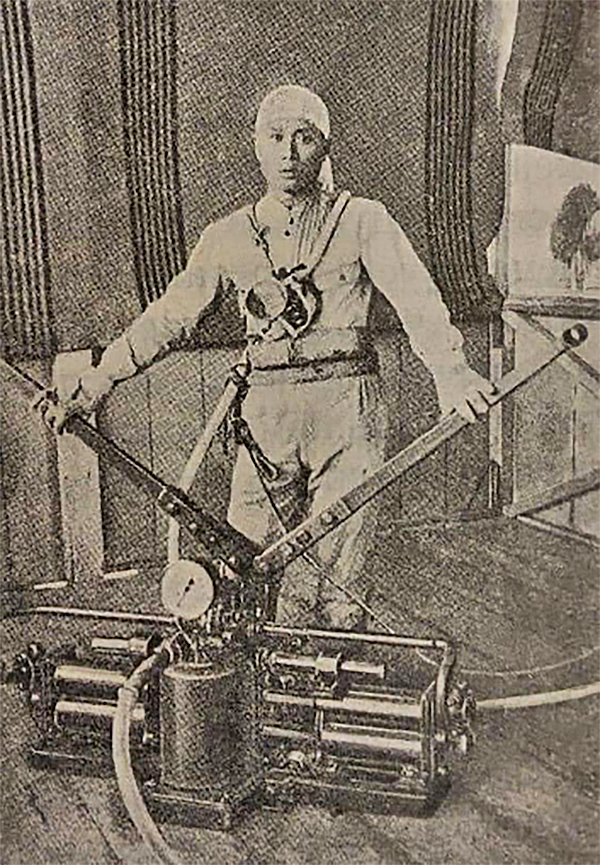
11 - Watanabe pump operator |
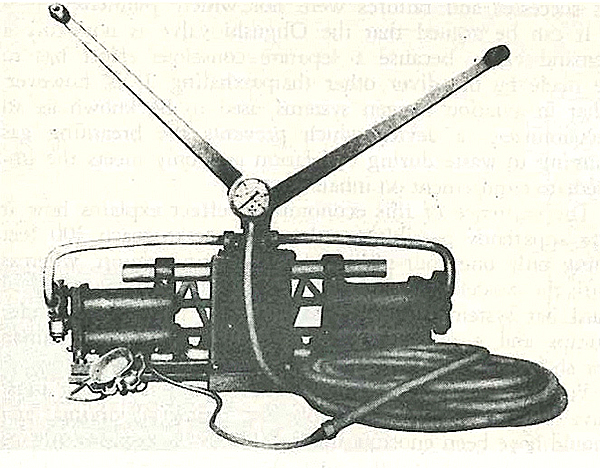
12 - Watanabe four-cylinder reciprocating hand pump |
Unfortunately, no technical drawings or descriptions of the pump have survived to explain its exact operation. One possible hypothesis is that its design was derived from the booster pumps produced by the German company Dräger in Lübeck in the early 1900s.
In its self-contained configuration, the diver carried one or two compressed-air cylinders on the back. The standard cylinder had a capacity of approximately 6.5 litres and was charged to 150 bar, providing the diver with around 1,000 litres of breathable air. It was also fitted with a pressure gauge to monitor the remaining air supply. As for the breathing apparatus itself, it employed manually actuated demand valves. As mentioned, the airflow was regulated by the pressure exerted by the diver's teeth on the valve levers.The system was designed so that the diver inhaled through the nose, which was enclosed within a round face mask resembling modern diving masks. The mask covered the eyes and nose while leaving the mouth exposed and was fitted with an air injector. The airflow was proportional to the pressure applied by the diver's teeth (greater pressure = wider valve opening = higher airflow). After inhaling through the nose, the diver released the pressure on the valve levers, interrupting the airflow and allowing exhalation through the mouth. Another notable feature of the system was that the airflow could be adjusted before the dive to suit the diver's individual requirements by setting the pressure reducer with a manually operated adjustment screw.
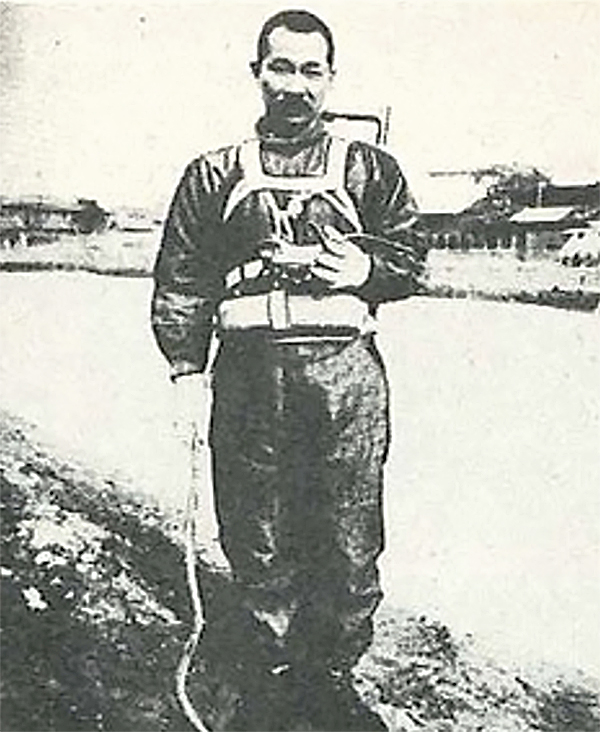
13 - The Watanabe-Ōgushi apparatus |
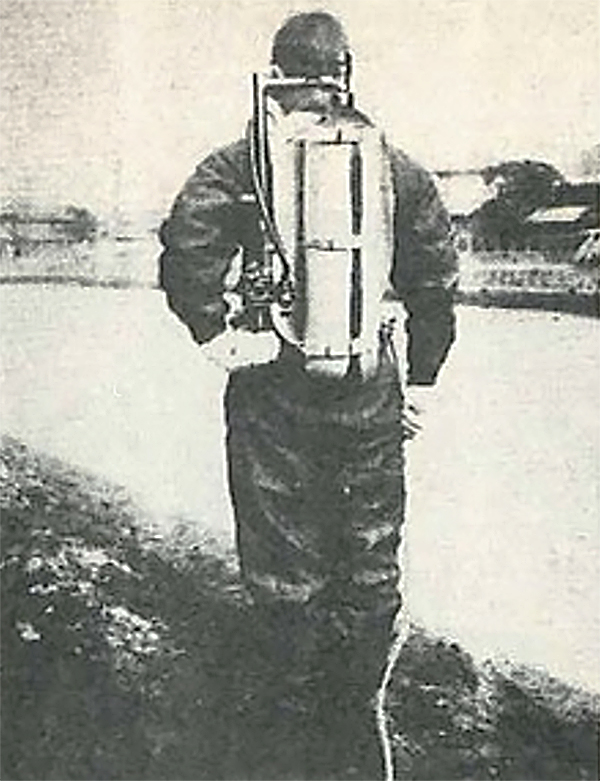
14 - Watanabe-Ōgushi rear |
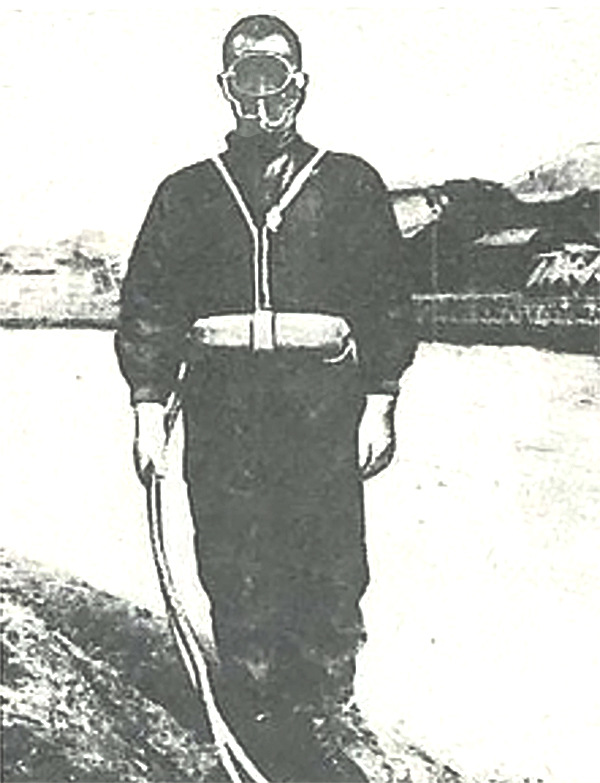
15 - Watanabe-Ōgushi hookah |
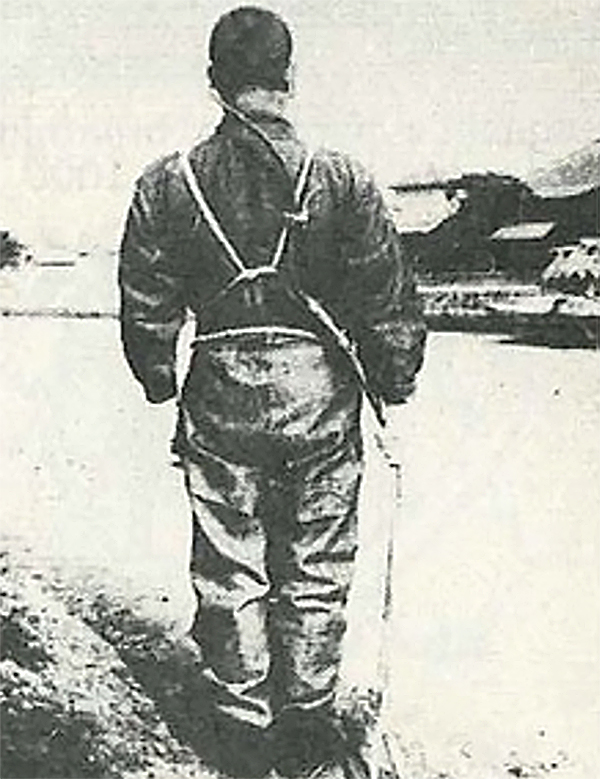
16 - Watanabe-Ōgushi hookah |
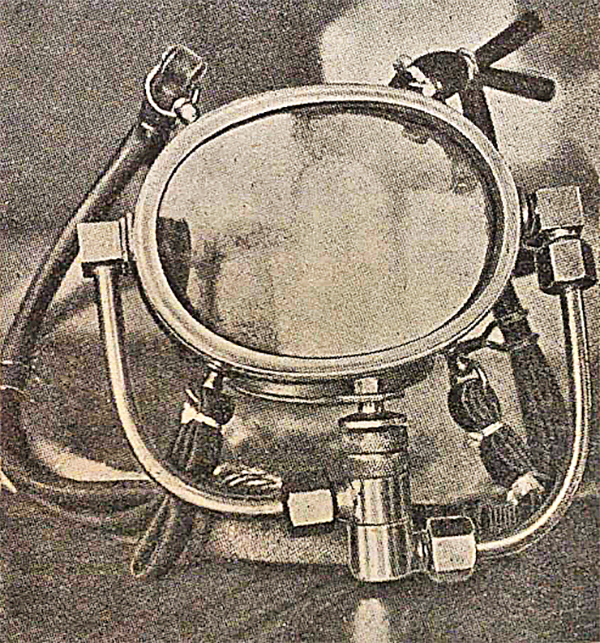
17 - The Watanabe-Ōgushi mask and regulator |
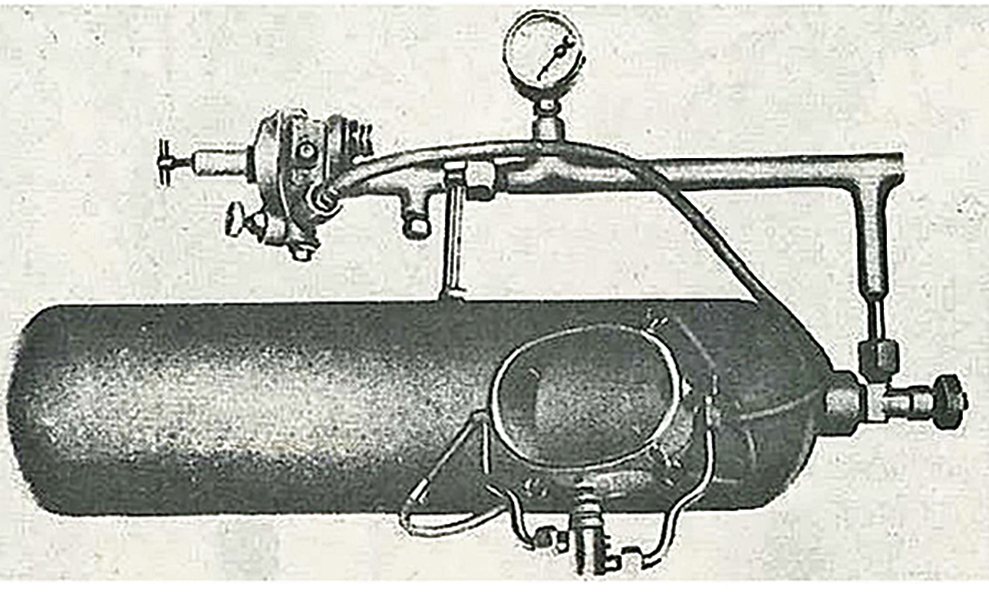
18 - The Watanabe-Ogushi autonomous unit complete with mask, tank, pressure gauge |
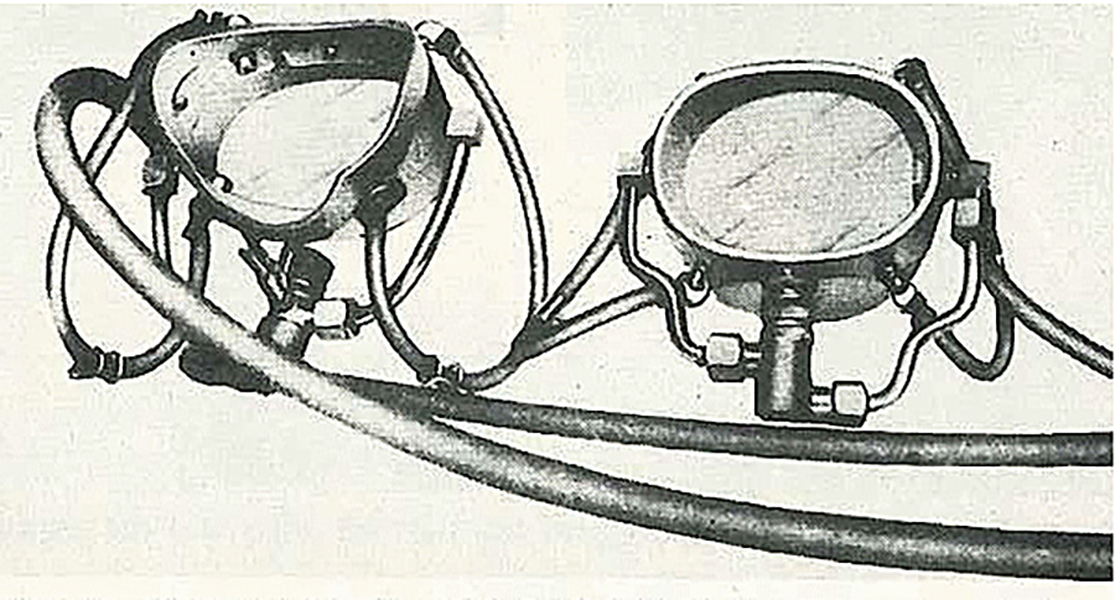
19 - The Watanabe-Ōgushi mask, featuring a demand valve actuated by pressure exerted by the diver's teeth. |
In summary, the Watanabe–Ōgushi apparatus consisted of a rubber face mask secured to the diver's head by two double straps fastened at the back. The front viewing lens was held in place by a metal retaining frame. A demand valve was mounted externally on the mask, aligned with the diver's mouth, which remained outside the mask. Air supplied either from the surface pump or from the compressed-air cylinders was delivered to this valve, which was operated by two short levers, one fixed and the other movable. To open the valve, the diver had to bite down on the levers, allowing air to flow into the mask. The diver then inhaled through the nose. During the subsequent phase, releasing the bite closed the valve, interrupting the airflow and allowing exhalation through the mouth.
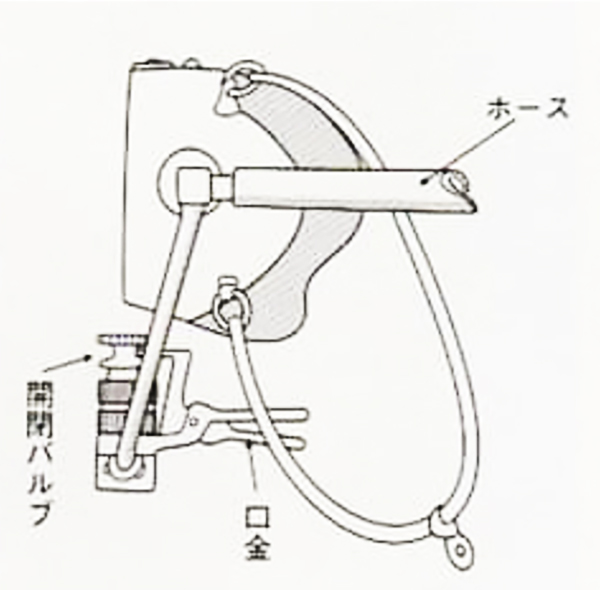
20 - Diagram of the Watanabe-Ōgushi apparatus |
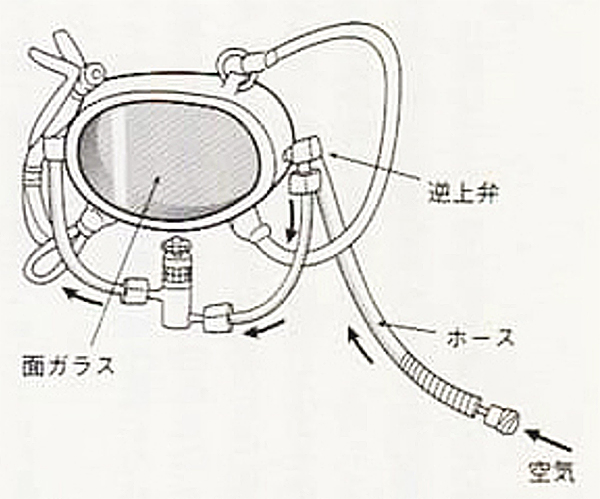
21 - Diagram of the Watanabe-Ogushi apparatus, front view |
|
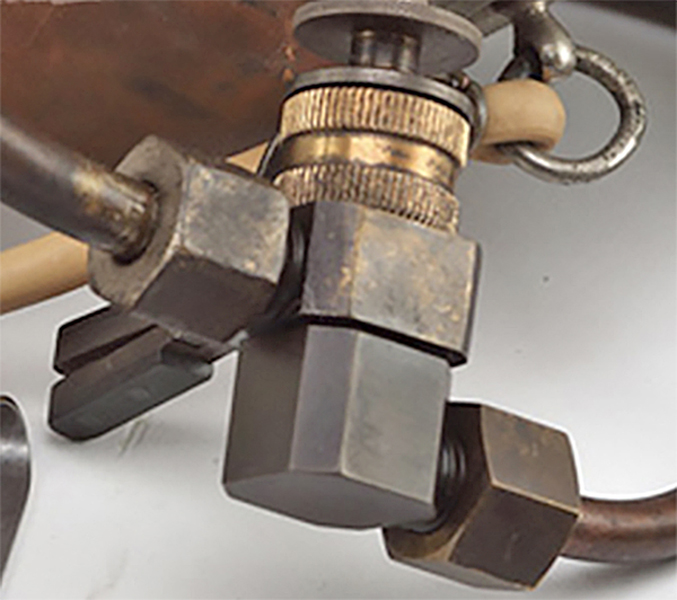
22 - Details of the tooth-controlled demand valve
|
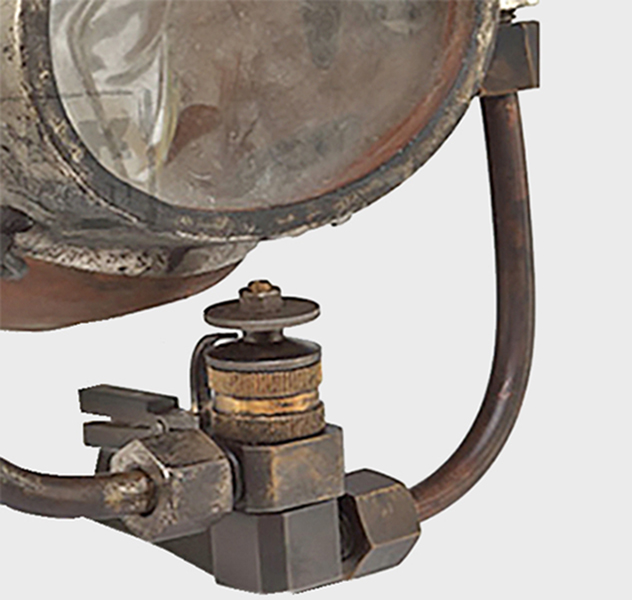
23 - Details of the tooth-controlled demand valve |
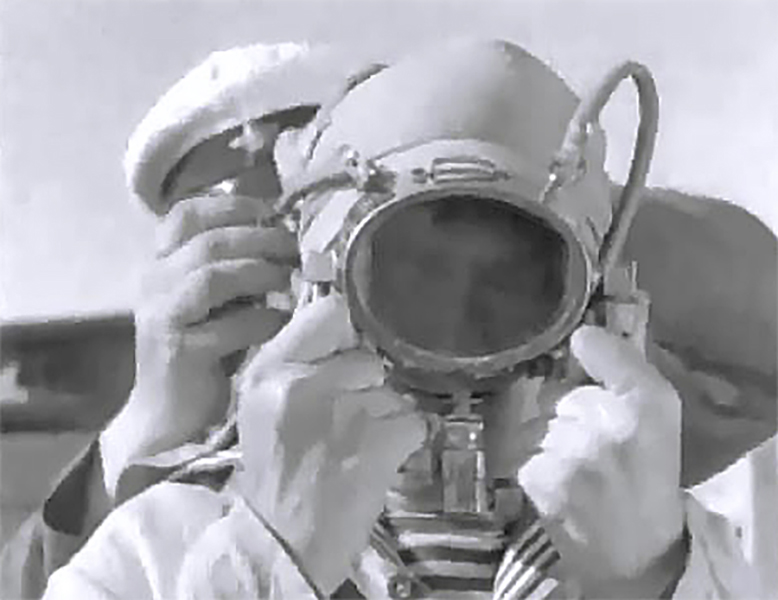
24 - The Watanabe-Ōgushi device produced under license by the Soviet EPRON |
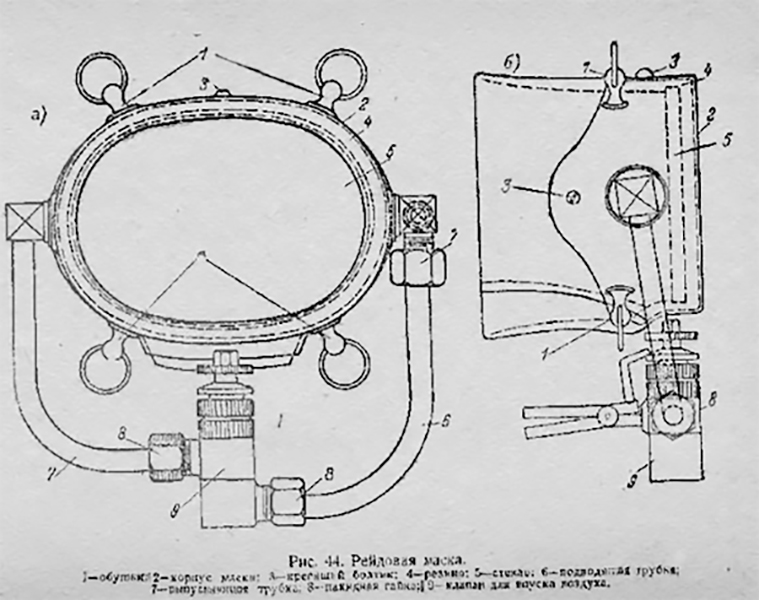
25 - The Watanabe-Ōgushi device produced under license by the Soviet EPRON |
At first glance, the degree of autonomy achieved by the apparatus might have suggested that it was destined for widespread success. In reality, however, neither the original unit nor its derivatives achieved significant commercial success, despite their use in salvage and recovery operations, including the recovery of the Prince in Balaklava Bay, on the Black Sea, in 1927, and their later adoption by the Soviet Navy. In 1926, Kataoka's company signed a licensing agreement with the Soviet agency EPRON (an acronym for Expedition for Underwater Works of Special Purpose in the Black Sea) for the manufacture of the apparatus. Ultimately, however, the system was overtaken by the rapid technological advances and innovations of the twentieth century, developments that culminated two decades later in the introduction of the Cousteau–Gagnan regulator.
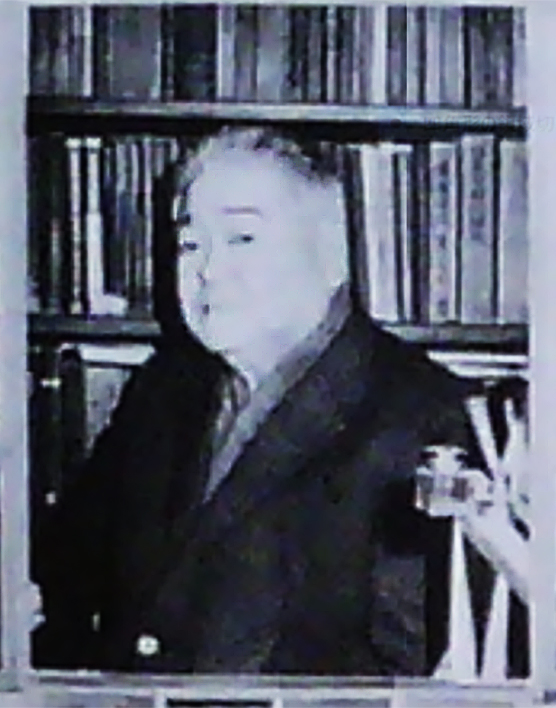
26 - Iwao Ogushi |
________________