This article was written thirty-five years ago, upon returning from a cruise in Sudan, while the excitement inspired by that extraordinarily life-rich sea was still fresh in my mind. It was fuelled by the exploration of Cousteau’s Precontinent II site, where the various structures were still clearly recognizable, and by the sensations experienced at Port Sudan airport, which at the time was little more than a tin-roofed shed with an unbearable temperature of 40°C inside. There, the soldier in charge of inspections opened,one by one, the Kodak boxes containing my thirty rolls of film. Later, however, our arrival at the harbour and the warm welcome aboard immediately erased the memory of that long and unpleasant ordeal.
°°°°°°°°°°°°°°°
Nabir learned to see his sea from within thirty years ago, when he served as a local guide on Cousteau’s team during the expedition that led to the Precontinent II experiment. That experience made him an invaluable companion for divers venturing into these remote waters, which at the time were still untouched by tourism infrastructure. For more than ten years he has been the captain of the Felicidad, a thirty-three-metre wooden vessel whose classic lines have become an integral part of the Sudanese seascape. Its discreet presence can regularly be seen near some of the world's most famous reefs.
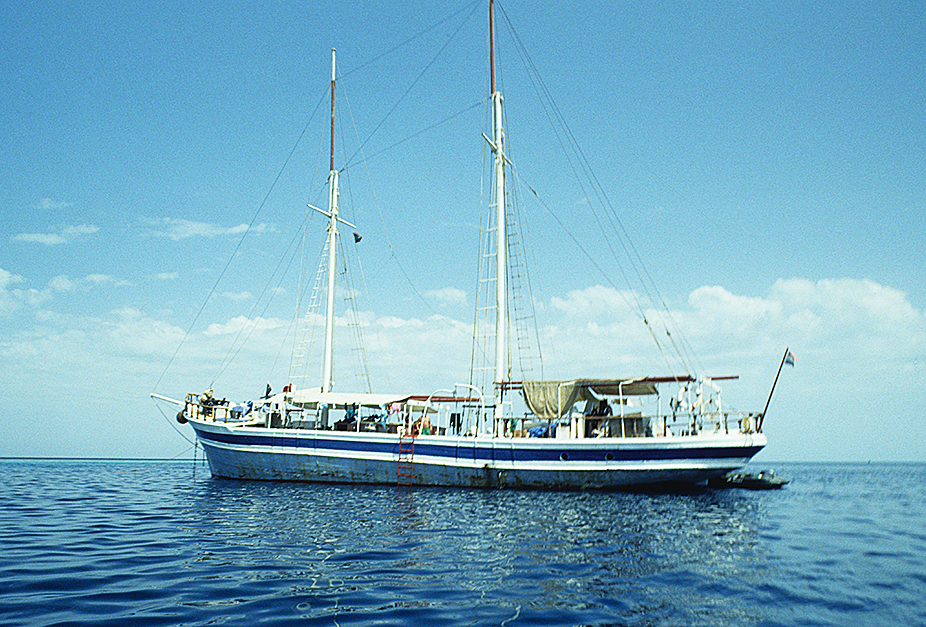
1 - The Felicidad
As soon as you step aboard, Nabir’s calm smile and the generously laid table make you forget the hardships of the journey and the stark reality of Port Sudan. Thoughts immediately turn to diving, and the rapid-fire questions reveal everyone's particular hopes and expectations. Some ask only about sharks; others dream of exploring the depths of one of the many famous or merely reported wrecks, while some are eager to head south at once, having heard that manta rays are more easily encountered there. The first destination, however, is beyond question. The Umbria lies waiting just a mile and a half outside the harbour, its upper structures protruding only a few centimetres above the surface. From a distance, they resemble dolphins frozen in the instant of arching out of the water. The great ship, deliberately scuttled rather than surrendered to the British at the outbreak of the Second World War, rests on its side, draped in the exuberant marine life of the Red Sea. It welcomes divers with a scene that seems almost unreal when contrasted with the desolation of the nearby coast. The first greeting comes from an elegant angelfish; its azure livery brushed with strokes of gold. Amused by the flashes of the camera, it darts ahead and then pauses to let itself be caught up with, as though inviting us to follow it on a guided tour of its strange underwater city. The deck is a tangled garden of soft corals, alcyonarians and gorgonians, inhabited by fish both large and small, living side by side yet distinctly separate, like neighbours in an apartment building. Yellow snappers gather beneath the stern; farther on are bannerfish, followed by clouds of anthias.
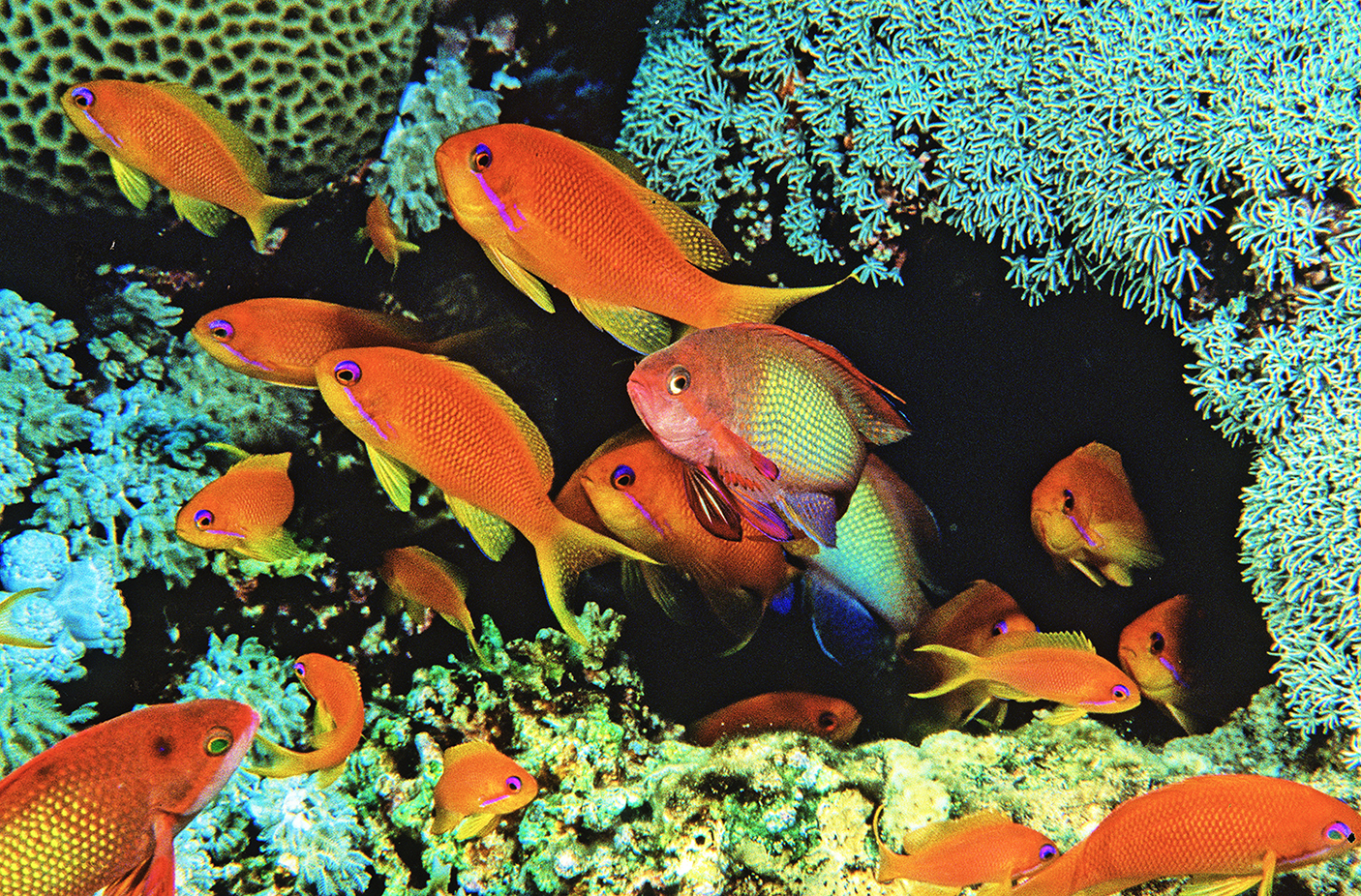
2 - tropical Anthias |
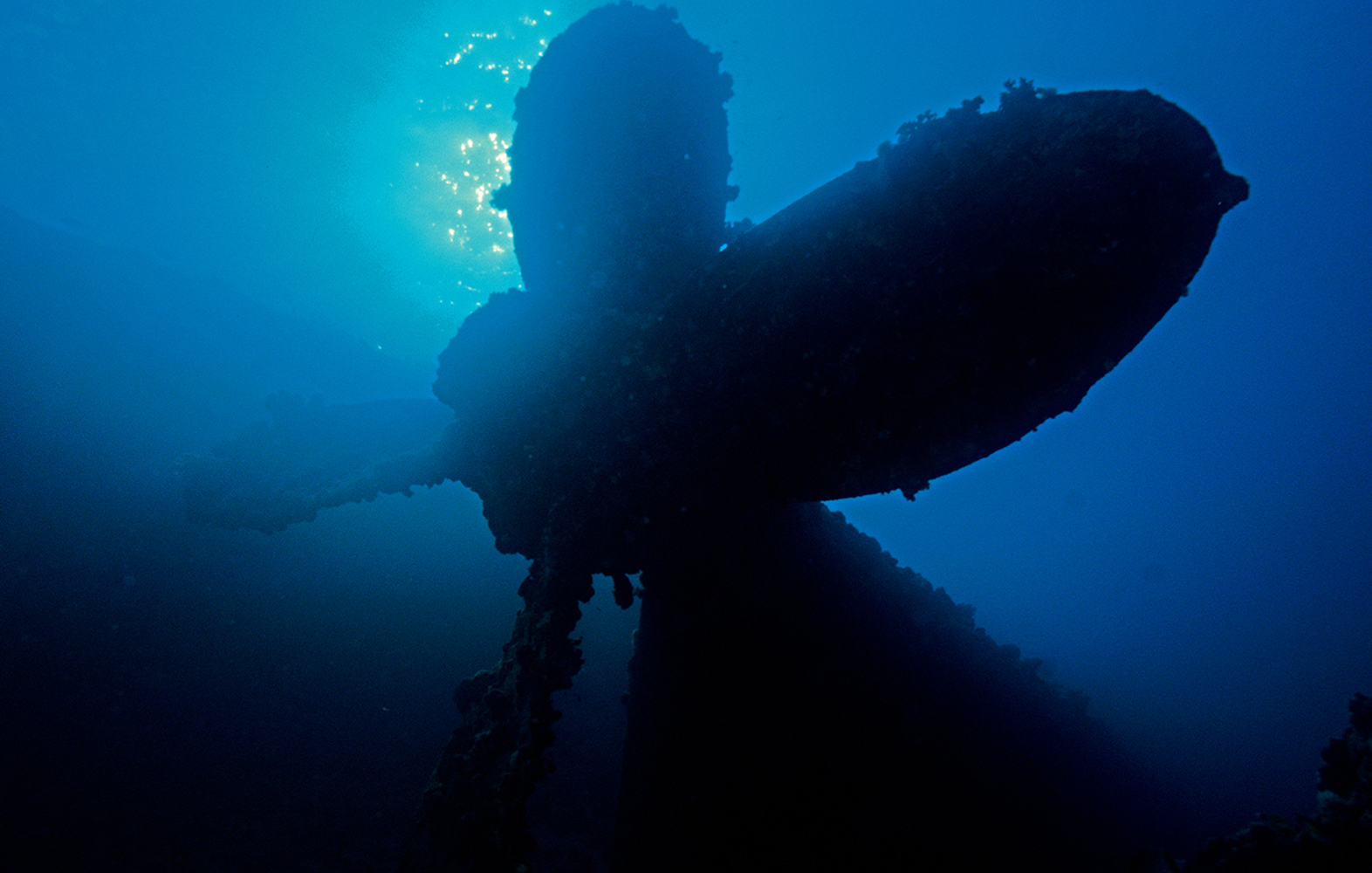
3 - Umbria's majestic propeller |
From afar, passing pelagic fish pause for a moment, seemingly curious, before continuing along their blue highways.
There is a strong temptation to enter the hull through one of the many hatches, to visit the Fiat cars from the 1930s and uncover the other secrets hidden within the holds, but the air supply is already running low. The tour of the ship ends back at the impressive propeller, silhouetted against the translucent surface above. It looks like the sail of an ancient windmill.
We then set a course northward along what has become a classic itinerary, weaving our way among shoals that must have betrayed mariners of every age. A short line of breaking waves on the horizon marks the reef of Abu Kesan, surrounded by emerald-green water and known as a regular gathering place for schools of dolphins. The hope is to photograph them underwater, but they have other ideas, and we must settle for the groupers, the undisputed rulers of the long reef. Shaab Gurna also has its dominant species, and it quickly becomes clear why this site is known as “the place of the sweetlips,” even though they are not actually sweetlips. Magnificent in their yellow-and-silver attire, they gather in secluded corners, clustering in dense ranks beneath the shade of great embroidered coral tables. Elsewhere, they form perfect circles just above the dazzling white sand, occupied with nothing more than remaining motionless, their snouts pointed rigorously in the same direction and their watchful eyes resting benevolently upon the diver.
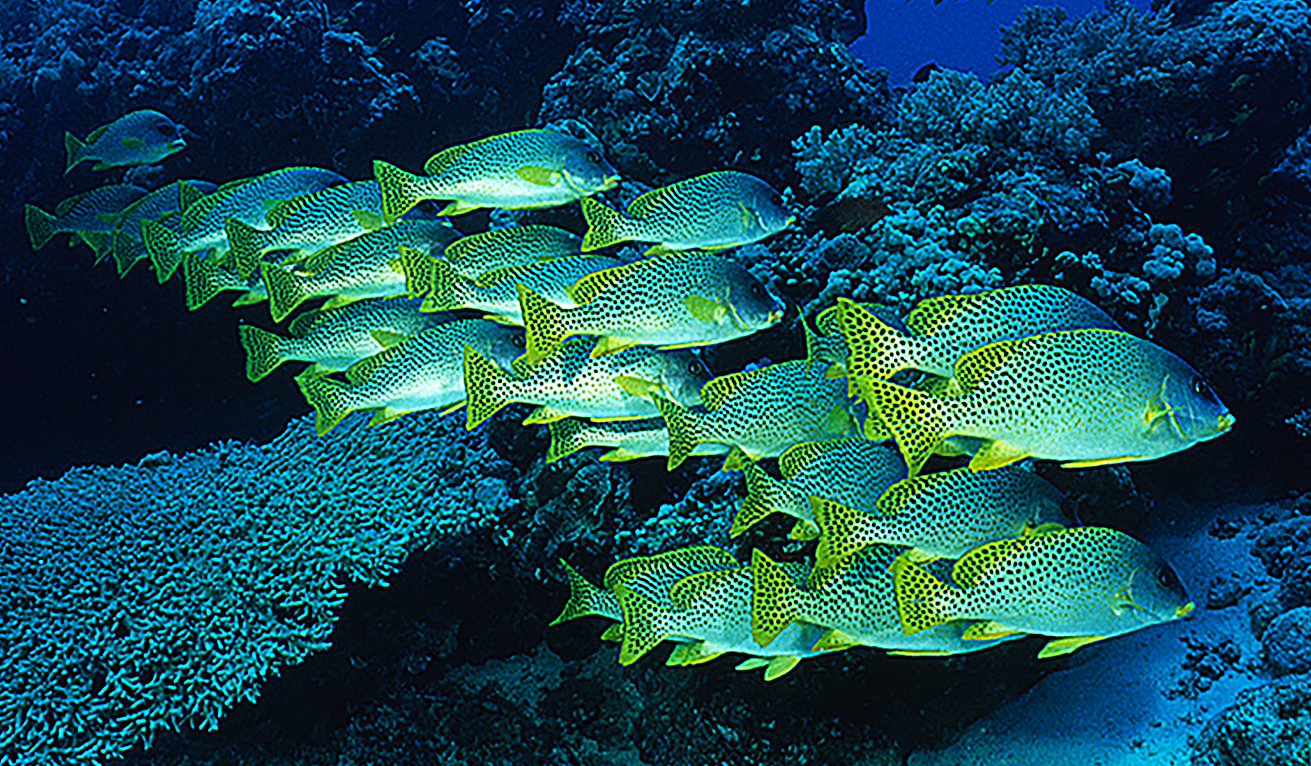
4 - Blackspotted sweetlips Plectorhynchus gaterinus |
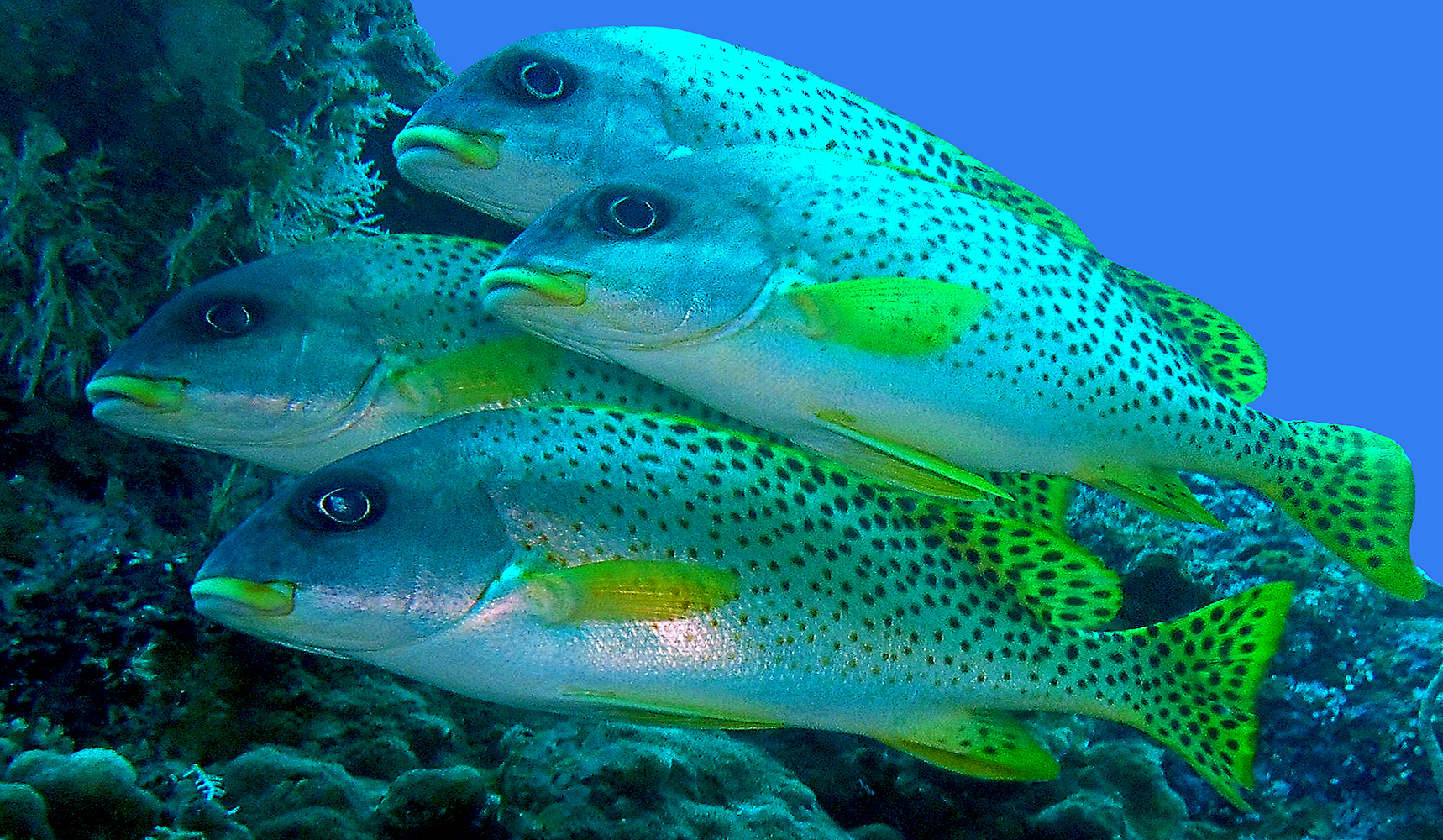
5 - Blackspotted sweetlips Plectorhynchus gaterinus |
They allow divers to approach and photograph them without fleeing. All they ask is that you fin gently, without disturbing their blissful existence in paradise. There are hundreds of them, perhaps thousands, scattered across an area that can be explored in just a couple of dives, but they are far from alone. Croakers, groupers and moray eels inhabit the surrounding reef. Trevallies come and go in mid-water, indifferent to a formation of not particularly large barracudas, which in turn pay due respect to a senior barracuda. He keeps watch over both them and us from twenty metres away, gigantic and awe-inspiring in his absolute, austere stillness. Quite a different temperament is displayed by the stocky rhinoceros fish. There are eighteen of them, moving about together in cheerful disorder: pushy, boisterous creatures, seemingly unable to decide whether they are more interested in feeding or in creating commotion. Only the sharks are missing from the roll call. A couple of fleeting individuals pass through, far too few to satisfy those who have come all this way chiefly in search of them.
Forgoing a visit to the “Toyota Wreck” and heading east instead, it does not take long to reach the legendary Shaab Rumi, located some twenty miles from the departure harbour. This is the site of Cousteau’s underwater village, the reef that no visitor to these waters can afford to miss. Here, some of the finest marine life in the Red Sea is concentrated, and sharks are never absent, readily appearing to take food from the hands of those brave enough to offer it.
The lagoon is entered through a pass reserved for experienced navigators. The clear water, a delicate shade of blue, turns blue green over the reef ahead and deepens into cobalt beyond it. Following the shallow bottom along the inner wall, one encounters numerous species of fish in their juvenile colours, creating the impression of having entered one of nature’s own nurseries. For a considerable distance, the coral formations rise almost to the surface, forming the rugged harvesting grounds of remarkable local fishermen who collect shells there while walking barefoot across the reef.
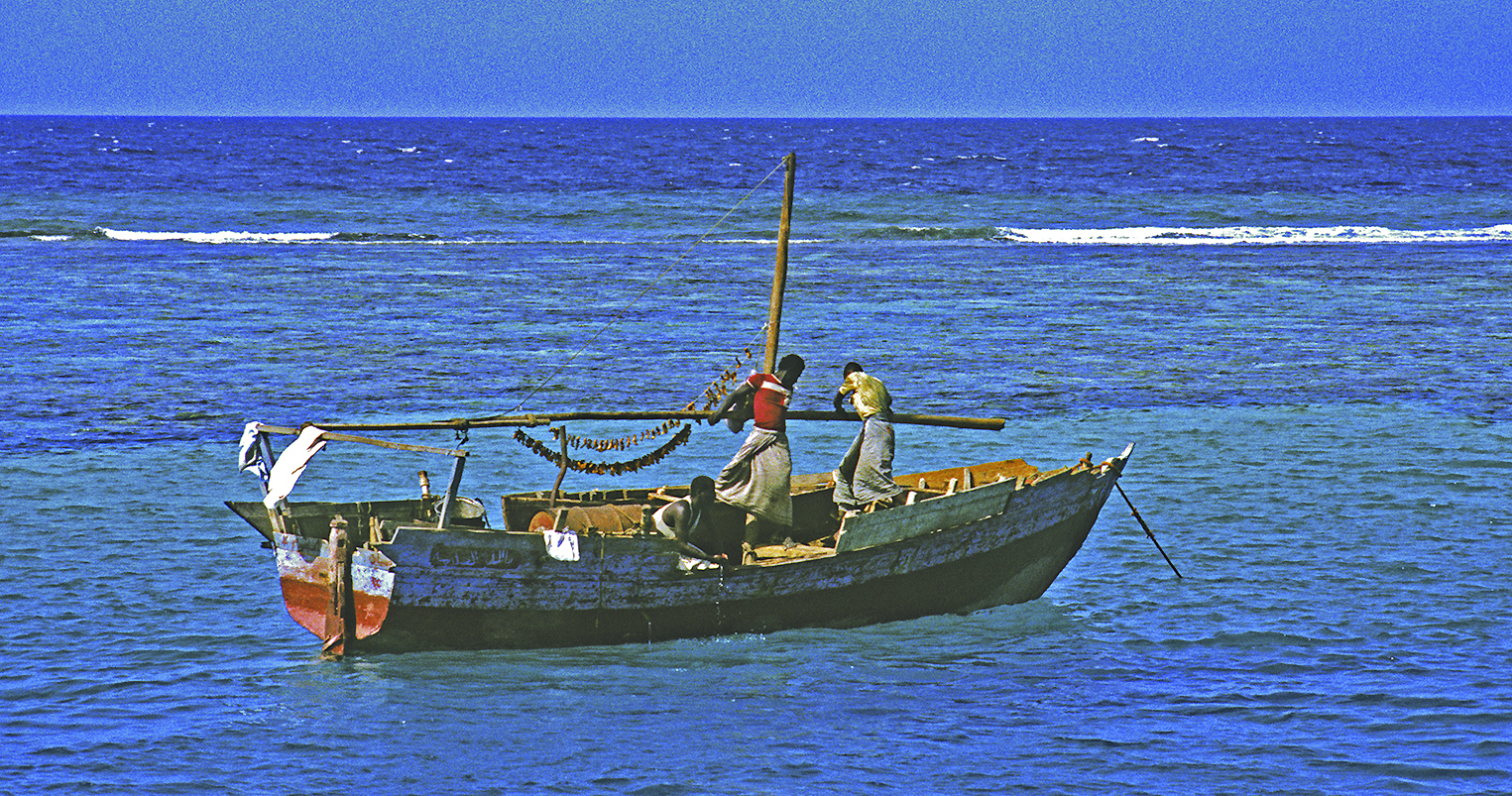
6 - Traditional shell gatherers
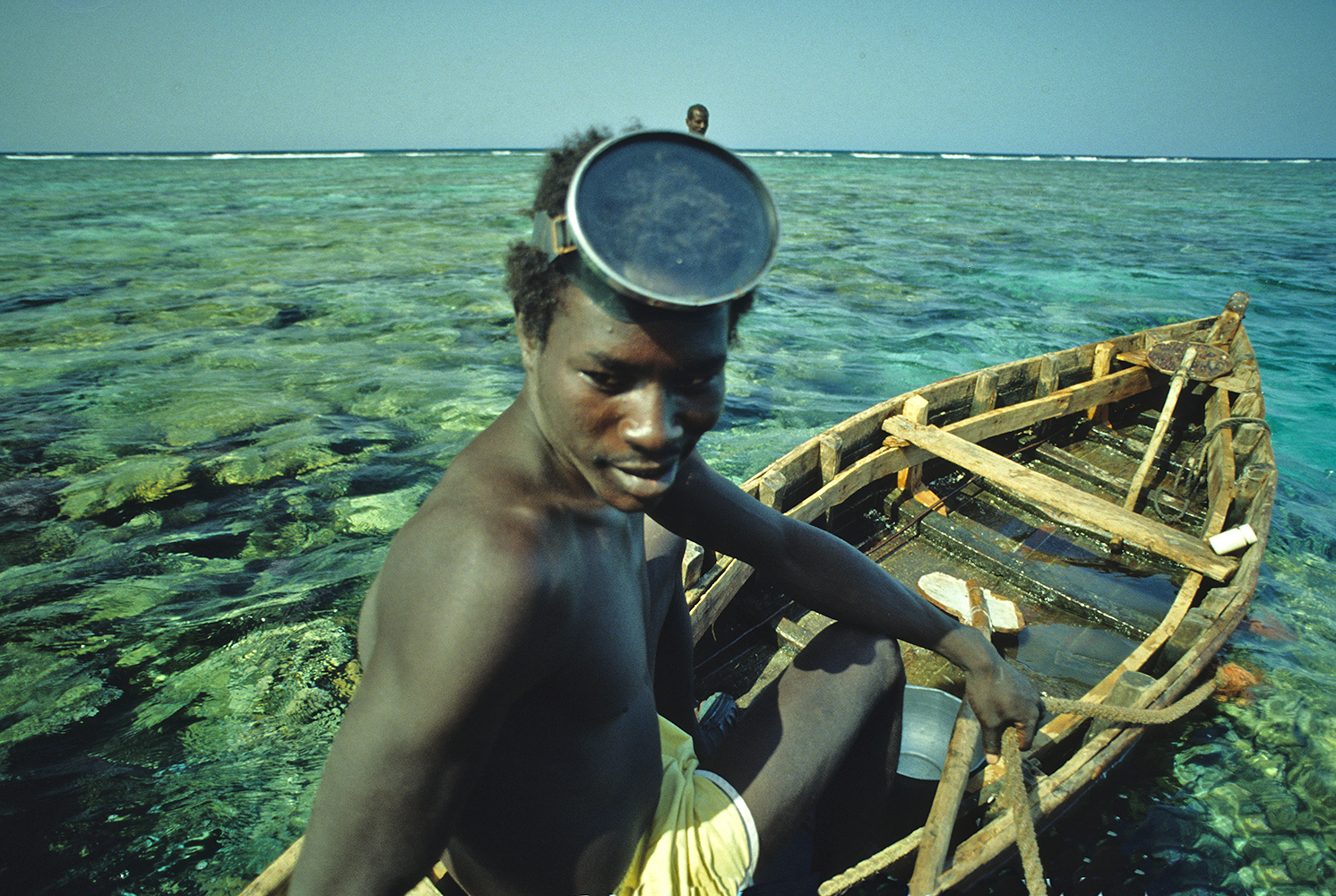
7 - A round mask is the shell gatherer’s only piece of equipment. |
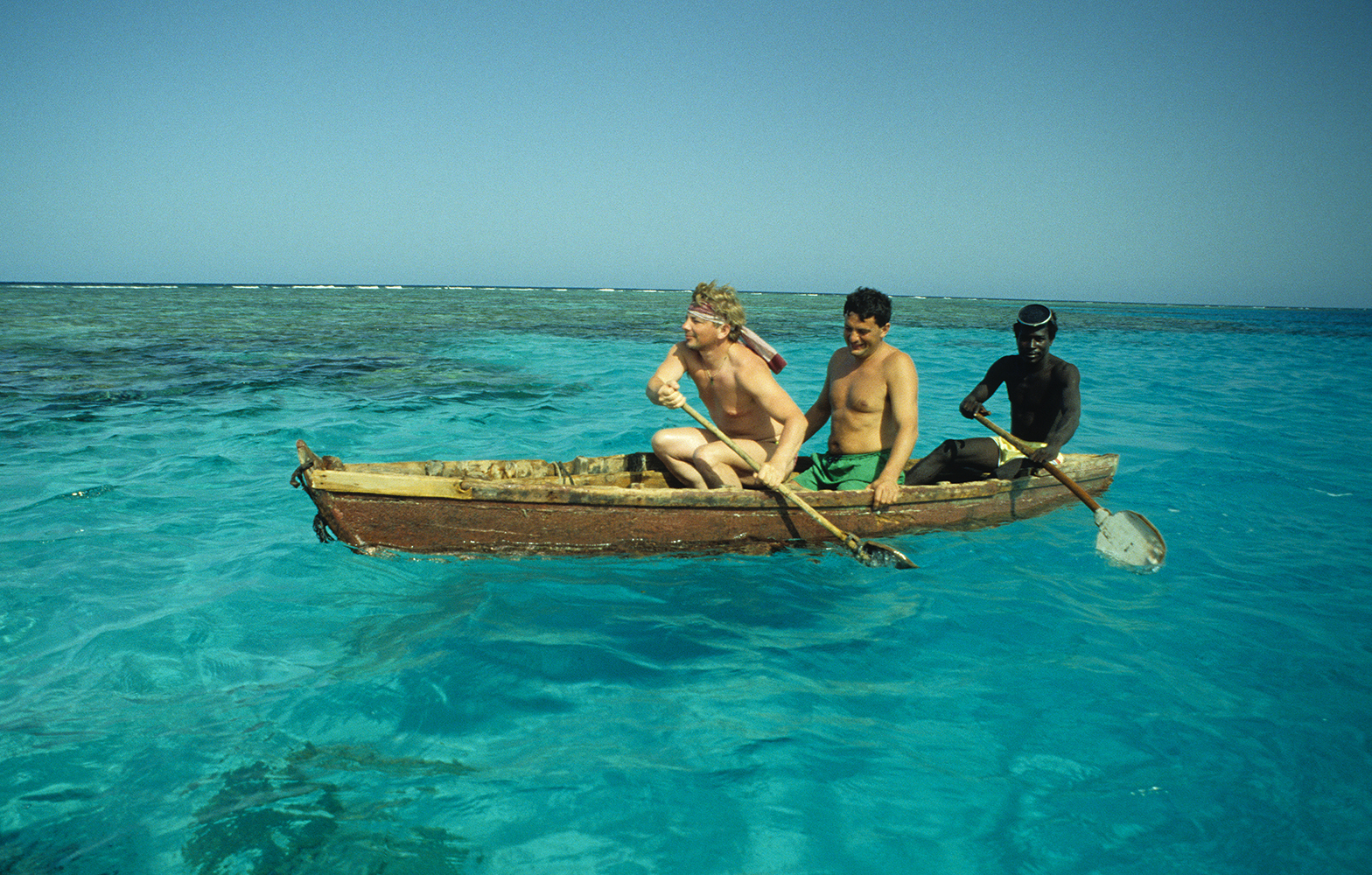
8 - A packet of cigarettes in exchange for a canoe adventure. |
They arrive from the coast aboard a small boat in which they live for days at a time, lacking even the most basic comforts. From its side they launch a tiny canoe and, equipped with nothing more than a museum-piece diving mask, they inspect every crevice, filling sacks with valuable cone shells expertly camouflaged and invisible to anyone else. Toward the outer edge of the reef, the seabed slopes down by a couple of metres. Here too, rhinoceros fish root about unconcernedly, while schools of black and blue surgeonfish drift past, and a majestic charcoal-coloured stingray rests in a sandy clearing. A little farther on lies the open sea. The north-eastern face drops away vertically. One is almost reluctant to take his eyes off the teeming coral wall and look out into the dark emptiness beyond the tips of his fins. Rounding a promontory, the bottom rises again in a steep terrace between 40 and 50 metres, adorned with large branches of gorgonians blooming with their tiny white polyps.
To the south opens the underwater amphitheatre where the teams of the Calypso once carried out their work. The first object of attention is an anti-shark cage, now almost overwhelmed by the multitude of benthic organisms that have colonised it.
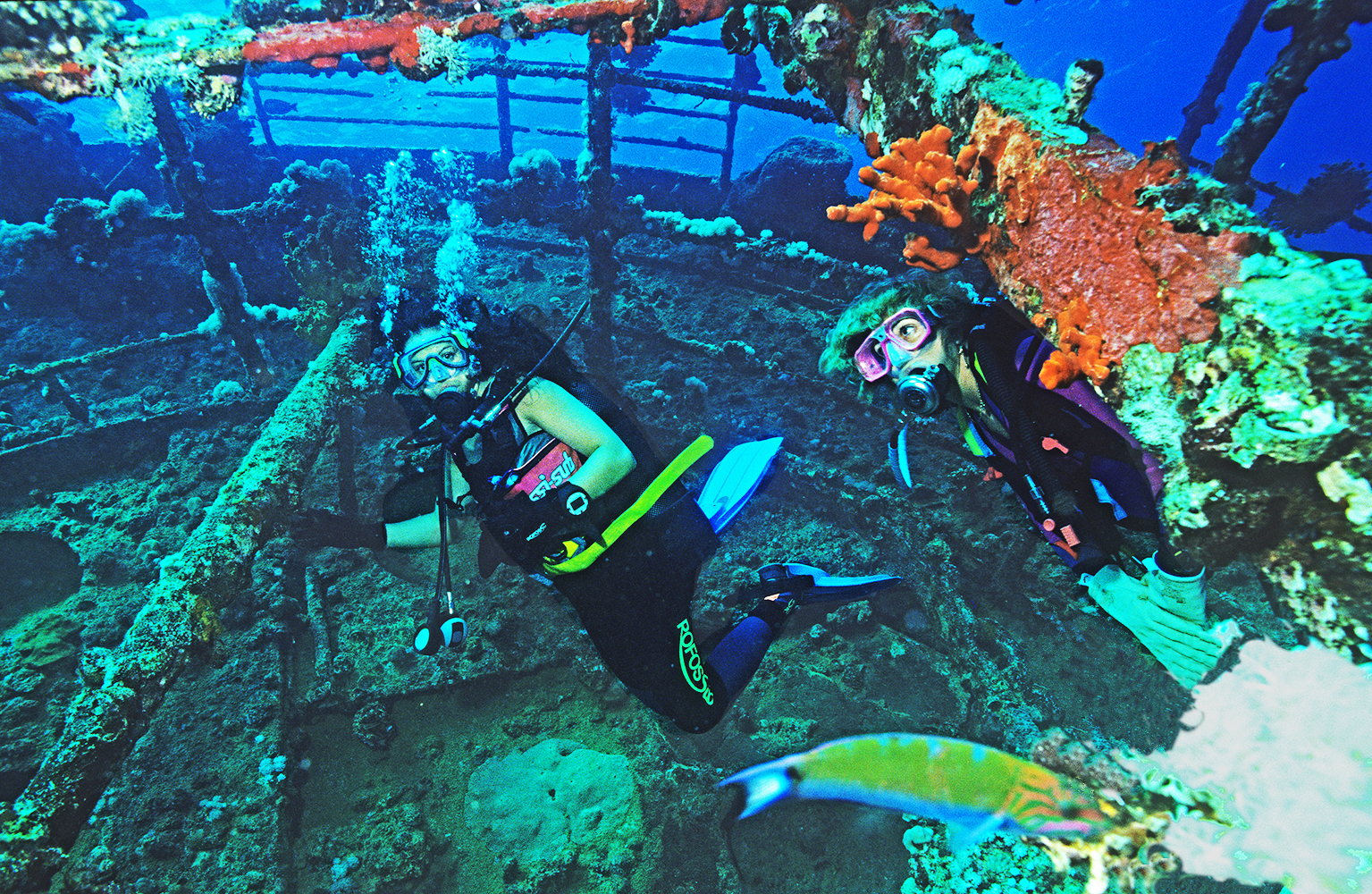
9 - La gabbia antisqualo |
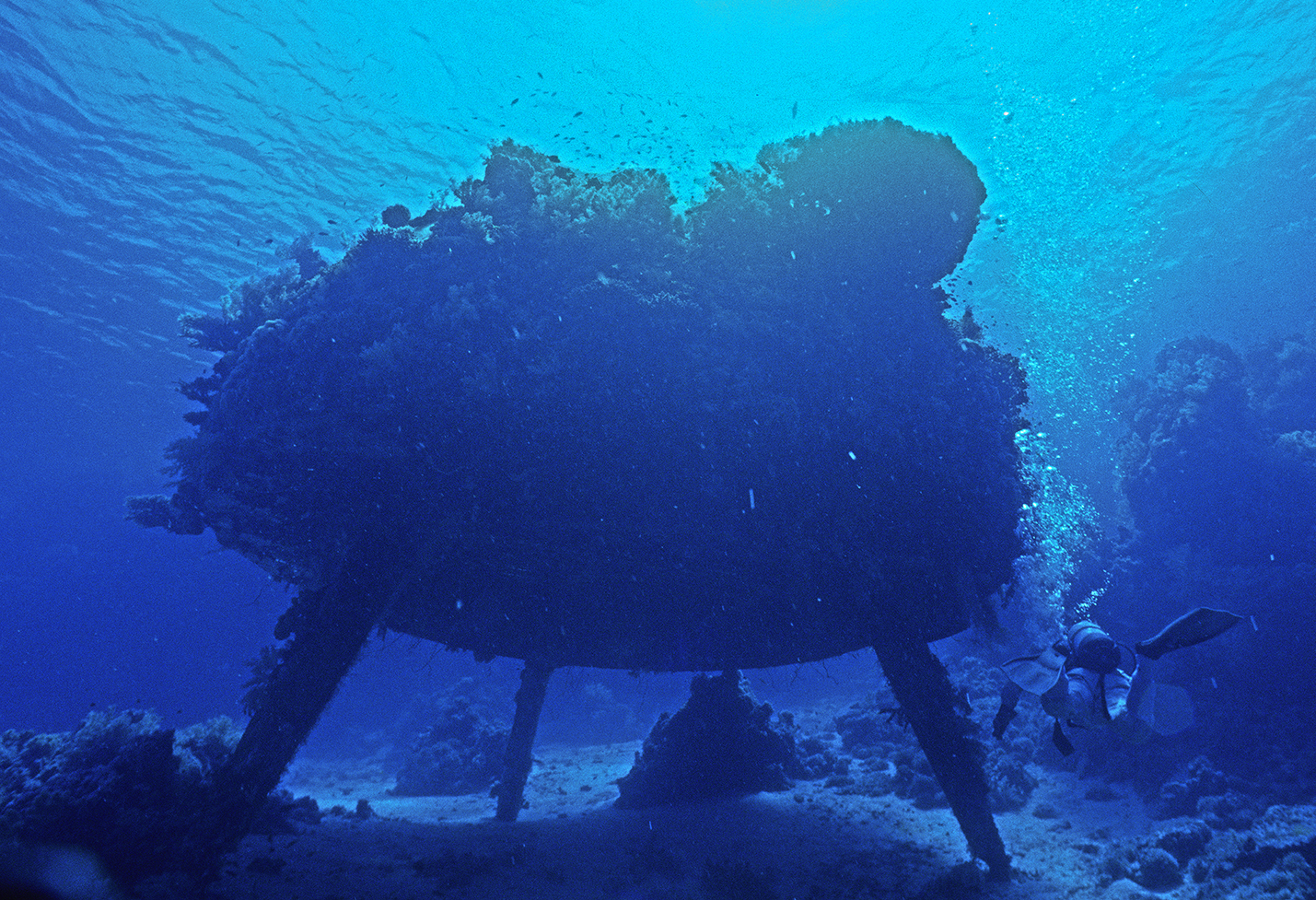
10 - La cupola asciutta |
||
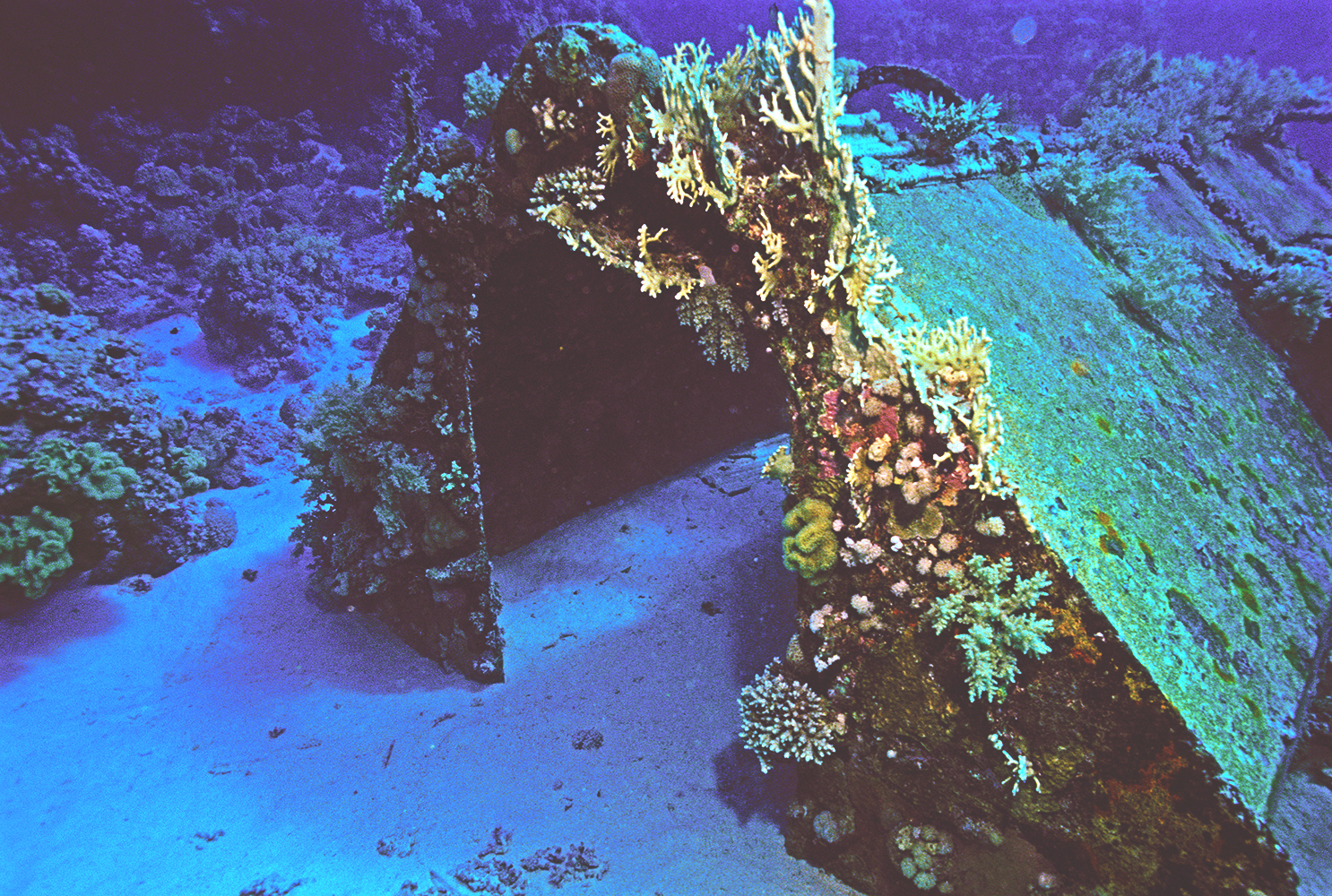
11 - Un ricovero per le attrezzature |
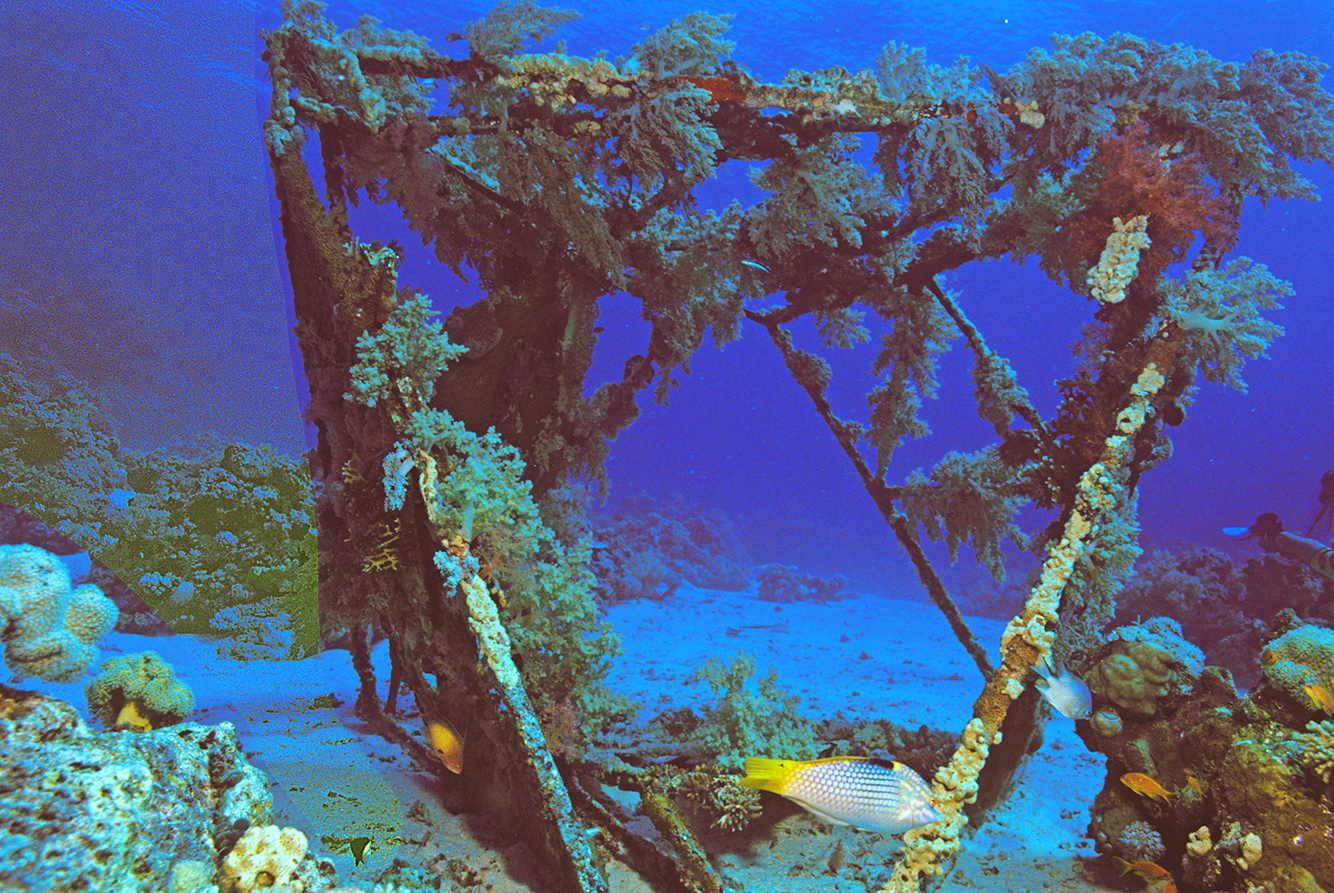
12 - La struttura a specchi |
As tradition dictates, the bag of fish is opened, and the masters of the house are already there. They swoop in, snatch a few pieces and dart away, only to return moments later cautious or excited, depending on their size and on the generosity of the offering. If the supply is plentiful and does not disappear within seconds, the excitement grows until it becomes sheer frenzy. For a few minutes, the sharks seem to lose all restraint. They fall prey to a kind of exhilaration expressed in tight circles and lightning-fast charges toward the bait, at times giving the impression that they do not actually see it clearly but perceive it through other extraordinarily developed senses. They hurl themselves at every morsel, competing for the choicest pieces, veering away from photographers eager for close-up shots, though not always successfully. After the first few encounters, one ceases to be startled by an accidental blow from a tail, or even by a forceful nudge caused by the scent of fish lingering on a wetsuit. What still has an effect, however, is seeing one of them swimming straight toward you, perhaps deceived until the last instant by a reflection in the mask or by the shape of a flash unit, especially if it happens to be yellow, a colour they seem particularly attracted to. There is little real danger in these encounters, but the risk lies in becoming overly familiar. Excessive confidence can lead to an accidental bite, with potentially unpredictable consequences. Most of the sharks are grey reef sharks or other members of the requiem shark family, generally not of alarming size since they rarely exceed two metres in length. Nevertheless, their dentition and the aggression with which they attack food are sufficient reasons to exercise caution. When the spectacle begins to lose its novelty, the temptation arises to seek new thrills by venturing deep beyond the reef edge, which at Shaab Rumi, as elsewhere, sometimes conceals gatherings of hammerhead sharks. Yet the true beauty of this sea is found above all in the first twenty metres, where the coral is never devoid of life or colour. Butterflyfish are always ready to put on a show, velvet pufferfish readily allow themselves to be stroked, and a rare or unusual encounter may occur at any moment. Such as the once-common meeting with the formidable crown-of-thorns starfish, Acanthaster planci, the thirteen-armed predator of coral polyps whose spines command respect from all creatures except the giant tritons. Or the sight of a small spotted ray, with its long tail and eyes raised like tiny periscopes.
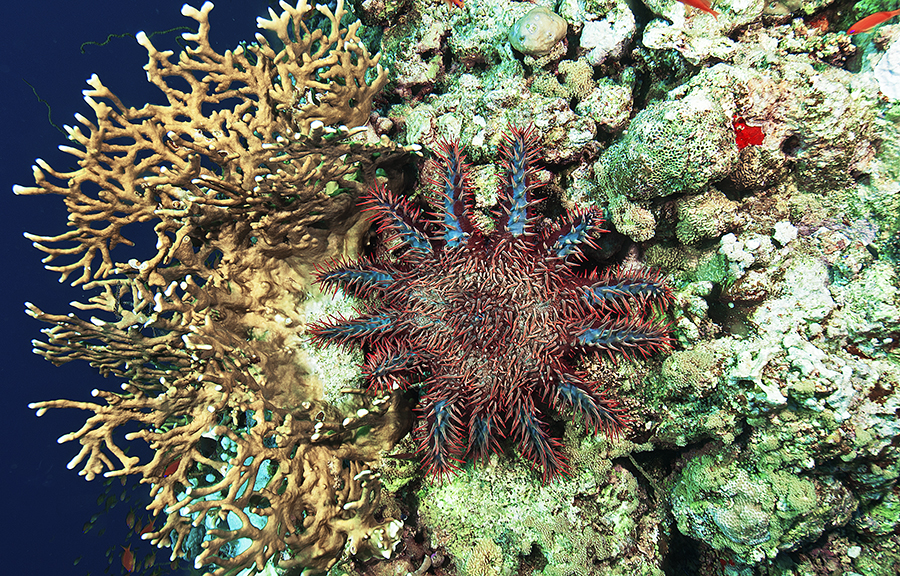
13 - Corona di spine Acanthaster planci |
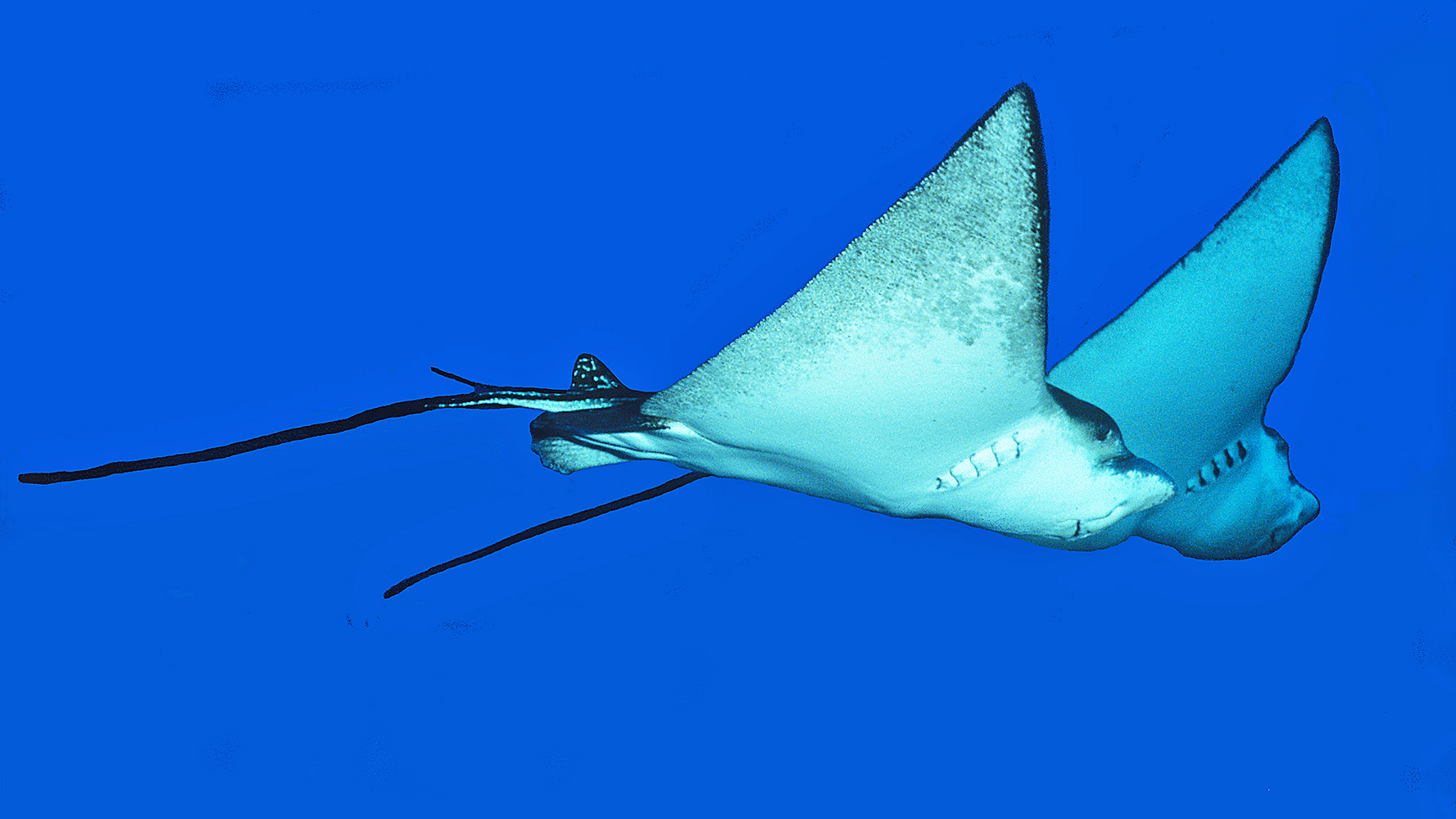
14 - Aquile di mare |
Following the reef, often accompanied by a curious young shark wagging its tail shyly three metres below, it is a pleasure to look around frequently and catch sight of the graceful flight of eagle rays, or of a turtle's hurried ascent toward the surface to draw a breath after an extraordinarily long dive. Near the surface, during the warmer months, encounters with manta rays are far from uncommon. At times they seem engaged in a mysterious underwater dance; at others, they launch themselves in spectacular leaps clear of the water. It is also possible to come across the harmless whale shark, immense in size, moving slowly with its mouth wide open as it feeds on plankton, entirely indifferent to the divers who breathlessly attempt to hitch a ride upon it.
After twelve days at sea without ports or islands, one is glad to set foot on land at the Shanganeb Lighthouse, disembarking at the end of its extraordinarily long jetty, which seabirds have adopted as their own landing strip. It was built by subjects of His Britannic Majesty and is now manned by four or five Sudanese soldiers, who are invariably welcoming to the rare visitors who come to climb the endless spiral staircase to the top.
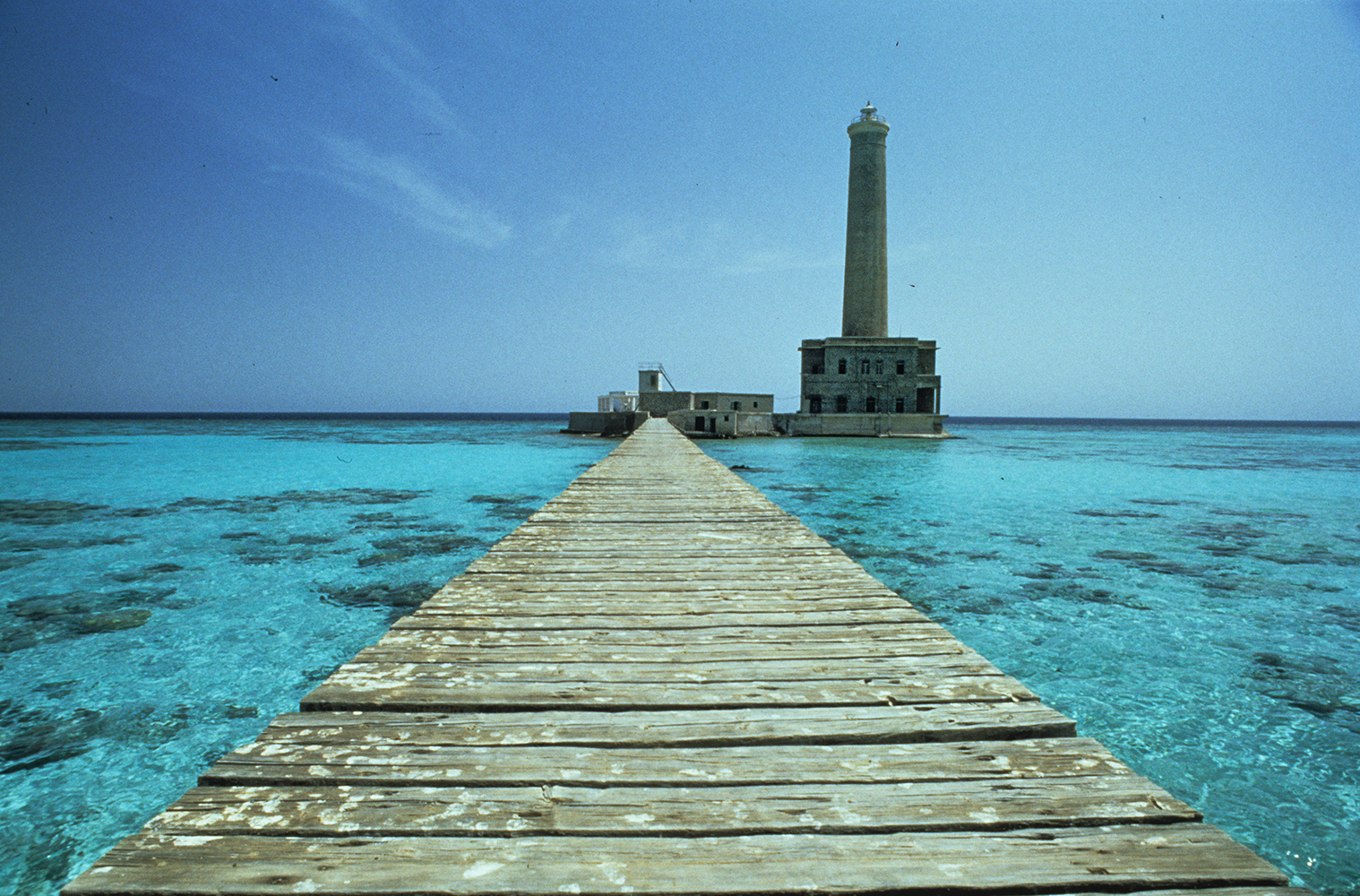
15 - Il faro di Shanganeb |
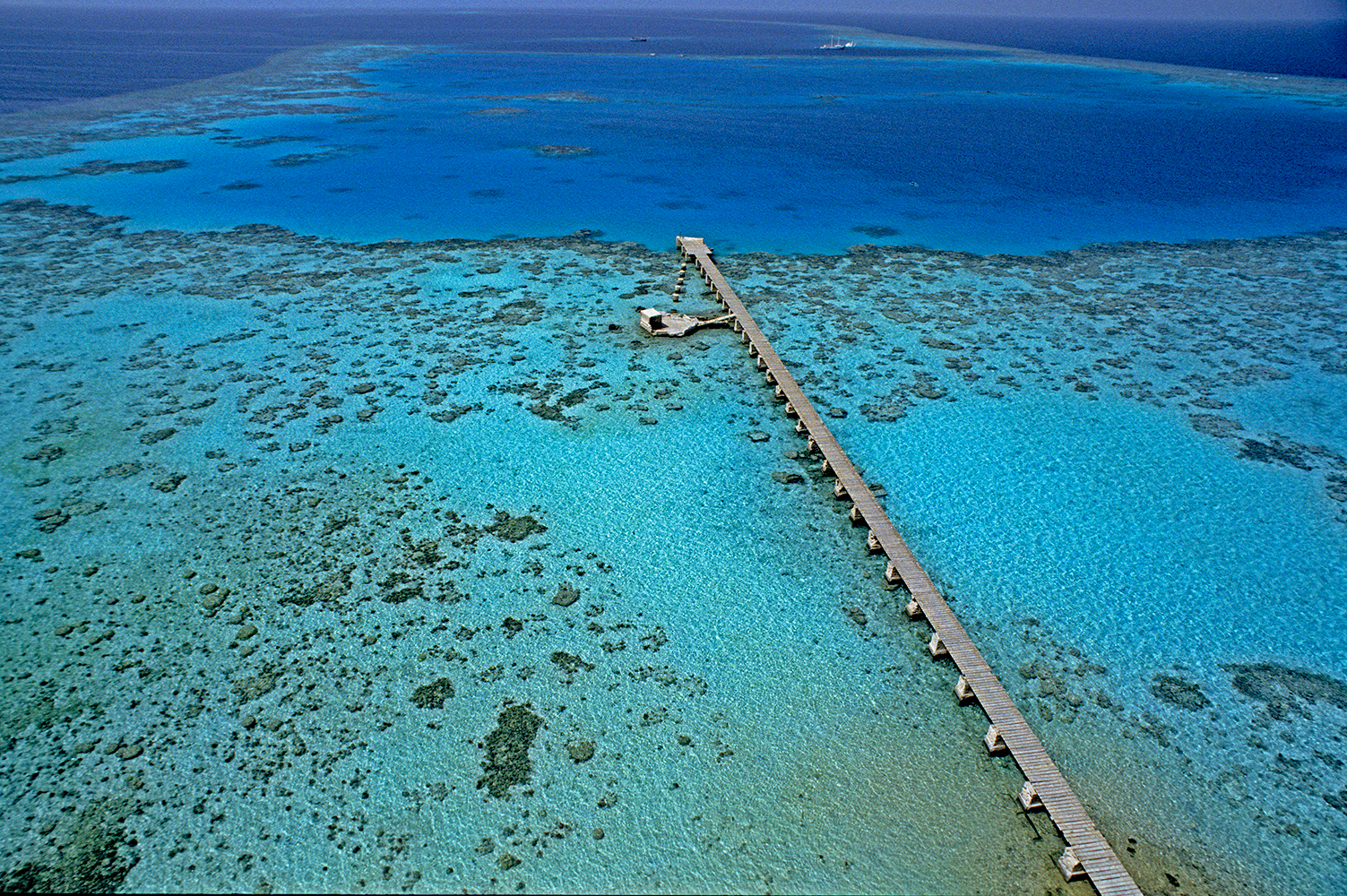
16 - La laguna vista dalla lanterna del faro |
From up there, the coral reef reveals itself as two protective arms embracing an almost rectangular lagoon. The contours of the seabed are clearly visible: the long terrace of whip corals, the shallow garden of sea anemones with their black or brilliantly coloured clownfish, and the deep blue of the reef edge to the west, where the enchantment of the other reefs is repeated. Each seems to compete with the others in proving to divers that this is the most beautiful sea of all. The Felicidad lies waiting, her bow already turned toward Port Sudan. Tomorrow it will be time to disembark, but before boarding the plane again, a visit to the ghost city of Suakin seems almost obligatory. An Italian company has recently built a modern road carved through the desert, travelled by trucks of every conceivable age. Along its sandy margins appear, from time to time, lines of camels and women dressed in garments of vivid, striking colours. Then, quite unexpectedly, a sign welcomes visitors to what was once a great city.
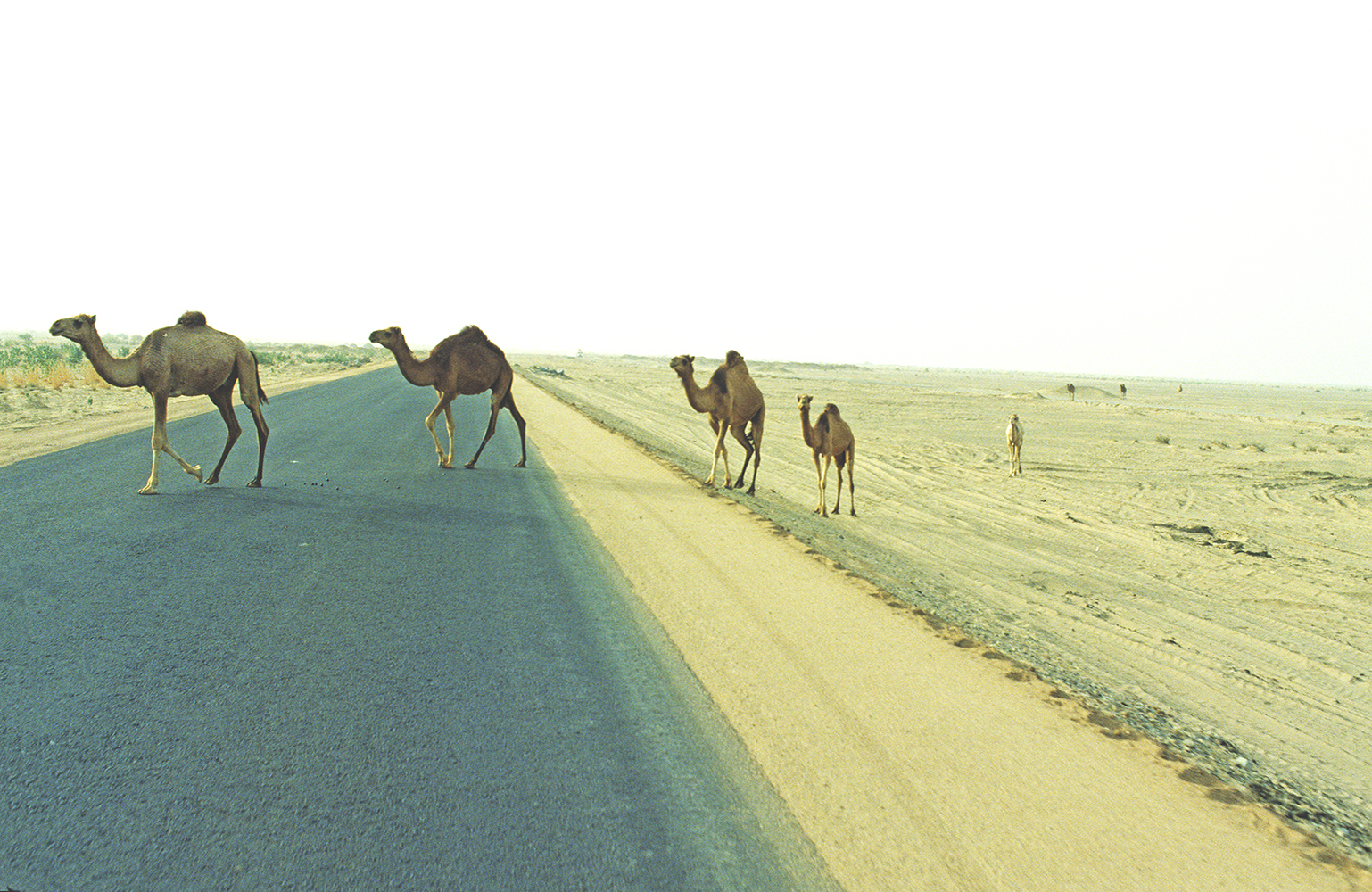
17 - Dromedari attraversano la nuova strada |
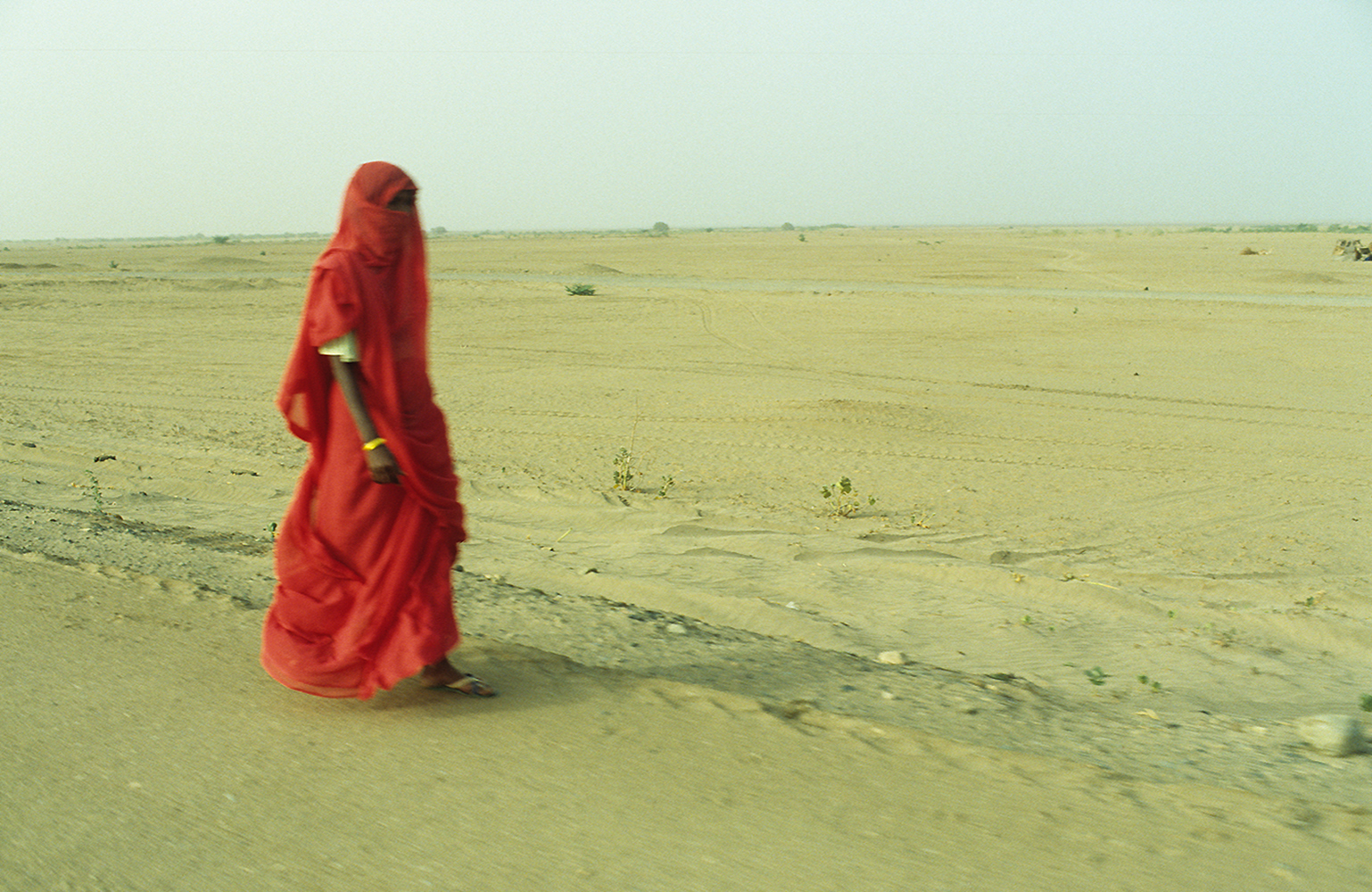
18 - Donna in costume tradizionale |
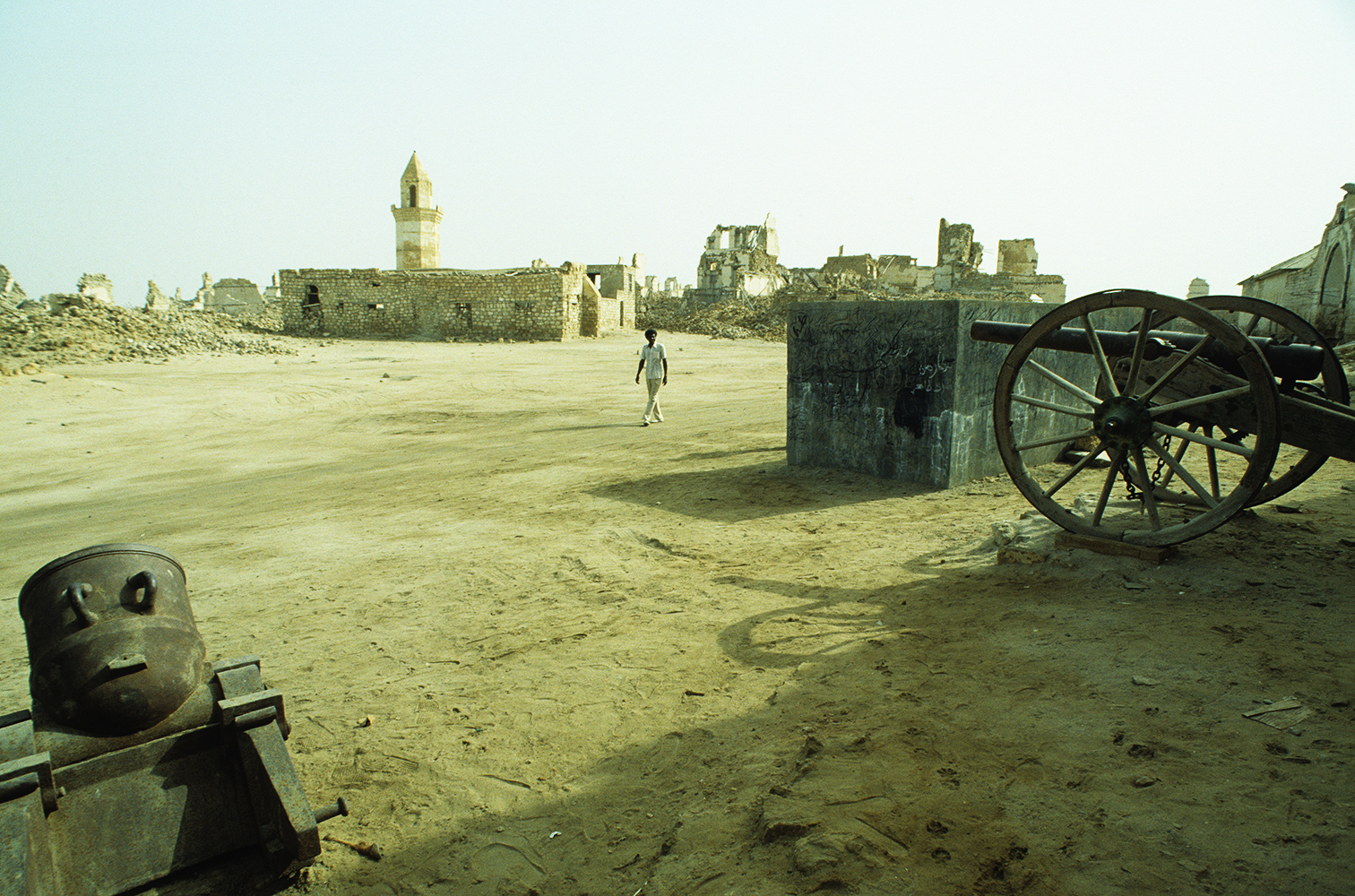
19 - Suakin nel 1992 |
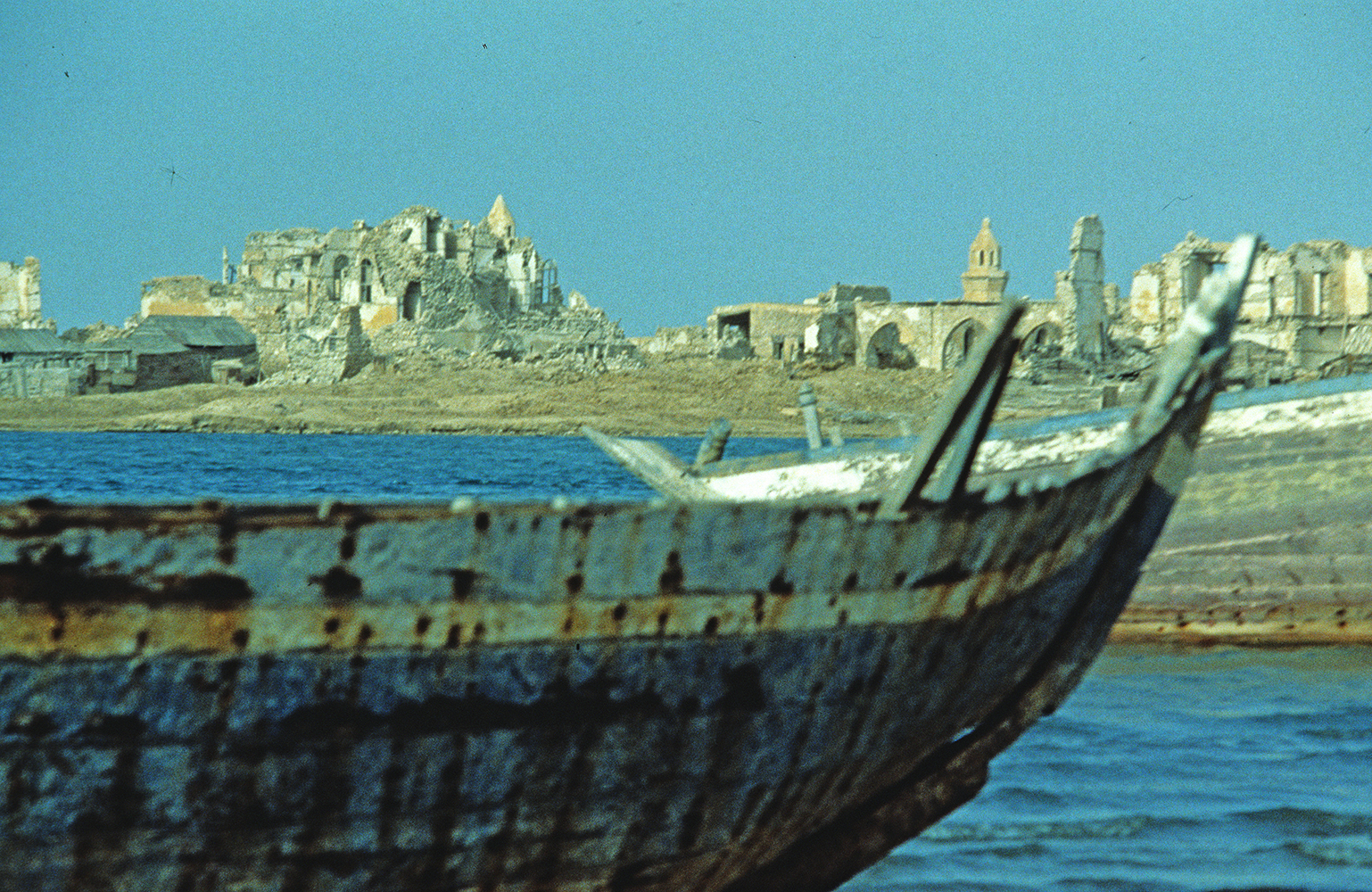
20 - Suakin, il porto abbandonato |
It is surrounded by shacks and poverty. Of its walls, once built from coral stone now turned grey and dusty, little remains beyond heaps of rubble. From a distance, a few spires create an illusion of grandeur, but they are merely skeletons destined soon to disappear, aided in their inevitable collapse by local inhabitants who strip away the few remaining timber supports to build their own huts. Along the shore of the great abandoned harbour, now unusable, blocked by the coral barriers that have gradually risen within it, lie the unfinished hulls of several boats, vessels that no one will ever complete.
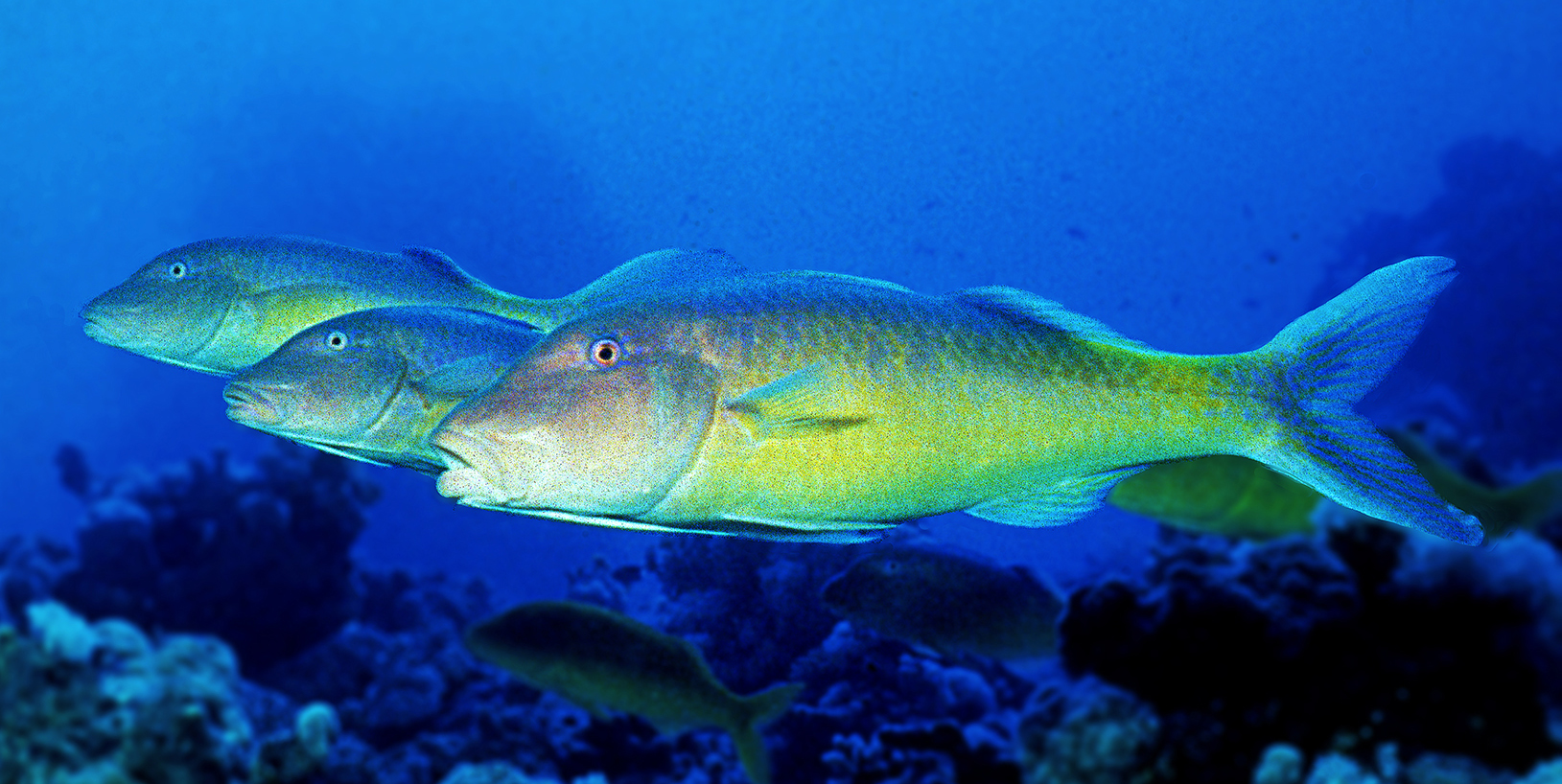
21 - Triglie tropicali Parupeneus cyclostomus
____________