Orcas, beautiful and fearsome queens of the cold seas, once didn’t even know how to swim. Together with their fellow dolphins, whales, sperm whales, and various cetaceans, they would simply roam the shorelines in search of elusive preys. Back then, such cetaceans were all much smaller than today and had feet instead of fins, but their eyesight was excellent, and when they looked into the water, they saw plenty of fatty, delicious fish just waiting to be caught. So, they decided to learn how to swim and dive in order to feast on them. It took a while, perhaps twenty or thirty million years, but they became very skilled, they discovered how pleasant life in the water was and never left it again. Humans, on the other hand, were impatient. As soon as they emerged from the uncivilized days of the cudgel, they already wanted to dive underwater and grab everything they could. In just a few thousand years, they went from pathetic early attempts to caissons and then to hardhat diver helmets. But in this far too short time, they did not evolve and remained completely land-based creatures, utterly unfit to go beyond the surface of seas and lakes. Impatience has its price, and humans began to suffer countless problems, so the great minds of the time got to work. The first to understand that the trouble came from resurfacing were Watelle and Poll, who, in 1847, referring to caisson workers, coined the famous slogan: “you pay when you come out.” A brilliant discovery, but of little comfort to the many civilian and military workers plagued by ailments, nor was it any comfort to know that their painful bent or crouched posture (also simply called the bend) would go on to define the symptoms of Type 1 Decompression Sickness (DCS)
A BIT OF HISTORY - Many tried to find the causes and remedies. Finally, in 1878, Paul Bert demonstrated the presence of gas bubbles in circulation and in tissues after resurfacing. Then, far ahead of other researchers, he suggested the use of pure oxygen for decompression and for the treatment of decompression-related illnesses. At that point, the knowledge was available to develop valid ascent rules, but another thirty years would pass before the Scotsman John Scott Haldane invented the decompression tables. He based them on a 2:1 supersaturation ratio and on a few fundamental concepts: gas exchange is governed by Henry’s Law; the absorption of a gas follows an exponential curve; and when gases are in equilibrium, the body is in a state of saturation.
HENRY’S LAW - “The amount of gas that dissolves in a liquid is directly proportional to the pressure of the gas on the liquid and the duration of that pressure; it also depends on the type of gas and liquid, and decreases as temperature increases.”
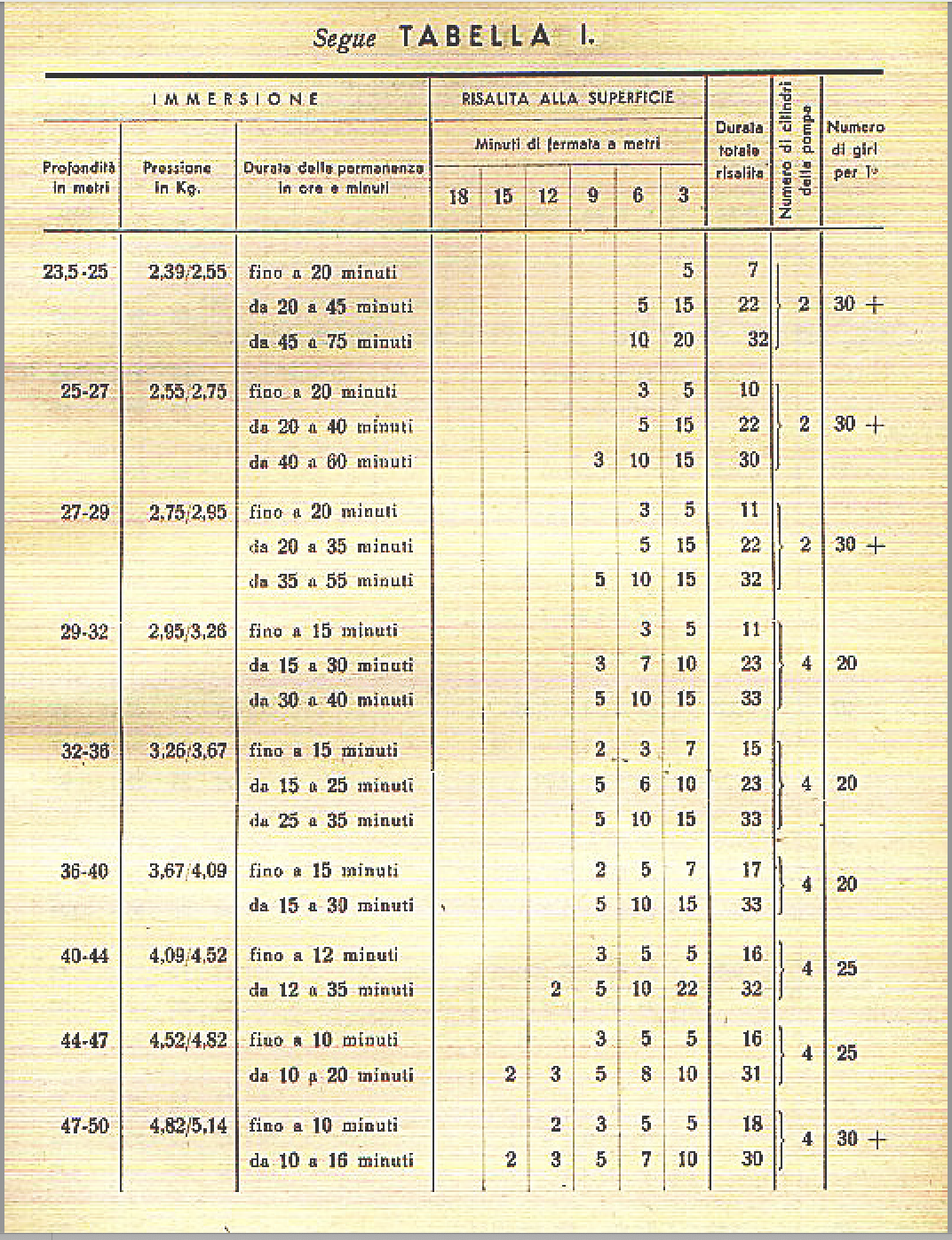
Haldane calculated decompression tables in 1907 for the British Navy and in 1915 for the U.S. Navy, which published them the following year in its weighty Diving Manual. Naturally, these tables were designed for helmet divers, as recreational scuba diving did not yet exist. The ones venturing underwater with helmets and heavy weighted boots were rugged workers, for whom simple and immediately understandable rules were needed. The prescribed ascent rate of 7 meters per minute was therefore set for essentially practical reasons: ascending faster would have risked the diver being unable to vent air fast enough, resulting in a catastrophic uncontrolled ascent ("ballooning"). This 7 m/min figure is worth remembering, as it marks the beginning of the ongoing "dance of ascent rates" that, as we’ll see, continues to this day. After Haldane, a long list of more or less well-known researchers continued experimenting in various ways. Theories multiplied, but results and safety changed little in the following years. In 1930, the British Royal Navy issued its own tables, quite similar to the original ones but with the ascent rate increased to about 10 meters per minute (3 minutes from -30 to -3 meters). We can see them here in direct comparison with Haldane’s, retrieved from the scholarly historical library of Fabio Vitale.
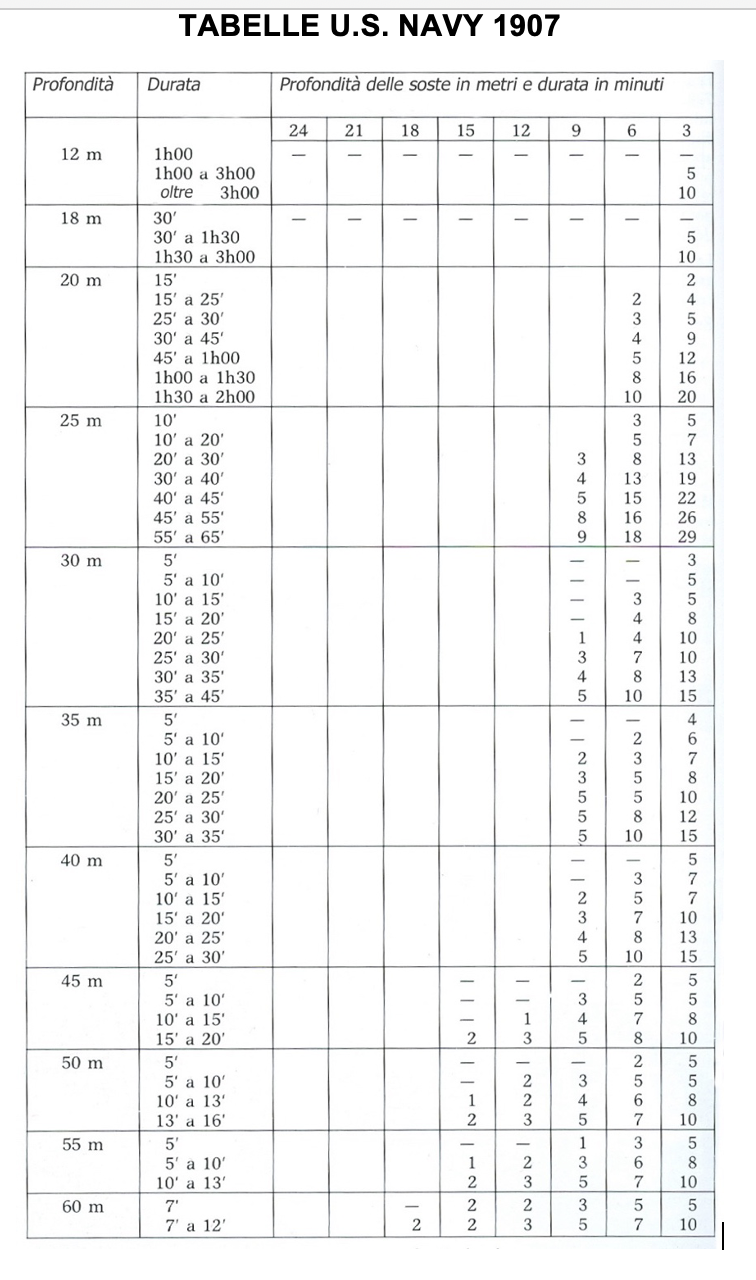
TABELLE U,S. NAVY 1916
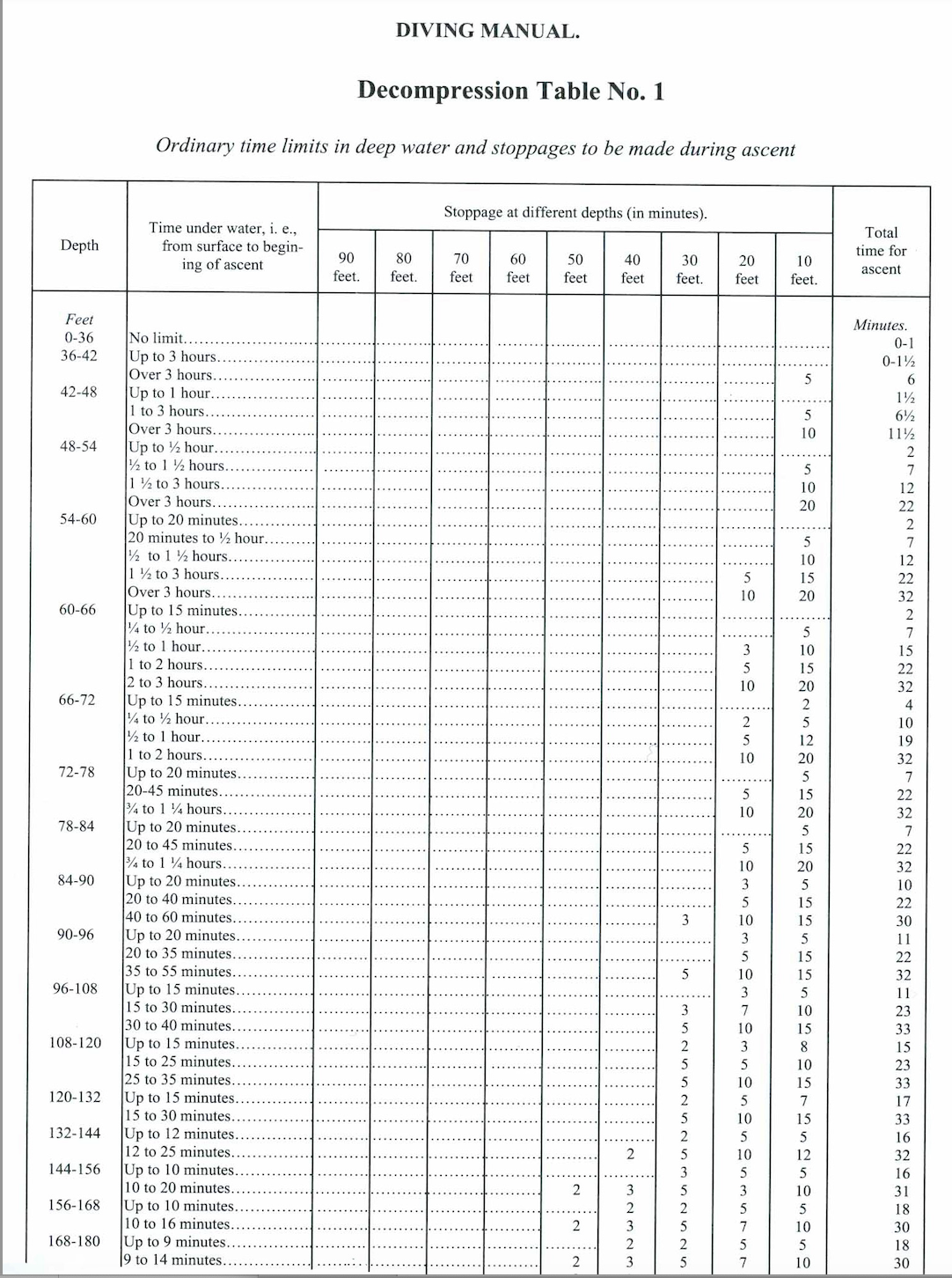
TABELLE PER PALOMBARI MARINA BRITANNICA 1930
Things began to change during World War II, when the U.S. Navy increased the ascent rate for its deep-sea divers to as much as 30 meters per minute, justified by wartime necessities. The scientific community voiced countless criticisms, and eventually the U.S. military gave in, settling on 18 meters per minute. Meanwhile, the war became a major source of innovation. The ill-fated Georges Commeinhes developed the GC 42 automatic regulator, which was quickly adopted by the French Navy, but he was killed during the Normandy landings and soon forgotten. Jacques Cousteau took advantage of the opportunity; his CG 45, which later became the famous Mistral, achieved the worldwide success we all know about. Thus began the era of recreational diving, although for the time being, divers were still subject to the rules designed for helmet divers. Or rather, most of them followed only fragments of those rules, learned second-hand. They were almost always self-taught, and no one carried decompression tables with them. Finally, in the early 1960s, Workman, in collaboration with the U.S. Navy, introduced the concept of "M-values", the maximum allowable levels of overpressure for individual tissue compartments. It was a significant scientific breakthrough, though it would still take quite some time before it led to tangible results.
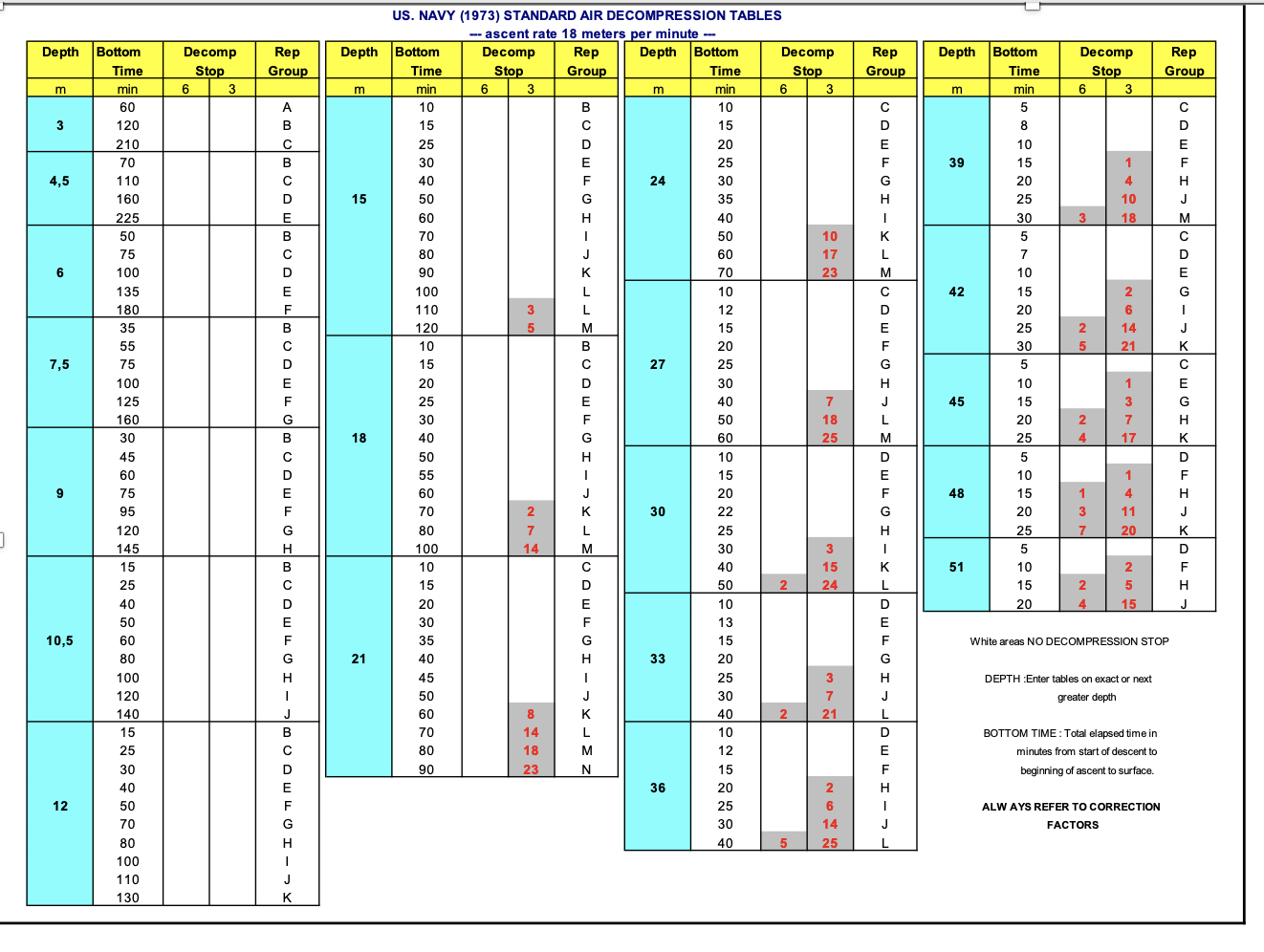
TABLES AND MORE TABLES - In that brilliant decade of adventure and innovation, certified divers began to grow in number. And they felt like gods compared to those who still dove in a primitive way, because they knew everything about dive theory and they used decompression tables. There were plenty of tables in circulation: the 1956 U.S. Navy tables, the British Navy and BSAC tables, the very interesting ones by the Italian Albano, the French tables from GERS, the Navy, COMEX, and several others. Taking the classic comparison of a 30-minute dive at 30 meters, some tables allowed it without deco stops, others required a stop at 3 meters, and ascent rates varied up to 20 m/min. However, diving medicine experts didn’t all agree: in Europe especially, a slower approach was preferred, and many adopted an ascent rate of 10 m/min. This meant leaving the bottom while being overtaken by the smallest bubbles, requiring divers to adjust their reference points every few meters, since small bubbles tend to grow quickly. A real challenge, even for the most disciplined divers used to ascending with one eye on the depth gauge and the other on the watch. The arrival of the analogue decompression meter by SOS, developed by De Santis-Alinari, meanwhile freed those who fully trusted it from the obligation of calculating each dive as a square profile and of checking bottom times and decompression stops with a watch. Still, ascent was always done at the pace of the bubbles. Then, in 1973, the U.S. Navy published a set of brand-new, ultra-modern tables, which seemed absolutely reliable and were almost universally adopted. We divers were thrilled: the tables firmly reaffirmed the ascent rate of 18 m/min and allowed us to follow slightly faster-rising bubbles. A brief moment of bliss. Soon, however, courageous doctors dared to completely disagree with the 18 meters per minute recommended across the Atlantic. They argued, and proved, that such speeds were a main contributing factor to Type II DCS, the neurological kind. They convinced us to readjust to 9–10 m/min, which soothed our consciences and led to a drop in the rate of serious accidents. But of course, there were always the nitpickers ready to ruin our peace of mind. Soon after, new objections began to emerge. Some pointed out that, for example, taking almost two extra minutes to ascend from -40 meters to the -3-meter stop results in absorbing nitrogen for two more minutes than what the tables themselves had accounted for. This sparked an uproar, and in the years that followed, three main schools of thought developed. The softest approach suggested adding the time "saved" during a faster ascent to the bottom time and entering the tables with the resulting total. The strictest approach proposed a complex proportional recalculation of the original tables, a revised version which was published in Italy in the May/June 1987 issue of Sport e Medicina, but the results were so severe that they gained little traction. The most common approach was based on the well-known principle of “I don’t give a damn,” so beloved by sceptics in general and divers in particular. For them, ascending at 10 m/min was perfectly fine without changing any table data.
TABELLE U.S. NAVY 1973
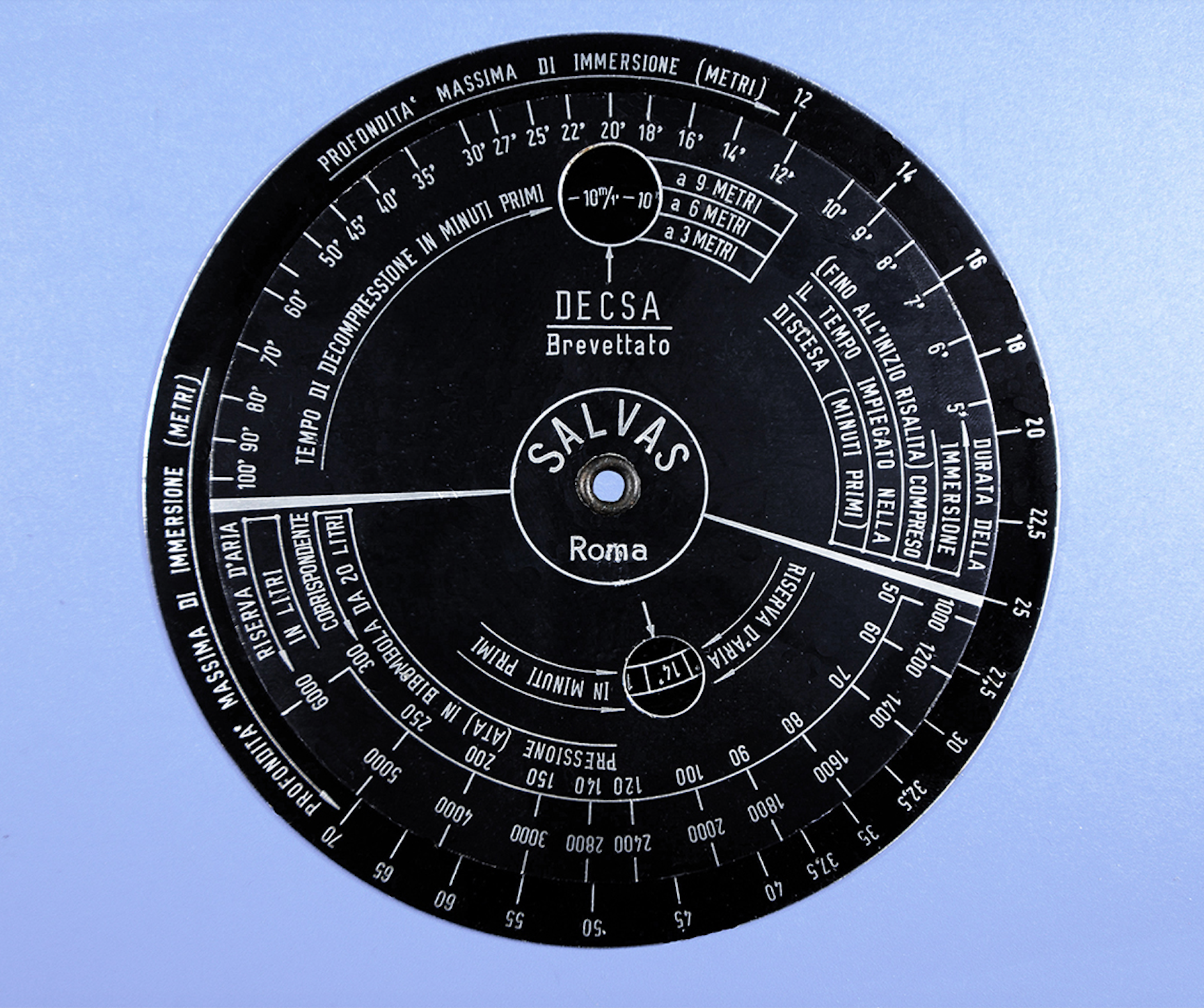
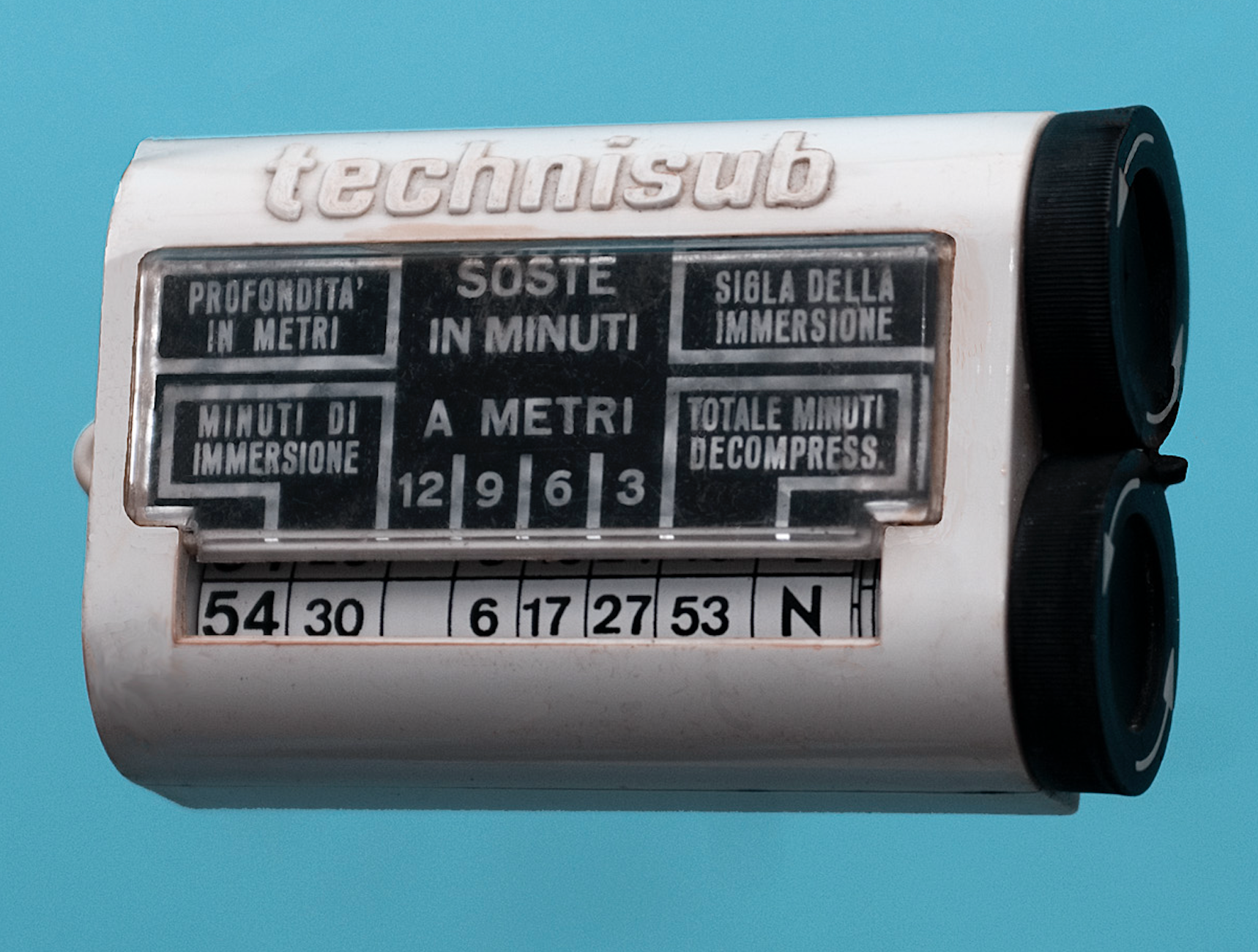
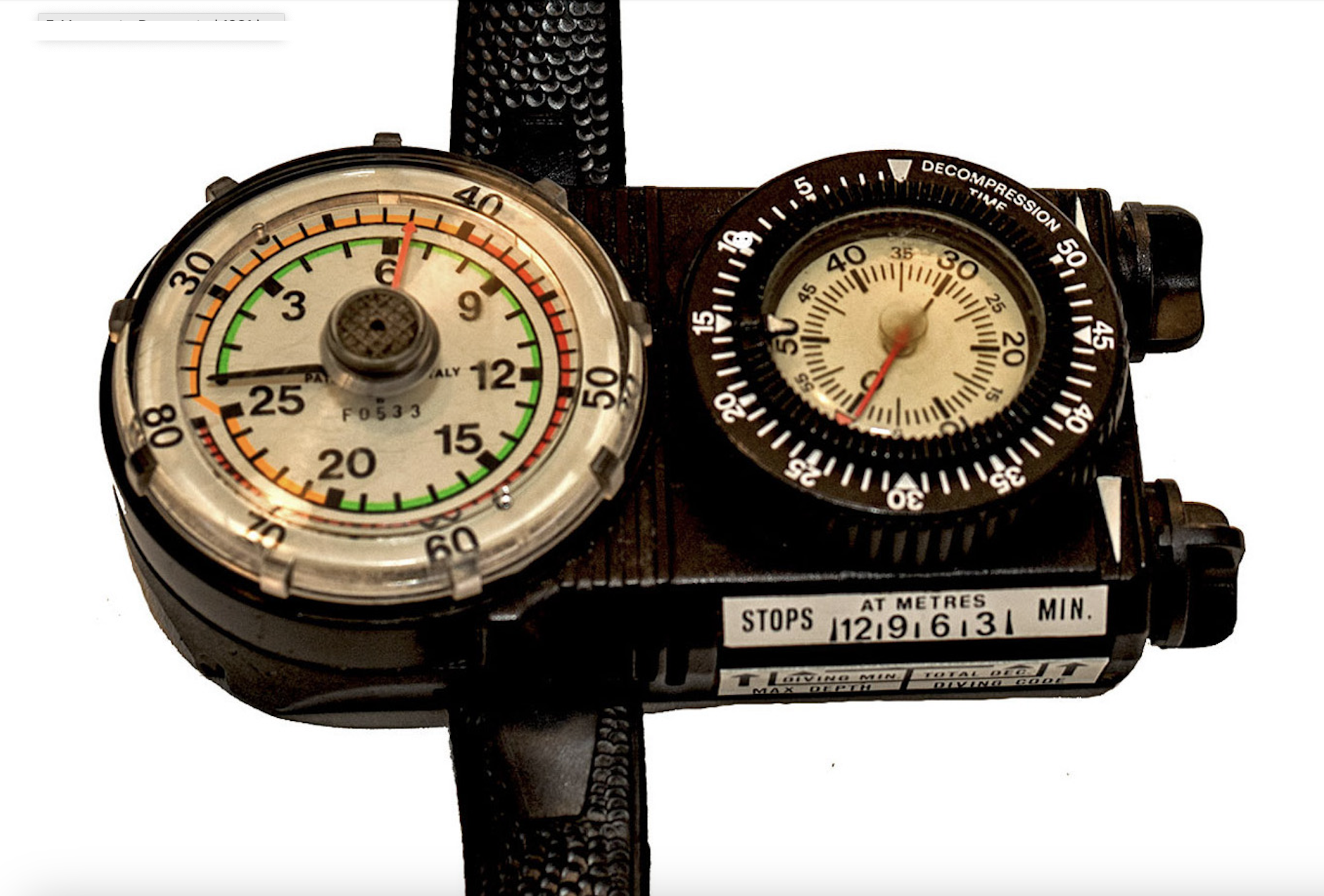
BÜLHMAN AND COMPUTERS - This variability of interpretations would continue indefinitely well into the mid-1980s—the years of change, marked by major developments. One of these was educational: PADI had just landed in Italy and was stirring up controversy on two fronts. The first concerned its revolutionary approach to instruction compared to the traditional federal method, which doesn’t concern us here. The second involved dive tables and reignited the debate on ascent rates. PADI meant America, and therefore the U.S. Navy, which never budged an inch from its diktats. Thus, the two camps of 18 and 10 meters per minute reformed, depending on the certification agency of the diver, much to the dismay of dive centres - now rapidly expanding - sometimes forced to split their clients during dives according to their respective protocols. The other novelty was technical: dive computers had arrived. At the time, only two were available: the massive Deco Brain Hans Hass, a Swiss model built in Liechtenstein by Divetronic, and the permissive Orca, made in the USA. They cost a fortune (950,000 lire for the Deco Brain in 1983), and few people trusted them. In general, divers continued to rely on tables, which were now available in various forms and versions. In addition to the classic rectangular or square structures, underwater options also included circular tables with movable sectors like those by Salvas or scroll types like the handy slide-rule calculator by Technisub, up to the most complete analogue anti-computer device - the Decocontrol by Mega Sport, composed of a depth gauge, timer, slide-rule calculator, and tables for repetitive dives. Quite a difference from the small Plexiglas table by Aer Sub (Cressi), equipped with a cursor, which in 1969 I left with a professional diver in Puglia who was entirely ignorant of decompression rules. He followed a method common to many: ascending flat if he hadn't gone beyond 30 meters and stopping for a bit under the boat to suck the last drops of air from his twin tanks at 150 bar. But if he had gone down to 40 meters or more, or if he was on his second dive of the day, he would ascend as soon as he pulled the reserve lever (the valve systems at the time had a mechanical reserve device) and would use it all up at -3 meters.
The spread of electronic devices began in 1986 with the small Swedish Suunto, little more than a table reader, soon followed by the first Aladin. The Aladin used an algorithm based on the theories and calculations of the Swiss scientist Bühlmann, who had been working on air and gas mixture tables since 1960 and was now finally becoming familiar even to non-experts. Like the old analogue decompression meter, blamed for numerous accidents, though most were certainly caused by users’ carelessness and neglect, the computer calculated multilevel and repetitive dives, functioned as a watch and depth gauge, and issued alerts if its instructions weren’t followed. It had enough features to fascinate divers, and over time, tables began to fade into the background. Once the diver certification course was over, few people picked up the tables again, despite recommendations to always keep them in the BCD pocket just in case. Yet, computer software is derived from the various tables - or vice versa, depending on your perspective - amplifying both their strengths and their flaws. The strengths lie in their ability to be easily updated based on the latest scientific findings; the flaws include still-volatile ascent rates and occasional exaggerations in the name of safety at all costs. So much so that one model was jokingly dubbed a "shower computer," among other similar names, due to its tendency to keep divers just a few minutes below the surface. In any case, bottom times have been shortened across the board, and going into decompression or diving beyond the fabled 40 meters is now considered a mortal sin. Returning to the previous example, no one today would allow 30 minutes at 30 meters without decompression, nor are people satisfied with the brief stop popularized by the old saying “30 minutes at 30 meters, 3 minutes at 3 meters.” In fact, for that time/depth ratio, the 1986 Bühlmann tables prescribe 2 minutes at -6 meters and 7 minutes at -3. If we go back and look at the 1916 U.S. Navy tables for working helmet divers and scroll down to the 96–108 feet range, we realize just how little has actually changed!
Regarding ascent rates, in Europe divers preferably ascend at 10 m/min, while in America the 18 m/min standard persists, and dive computers add to the confusion on this topic. Manuals and guidebooks contain phrases such as: “ascend at a rate of 12 m/min, increasing to 18 m/min only if necessary” – “ascent rate must be less than 10 meters per minute” – “ascent rate is 21 m/min between -30 and -15 meters of depth; 15 m/min from -15 meters to the surface.” The reason for these apparent inconsistencies lies in the different choices made by the software developers - some advocating for a constant ascent rate, others preferring variable rates depending on depth and type of dive. In the 1990s, disagreement was total. For example, the Dive Rite Bridge allowed ascents between 9 and 18 m/min; the DC 12, Trac, and Edi Scubapro between 15 and 27 m/min; the Cochran Commander 6/18; the Mares Guardian 10/18; while the Aladin Pro, AirX, and Sport recommended 7/20. So – watch out! – the Aladins prescribe for the final part of the ascent exactly the same rate that Haldane indicated in 1907 for helmet divers!
PROGRESS – A groundbreaking shift was announced by the U.S. Navy in 1993 when it previewed its latest dive tables, based on an entirely new principle. Until then, researchers had relied either on the theory of dissolved gas or that of free-phase gas. Now, however, a probabilistic theory was introduced, one that evaluates the risk of each dive profile by comparing it with previously collected data. These new tables, while still declared provisional, were said by the presenters to serve as the foundation for many upcoming dive computer software programs. Promising premises and pledges - except that, after much initial discussion, the whole matter quickly faded into obscurity. In fact, by 2008, yet another new set of U.S. Navy tables appeared, returning to earlier models and theories, though with some interesting modifications. The -3 meter stops were abolished; for a 30-minute/30-meter dive, a 3-minute stop at 6 meters is required; descent is expected at a speed of 23 m/min; and for ascent - and here lies the real novelty - the Americans finally adopted the 10 m/min ascent rate. Similar parameters are now used for dive computers.
TABELLE U.S. NAVY 2008

Shocking developments? Not really. In the U.S. as in Europe, comparisons with the past show that these were simply further small adjustments in the ongoing step-by-step pursuit of ever-greater diving safety. It's a process still underway, with researchers fully aware that total safety might only be achieved when we have mini devices interfaced directly with our bodies, as Professor Data foresaw many years ago. Devices capable of performing calculations based on real, subjective data, rather than on current theoretical parameters derived from thousands of different situations and different bodies. For now, we can be content knowing
_______________