PART 1 - THE ITALIANS
The missions of the frogmen (more commonly known as commandos) of the various military navies, and the actions they performed, have been a powerful attraction for many cinema producers and directors who have attempted to tell the various events of the Second World War through dedicated movies. This powerful appeal derives from the spectacular nature of these actions, which, often with the limited and inexpensive resources used, especially when compared to those deployed by the navies of the countries involved in the conflict, were able to achieve sensational results, sometimes challenging the military balance of power realized up to that point. What they lacked in terms of powerful equipment and military organization, was often compensated by exceptional qualities of courage, tenacity, self-sacrifice, and heroism. All these qualities aroused admiration, not only among the organizations and military leaders of the time and made a strong attraction for the cinema industry. She repeatedly told these stories through numerous cinema movies, which were realized especially in the period from the early 1950s to the late 1960s.
Of course, the actual events were sometimes fictionalized or even modified and invented from a historical perspective, mostly to make them aligned with the movie's subject and to try to satisfy the target audience. However, they remained spectacular and emotionally impactful.
Several years after the end of the war, during the shooting of the various movies dedicated to these actions, it was not always possible to use the original equipment of the time. Most often, this was because it was no longer available (or completely destroyed during the war or discontinued) or because the movie's subject featured a completely fictional event not corresponding to the actual equipment available during that particular military action.
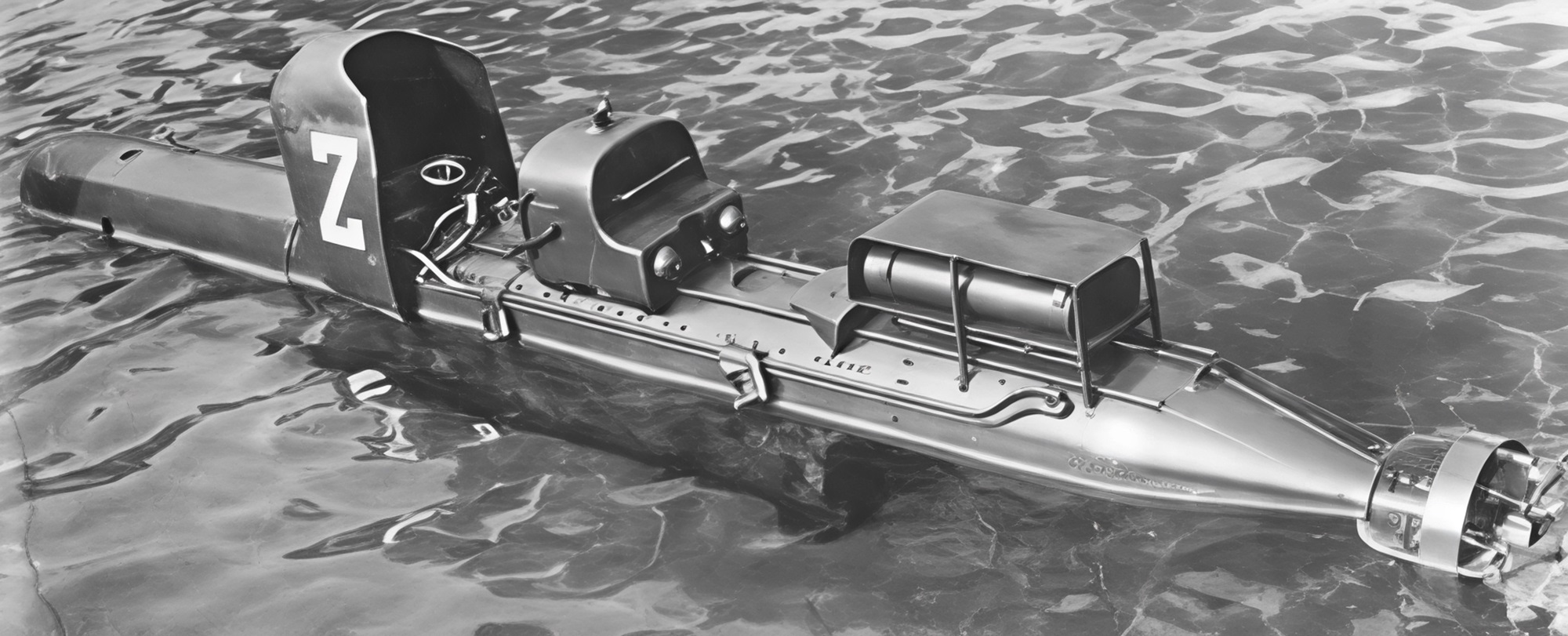
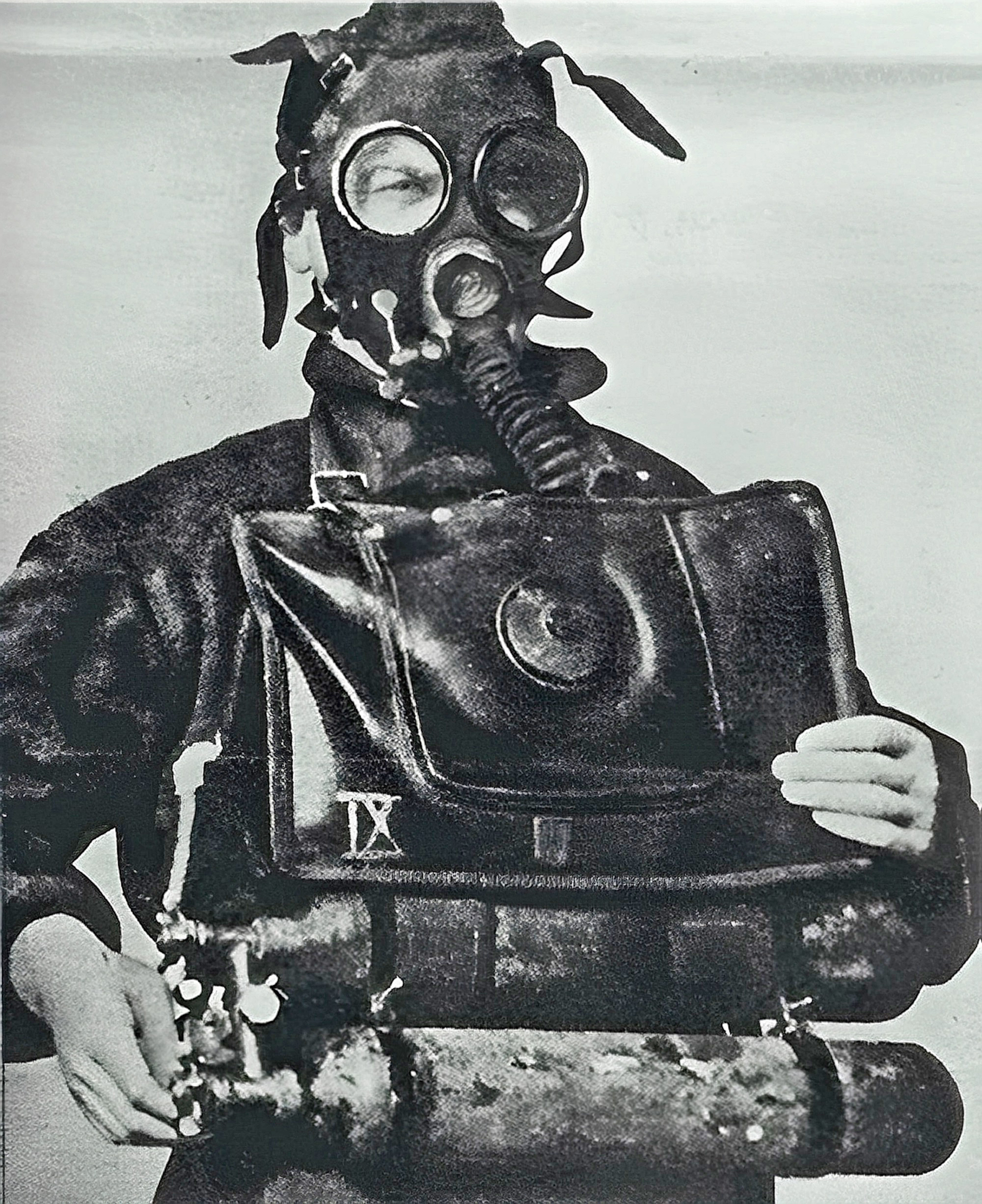
Undoubtedly, the nation that had contributed first to the development of the frogman specialty even before the beginning of the Second World War was Italy which, as early as 1935, had begun the design and testing of the Siluro a Lenta Corsa (SLC) (Slow Motion Torpedo) better known as the “maiale” (pig) (see Fig. 1), and of all the underwater equipment that would later be used by its operators (mainly drysuits, oxygen rebreathers, watches, compasses, depth gauges) as shown in Figs. 2, 3 and 4.
 |
 |
|
Fig. 1 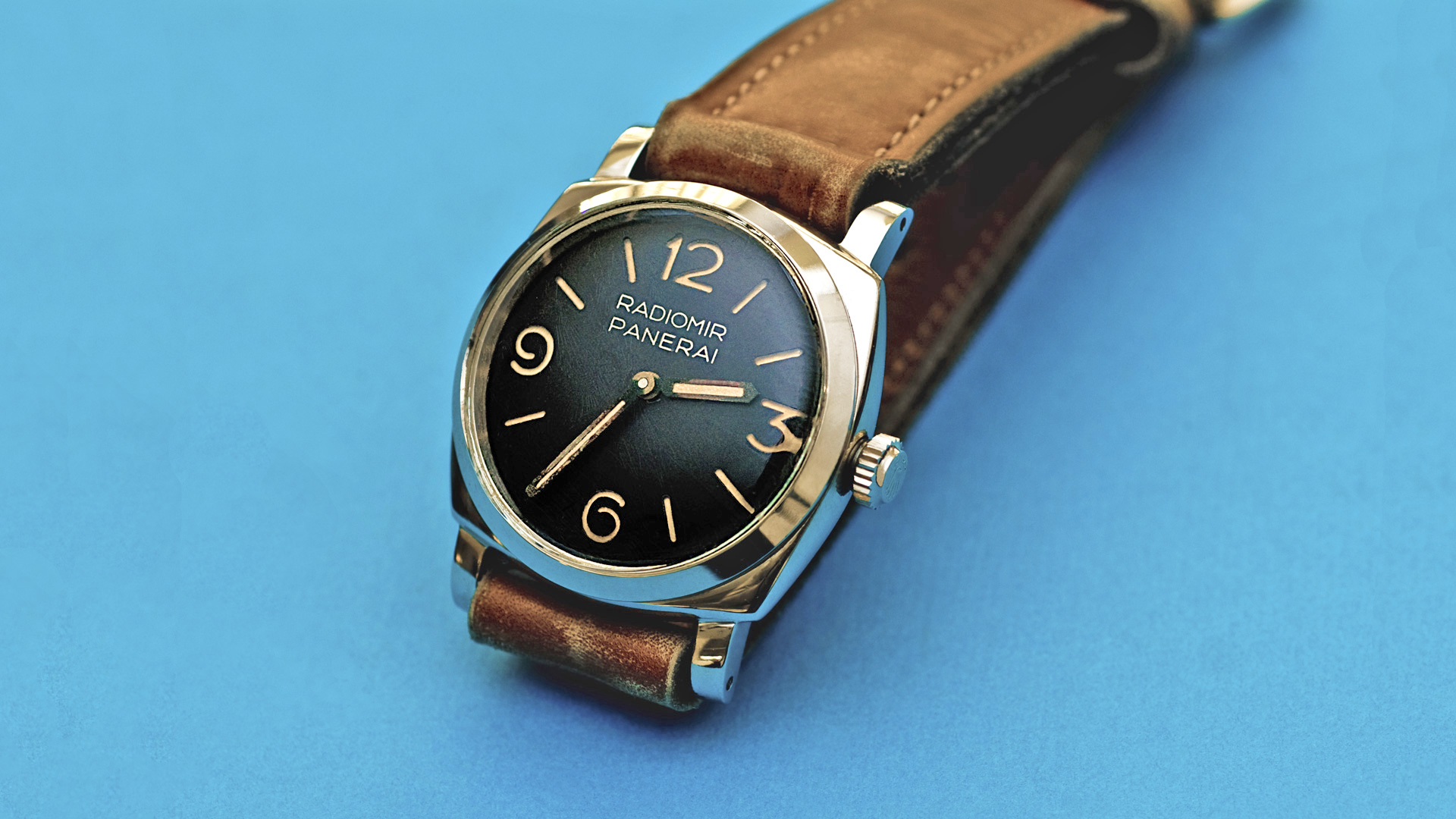 |
Fig. 2 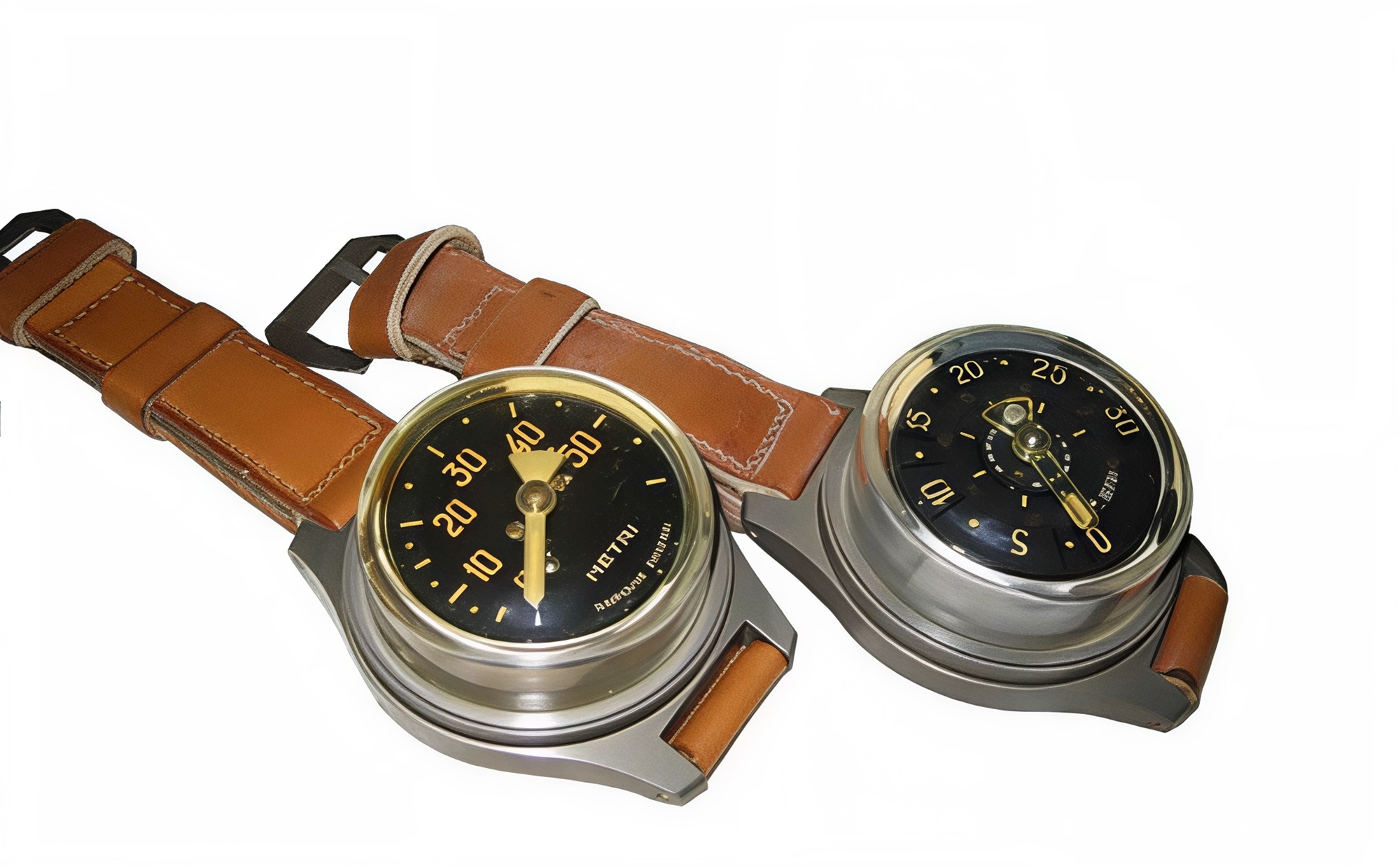 |
Fig. 3 Fig. 4
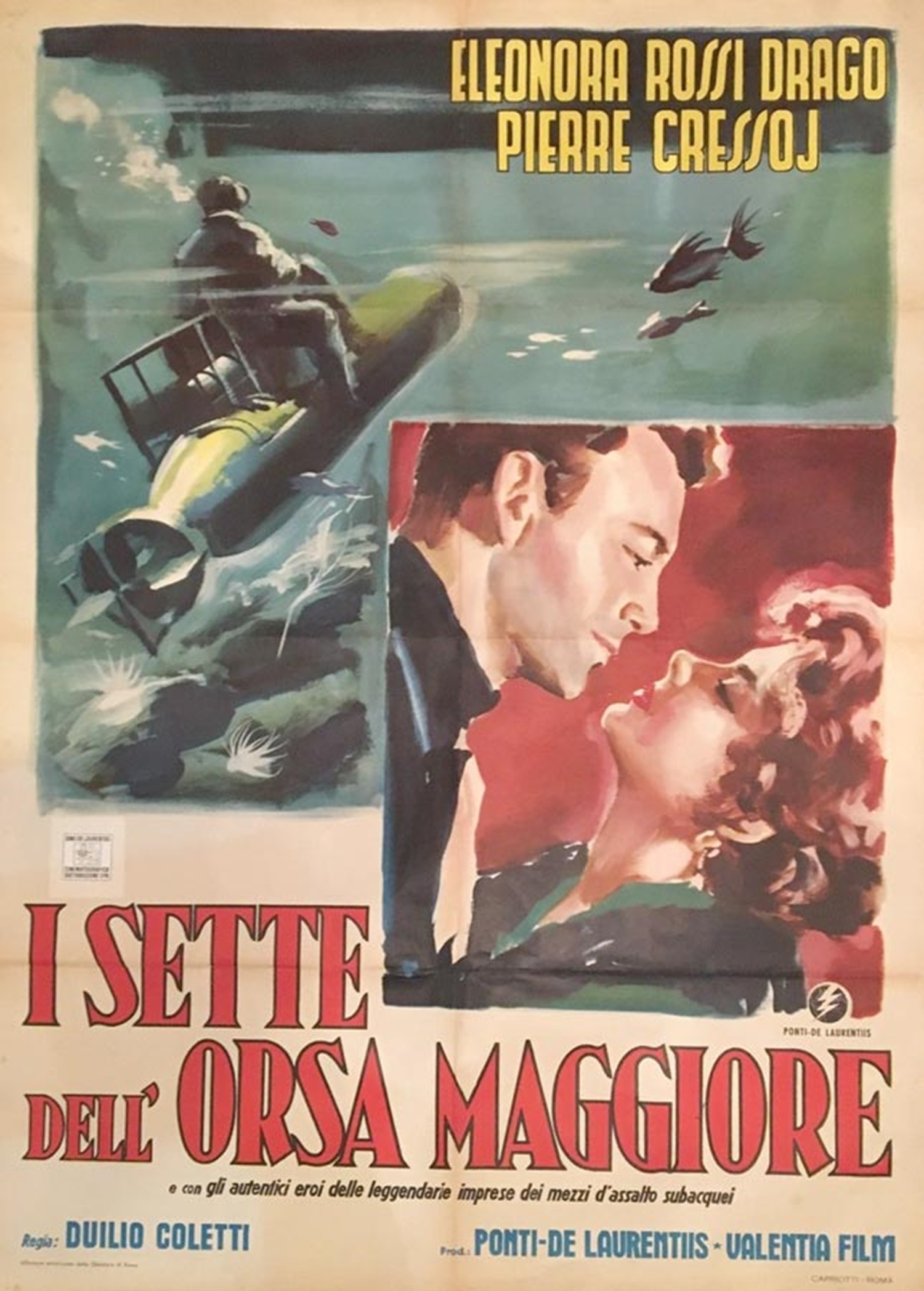
The first movie dedicated to the actions of the Italian frogmen during the Second World War was “I Sette dell’Orsa Maggiore” (see Fig. 5), later distributed internationally with the title “Hell Raiders of the Deep” (see Fig. 6).
 |
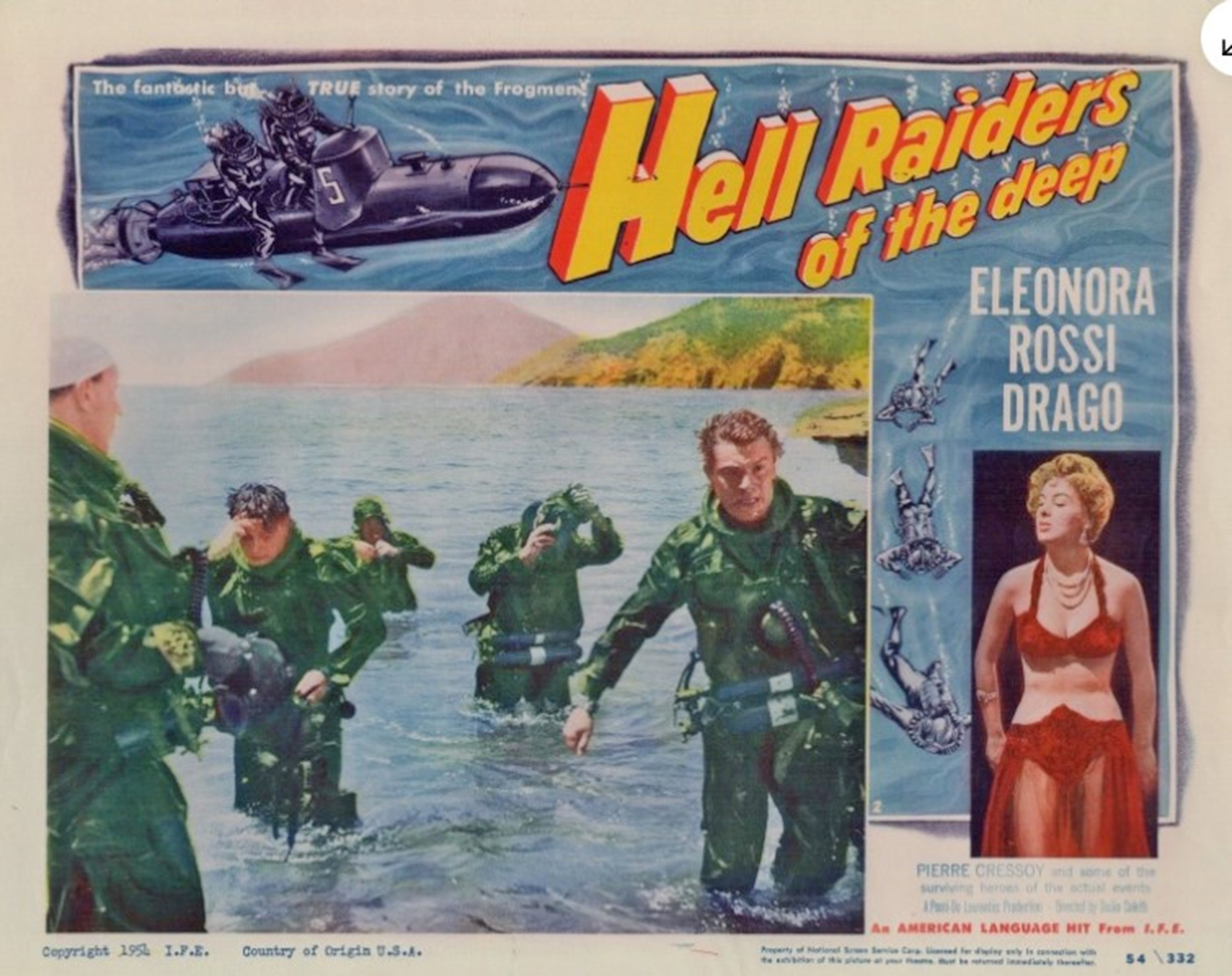 |
Fig. 5 Fig. 6
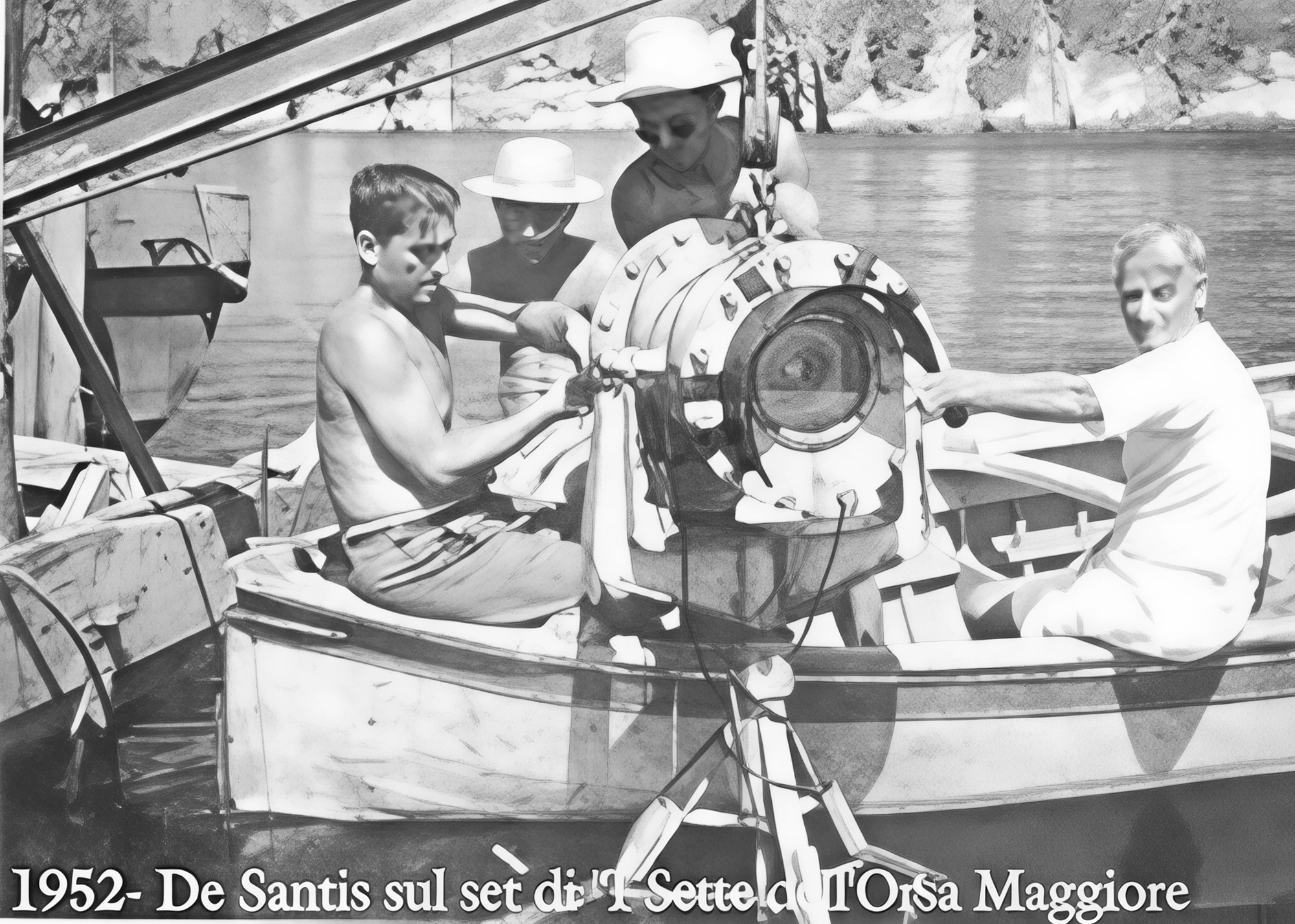
Produced in 1953 by Carlo Ponti and Luigi De Laurentis, directed by Duilio Coletti, and featuring Eleonora Rossi Drago (Marion, an Italian spy operating in Algeciras), Pierre Cressoy (the commander of the frogmen group assigned to the Gibraltar missions), and Tino Carraro (the commander of the Italian Navy commandos team), this movie counted on the participation of some of the real frogmen involved in the Navy's missions during the war, such as Girolamo Manisco, Luigi Ferraro, Giovanni Magello, Giovanni Tadini, Giorgio Spaccarelli, and Colombo Pamolli. The underwater shooting was assigned to Victor De Sanctis, a pioneer of underwater cinematography (see Fig. 7). The movie's subject and the various settings are quite realistic, thanks to the direct contribution of the former commandos mentioned above, even if some actions do not correspond exactly to historical reality. The initial part of the movie is dedicated to the training phase of the frogmen which took place at the mouth of the Serchio river, north of Livorno, on the estate of the Salviati dukes (see Fig. 8), sheltered from undesired eyes.
 |
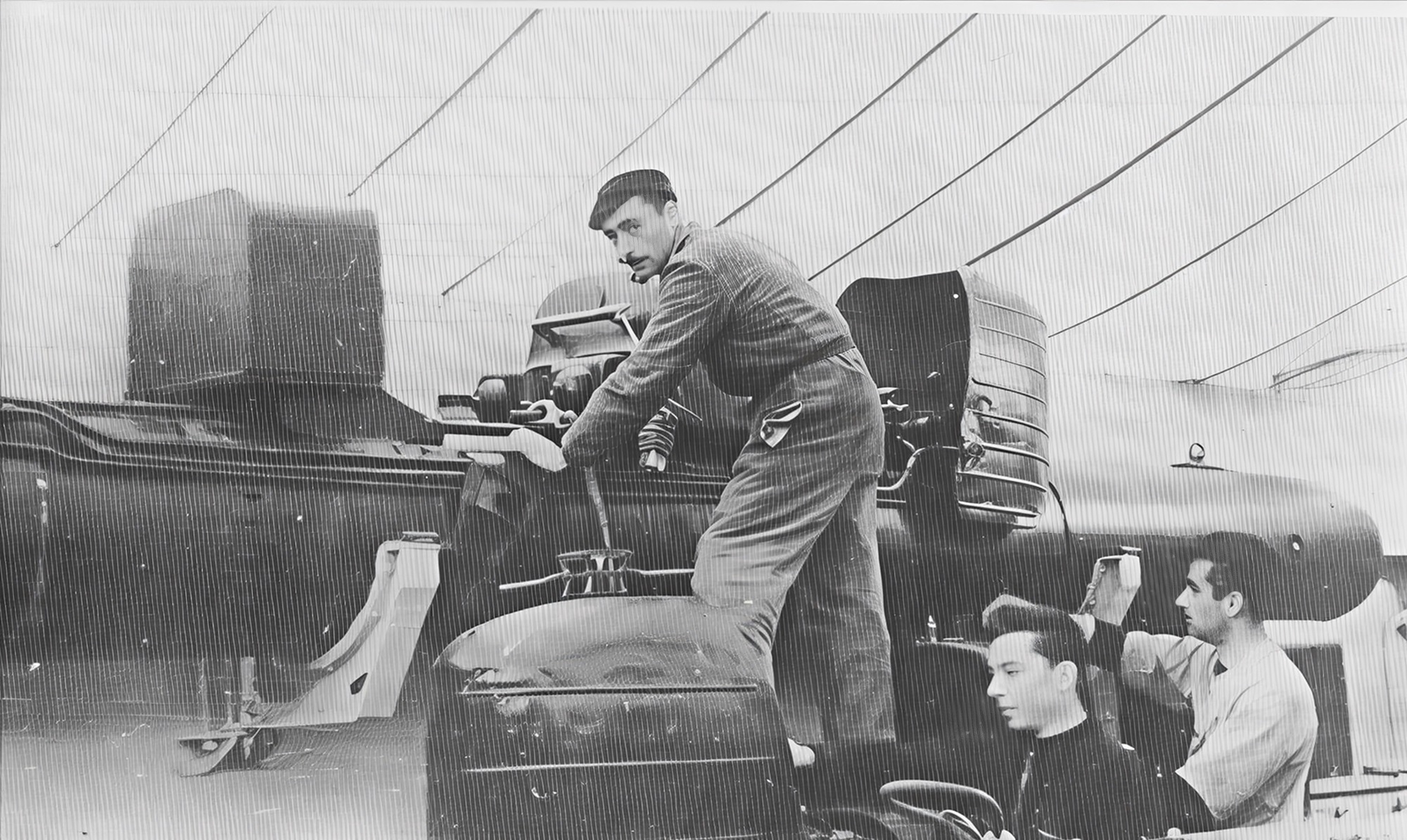 |
Fig. 7 Fig. 8
Here was located the training base for the SLC operators who, in addition to piloting the "pigs", also practiced all other possible operational scenarios, including long marches on the seabed carrying explosive barrels on their backs (see Fig. 9) or overcoming net barriers placed to protect ports and enemy vessels (see Fig. 10).
 |
|
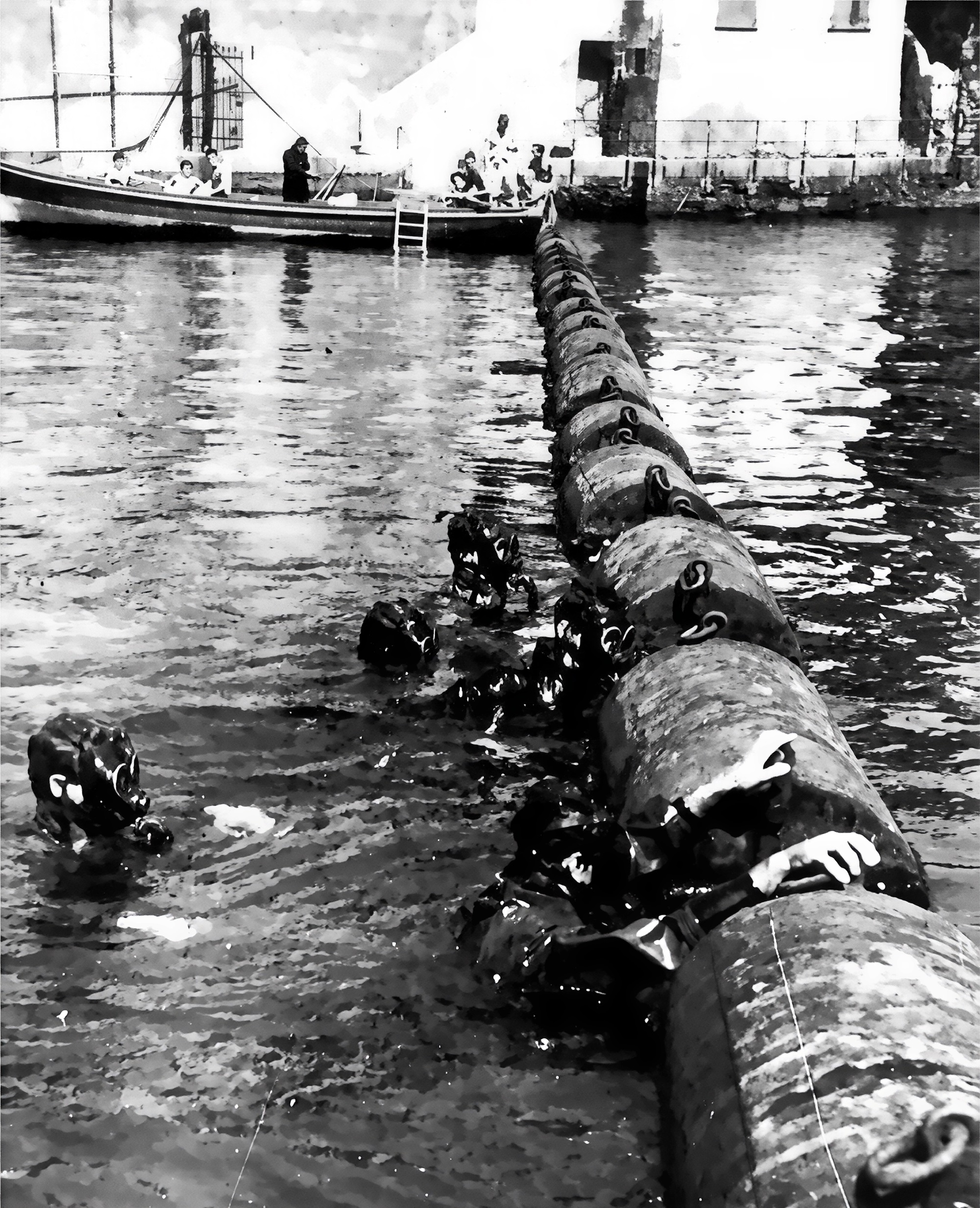
Fig. 9 Fig. 10
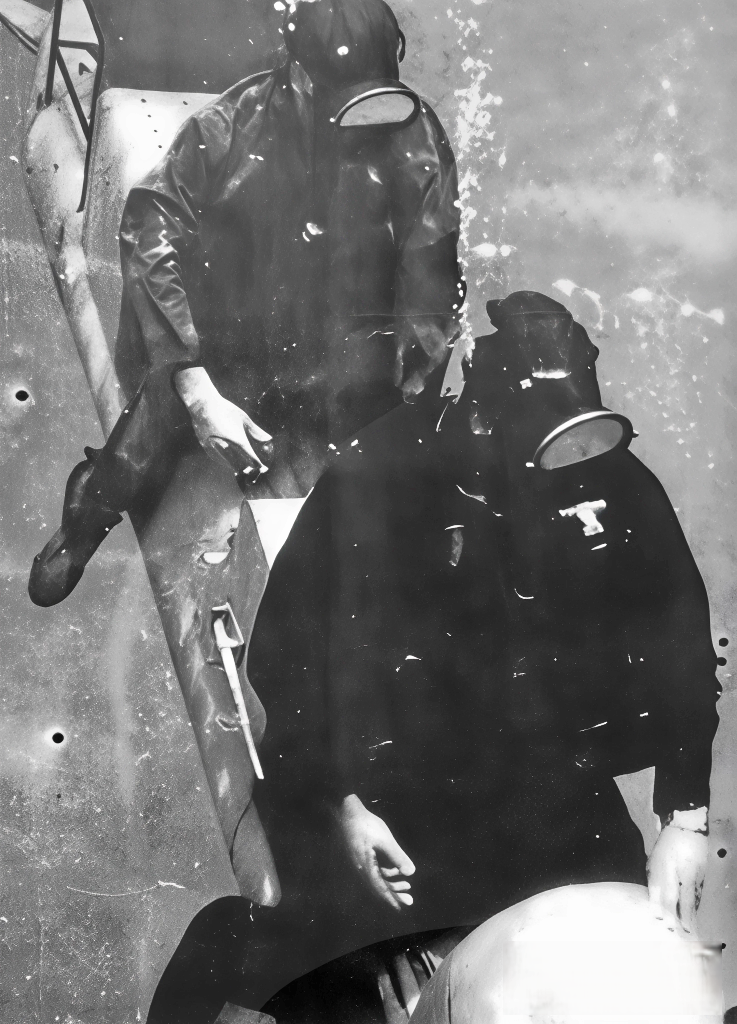
In the initial underwater shooting of the movie, the marchers on the seabed are shown without the explosive barrels and without the weighted shoes and wool-lined hoods, which were part of their standard equipment, all components shown in Fig. 9 above. Since they could not have the Belloni dry suits and the original model 49/bis of the oxygen rebreather produced by IAC (Industria Articoli Caoutchouc) of Tivoli (a company later acquired by Pirelli in 1938), which were the materials actually used during the war actions, the dry suit (article 752) and the “Universal” model oxygen rebreather (article 971) produced by Salvas from Rome were used as an alternative (see Figs. 11, 12 and 13). This equipment was in fact very similar to the original ones (the main modification consisted of the Salvas single-glass full-face mask that replaced the IAC binocular one) and remained in production throughout the 1950s and well into the 1960s, having also been adopted by the Italian Navy. A mannequin equipped with this Salvas equipment (although with a single-tank oxygen rebreather and not the double-tank version which was the standard configuration used by the "pigs" operators) is on display at the National Museum of Underwater Activities in Marina di Ravenna (see Fig. 14).
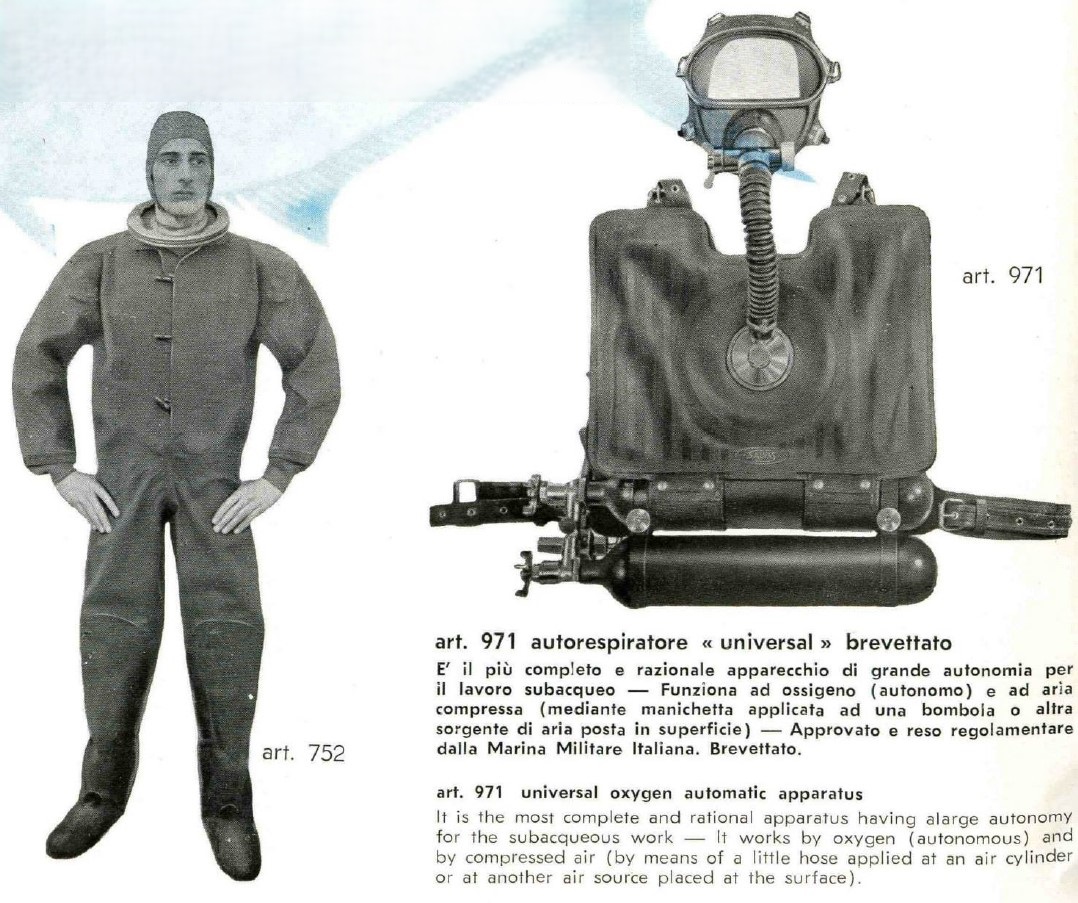
Fig. 11 |
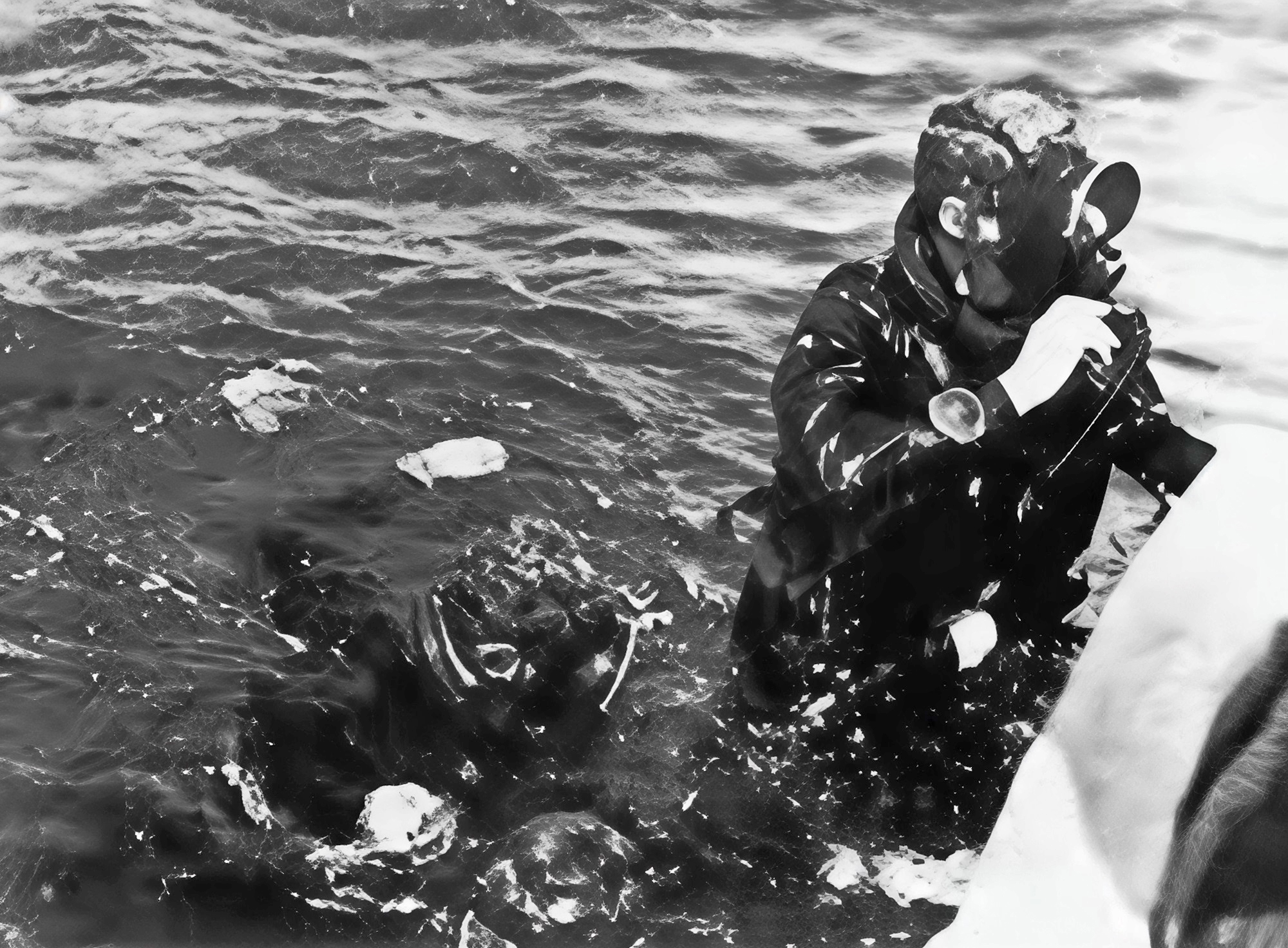
Fig. 12 |
 |
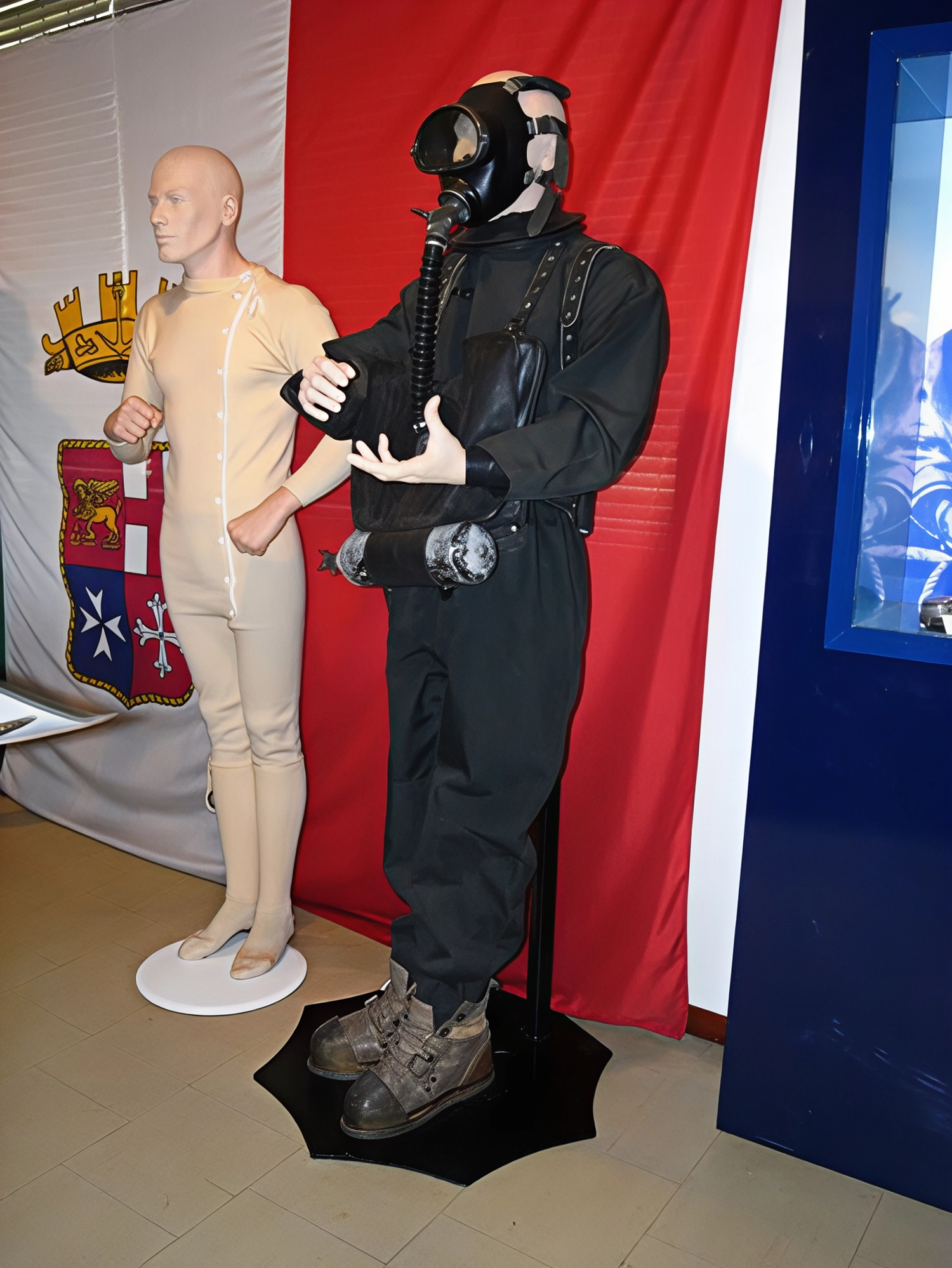 |
Fig. 13 Fig. 14
The rebuilt of the SLC torpedoes in the movie looks very accurate and suggests that these were original units recovered from warehouses or military bases and recommissioned for the movie's needs. The most significant difference between the vehicles used in the movie and the original ones was the color of the exterior paint. To improve visibility during underwater shooting (the real actions took place exclusively in the dark, and in the movie, they were shot in low-light conditions anyway), the color was light, while in real conditions, it was dark to reduce the risk of the torpedo being noticed from the surface.
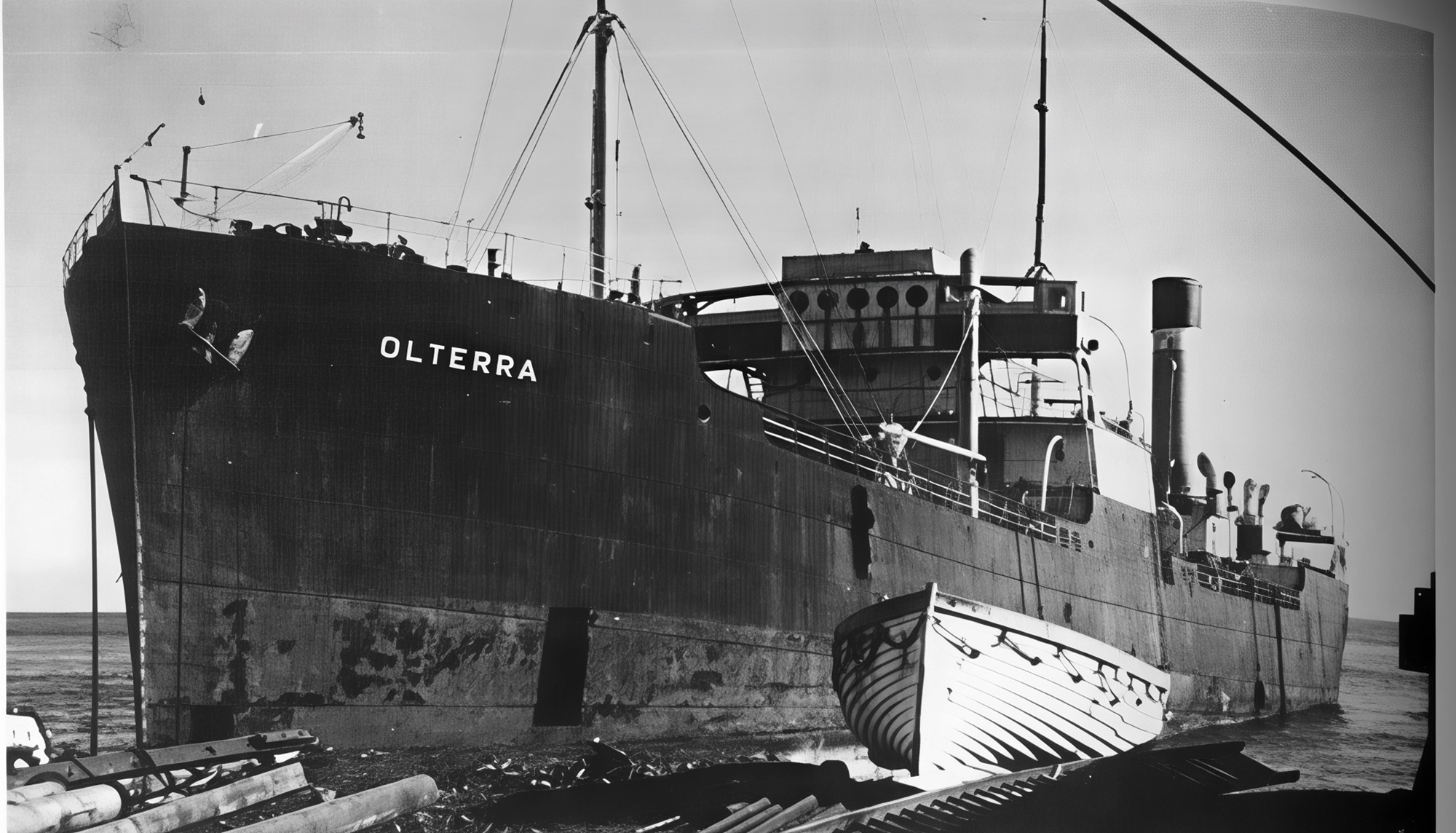
The central part of the movie is dedicated to the attacks on the UK military base in Gibraltar, carried out on several occasions and with different grades of success by the Italian Navy throughout the first phase of the war until the Armistice of 8 September 1943. These attacks were repeatedly attempted both using the SLCs, first transported by the submarine Scirè and then launched from the secret base built inside the oil tanker Olterra, moored in the Spanish port of Algeciras located few miles from the British military base (see Fig. 15), and using gamma men (also named assault swimmers or commandos) who, starting from the shore in Spanish territory, swam at night to the English merchant ships moored in the bay of Algeciras and then mined them using "bugs" or other explosive devices. In the movie, the starting base of the SLCs and the gamma frogmen coincided with the Olterra ship, but we know from the real history of these actions that the assault swimmers were based at Villa Carmela, a house a few hundred meters from the shore of the bay of Algeciras (see Fig. 16).
 |
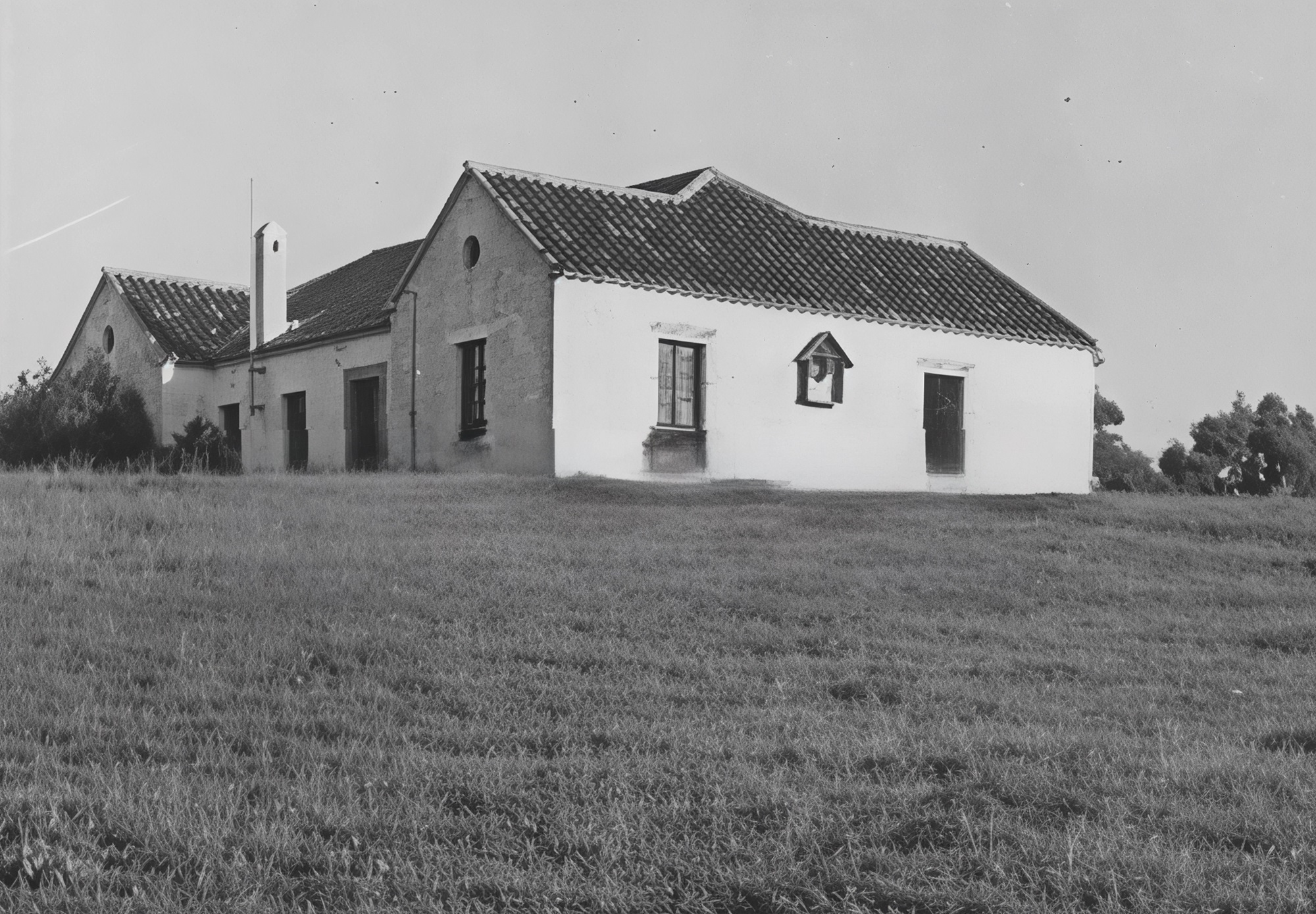 |
Fig. 15 Fig. 16
The movie ends with the famous action in the port of Alexandria, Egypt, on December 18 and 19, 1941, with the sinking of the British battleships HMS Valiant and HMS Queen Elizabeth.
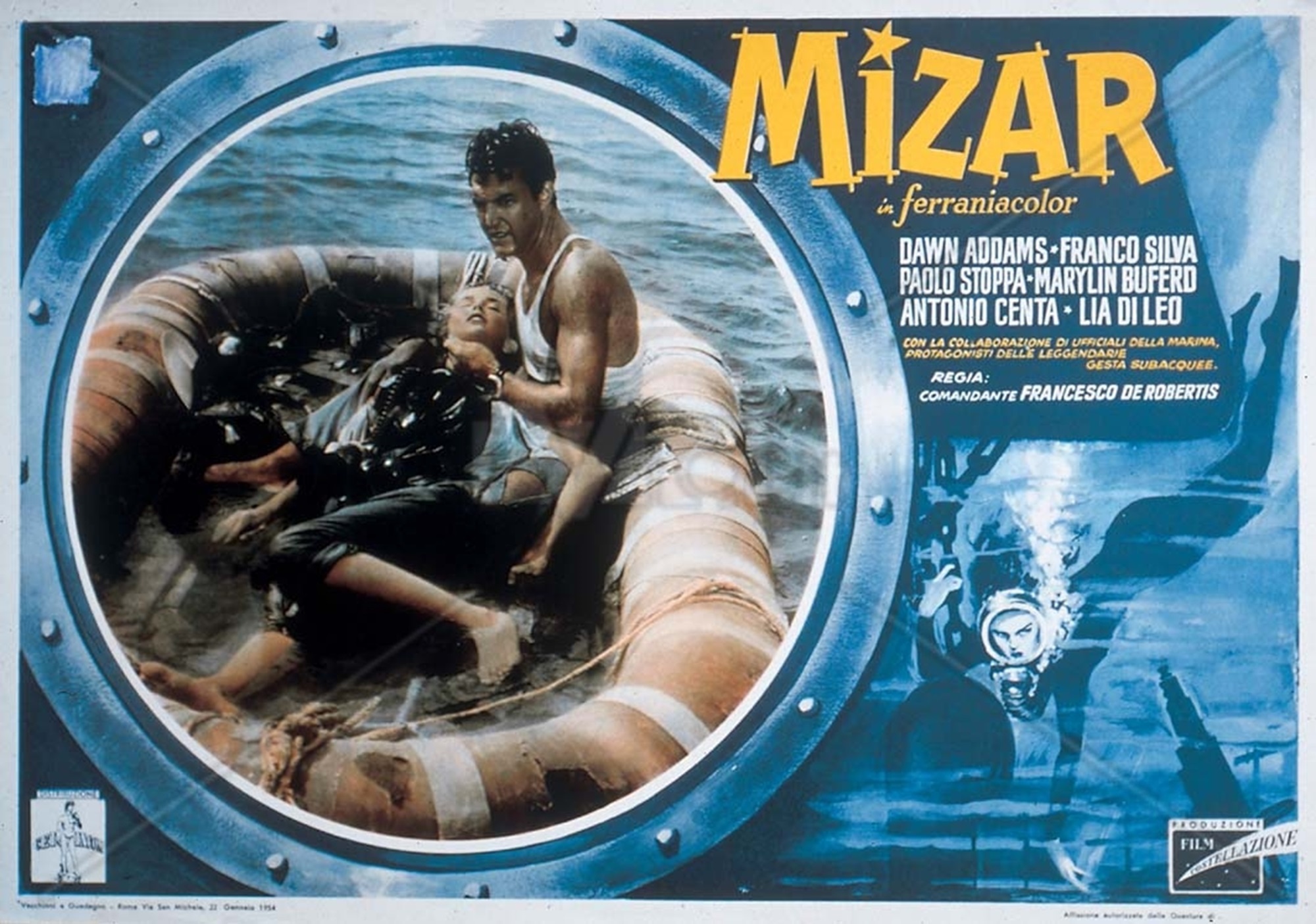
The following year, 1954, saw the release of "Mizar (Sabotage at Sea)" (see Fig. 17), a movie directed by Francesco De Robertis and clearly inspired by the missions of the M.O.V.M. (Military Gold Medal) Luigi Ferraro, a famous Italian frogman who, acting alone and operating in the ports of Alexandretta and Mersina between May and July 1943, sank or seriously damaged four enemy steamships. The title of the movie distributed in English-speaking countries was "Frogwoman" (see Fig. 18), reflecting the role played by the gamma frogwoman Mizar, played by the English actress Dawn Addams, who on several occasions assisted or completely replaced the designated male frogman in sabotage actions. The other main actors in the movie were Franco Silva (the Italian gamma frogman who was the protagonist of the sabotage actions), Paolo Stoppa (the Italian consul in Alexandretta), and Antonio Centa (the Italian spy responsible for infiltrating and covering up the frogman).
 |
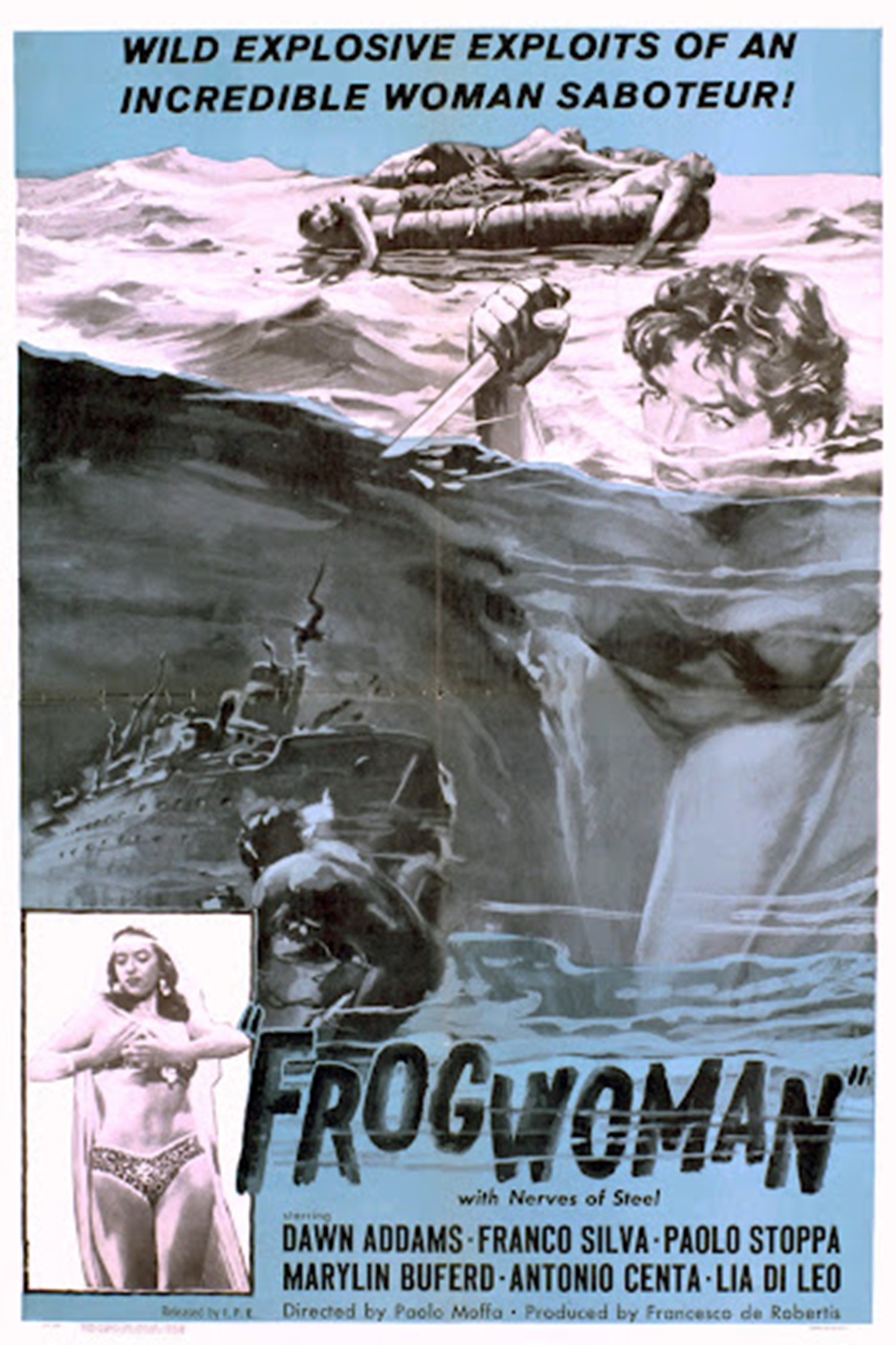 |
Fig. 17 Fig. 18
Luigi Ferraro himself participated in the movie’s production as a consultant, supervising and checking the accuracy of the actions and the film's subject, and also training actors and stunts in the correct and safe use of the diving equipment employed (see Fig. 19). In addition to the rubber drysuit (which Ferraro did not use during the real attacks due to the pretty warm water temperature), the typical Italian assault swimmer was equipped with a small Pirelli oxygen rebreather capable of providing approximately 40 minutes of working range (see Figs. 20 and 21) and a pair of fins produced by Superga from Turin (extremely uncomfortable and ineffective, as Ferraro himself told) which were considered a military secret at the time (see Fig. 22).
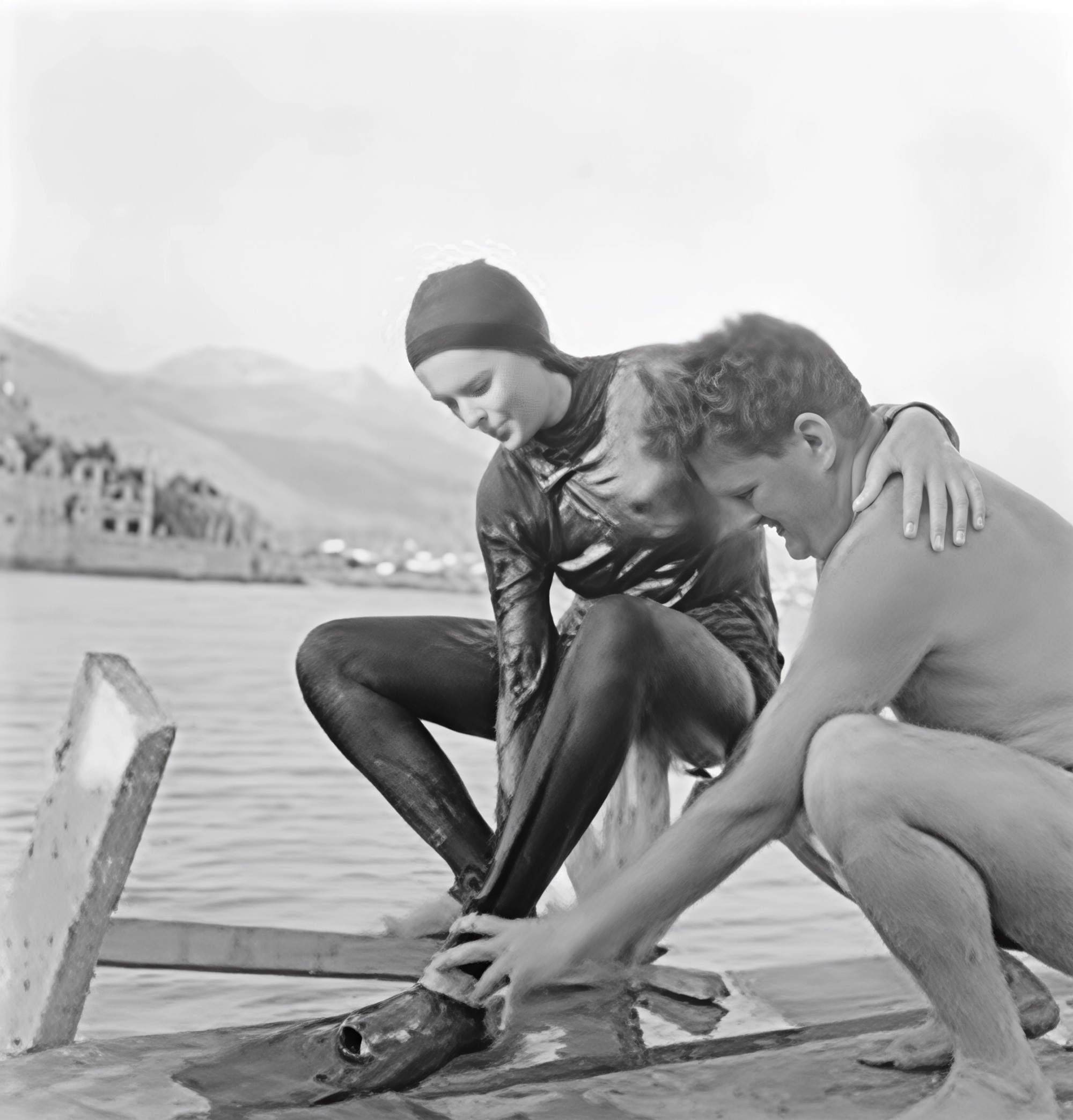
Fig. 19 |
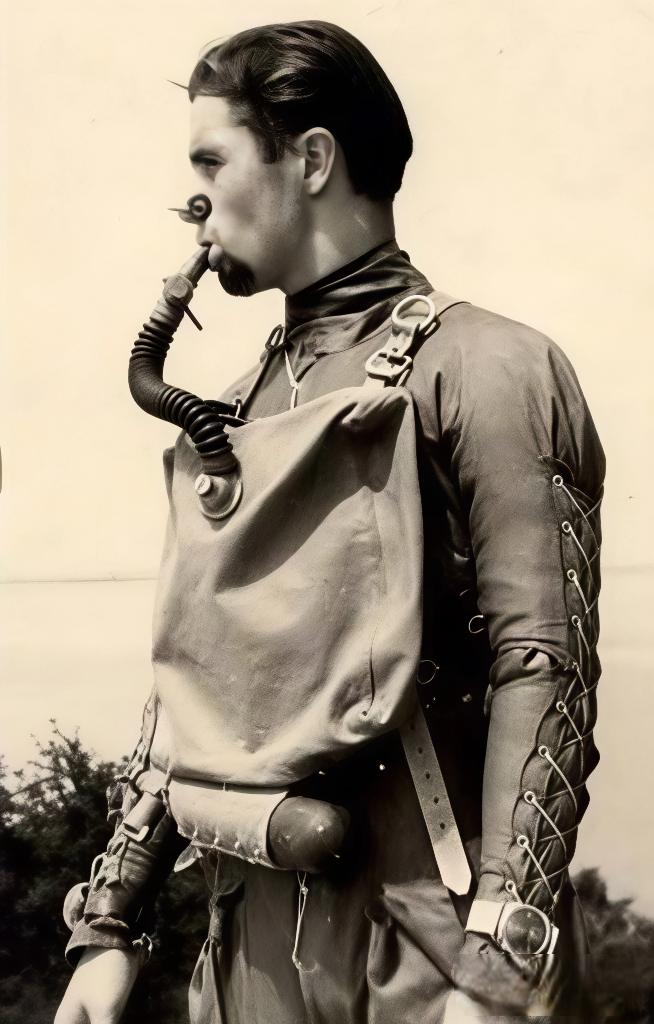
Fig. 20 |
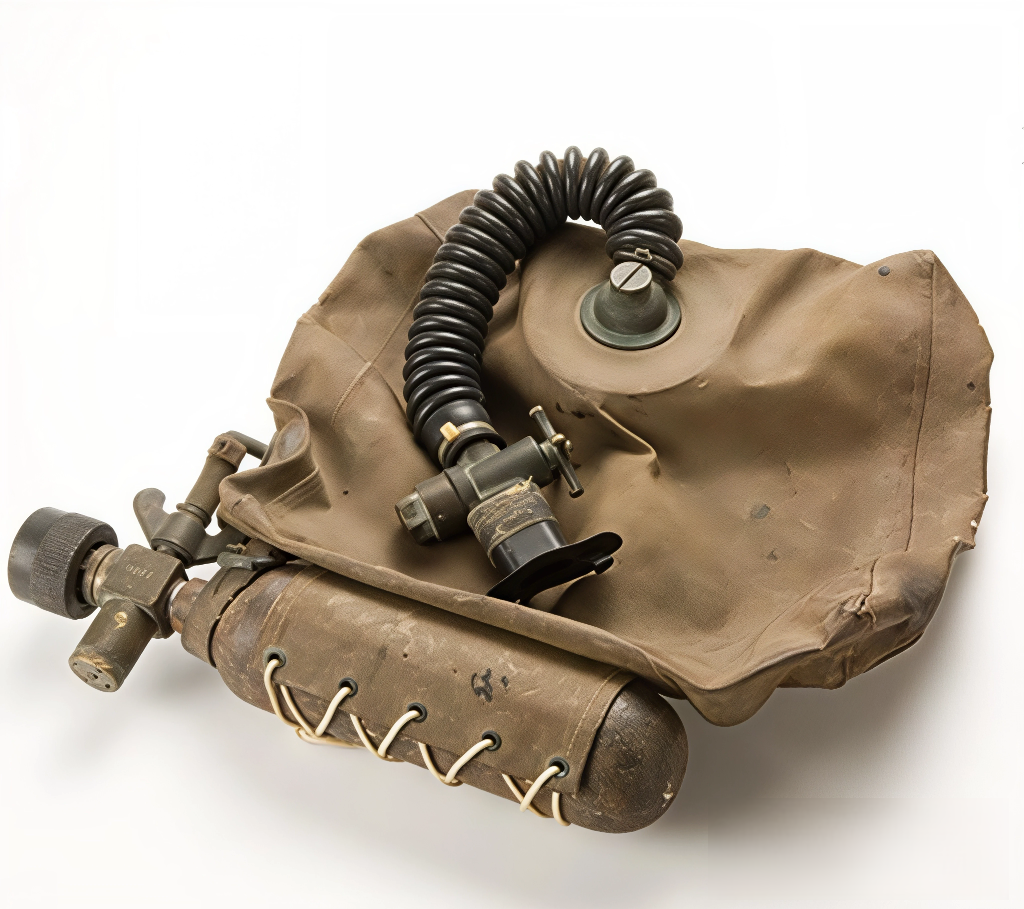
Fig. 21 |
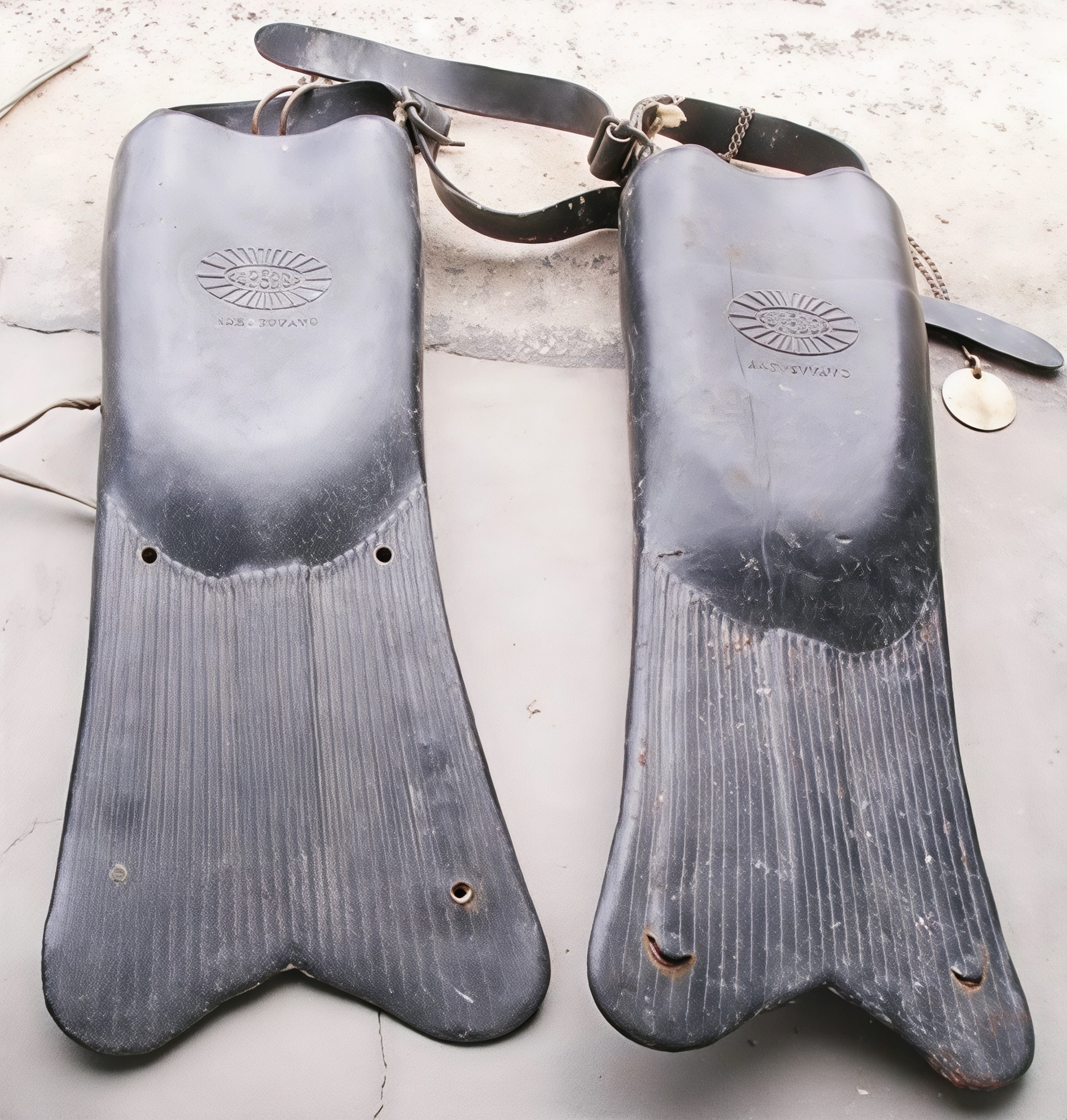
Fig. 22 |
The rubber drysuit used in the movie was basically the same one developed during the war by Pirelli on the specifications issued by the Italian gamma frogmen group commanded by Eugenio Wolk. It was much lighter than the Belloni suit normally used by the "pigs" operators and, although ensuring less thermal protection, was more suitable for the use of assault swimmers. Wolk himself filed several patent applications for this suit, which had, as its main novelty compared to the Belloni model, a simpler and more effective ventral closure system (see Figs. 23, 24 and 25). This type of drysuit remained in production, both by Pirelli and Salvas, for several years after the end of the war and was used in both civilian and military applications. Unfortunately, the other equipment used during the war was no longer available and therefore the materials used in the movie were taken from the typical military frogmen gear configuration of that period, as shown in Fig. 26.
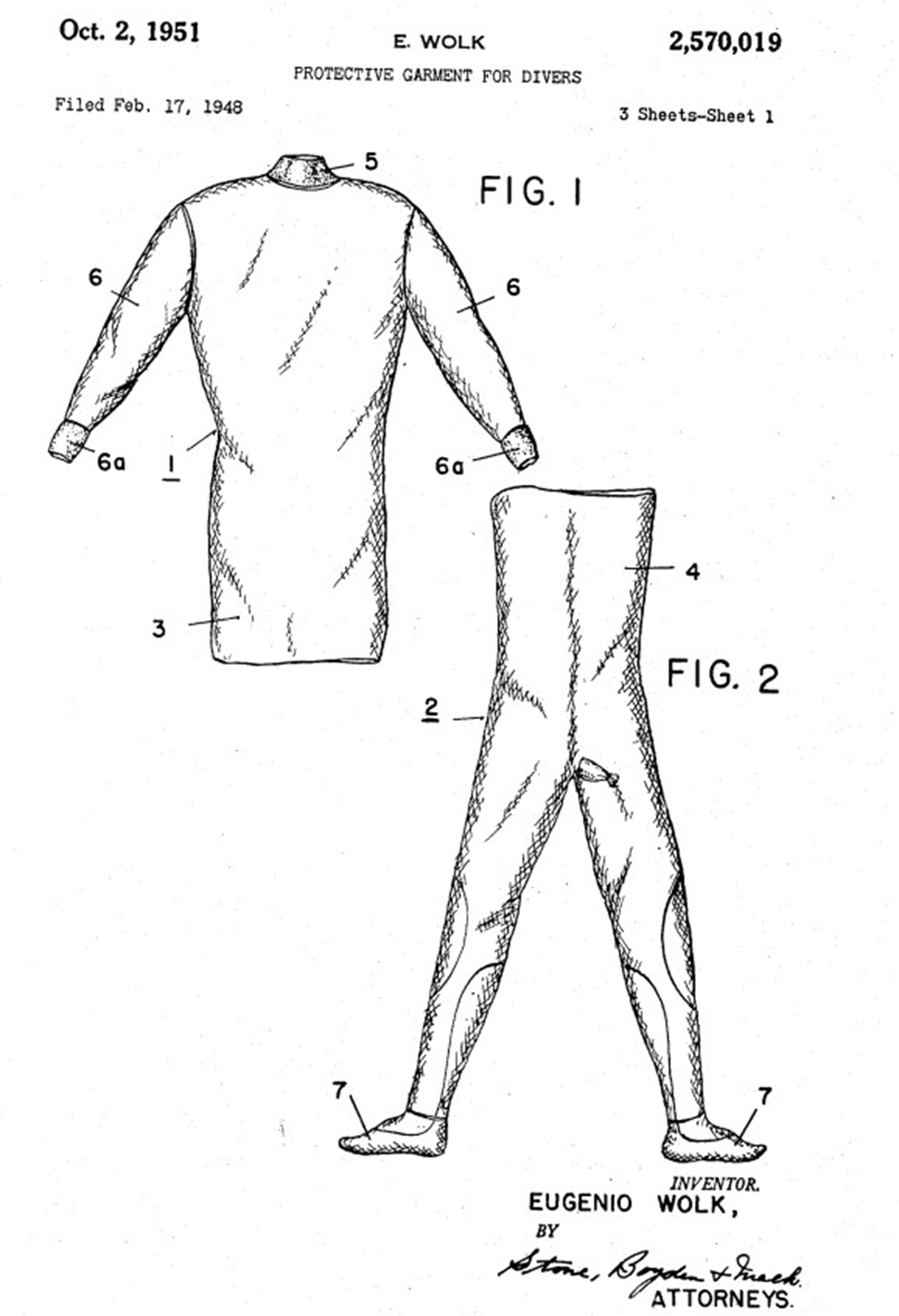
Fig. 23 |
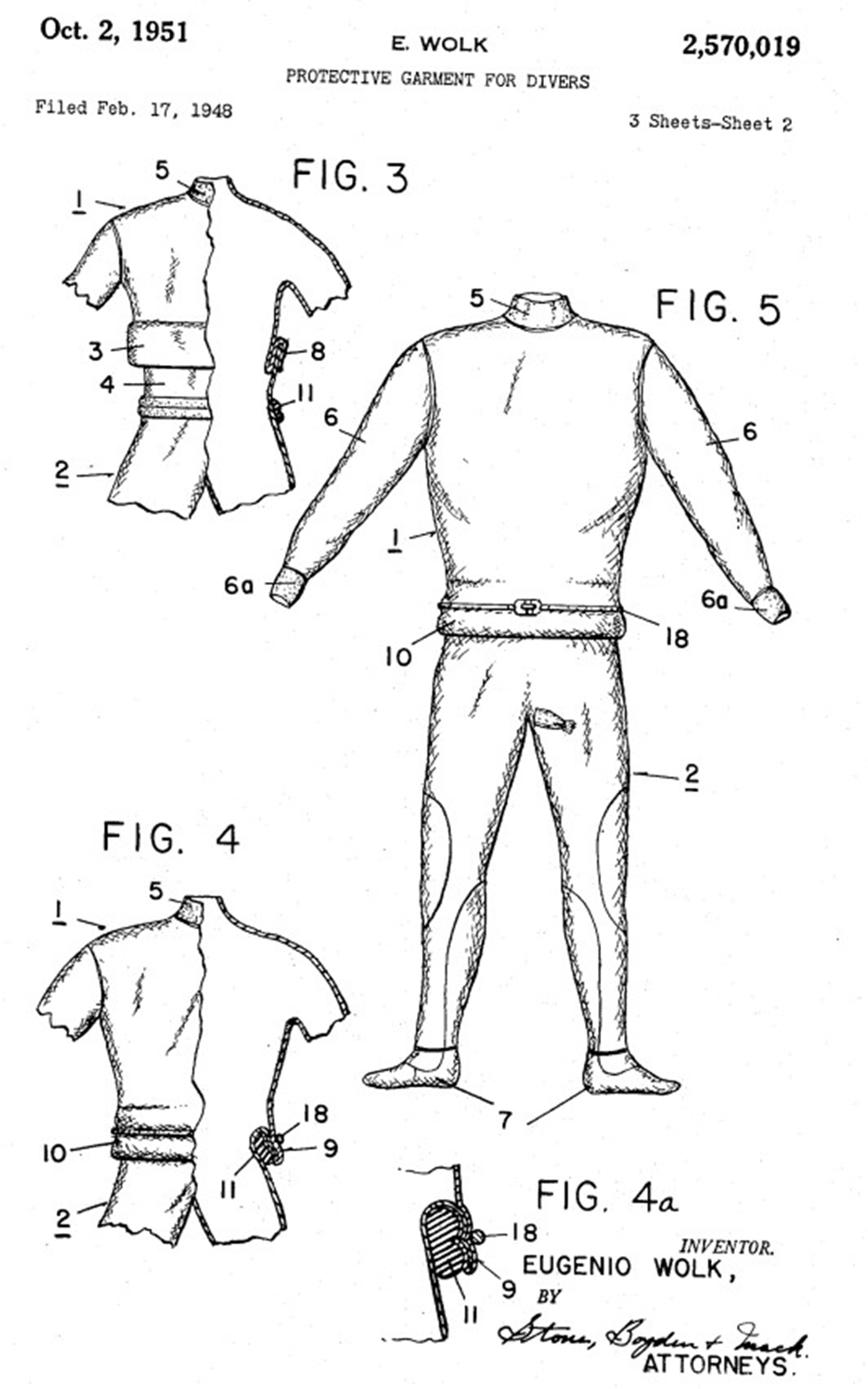
Fig. 24 |
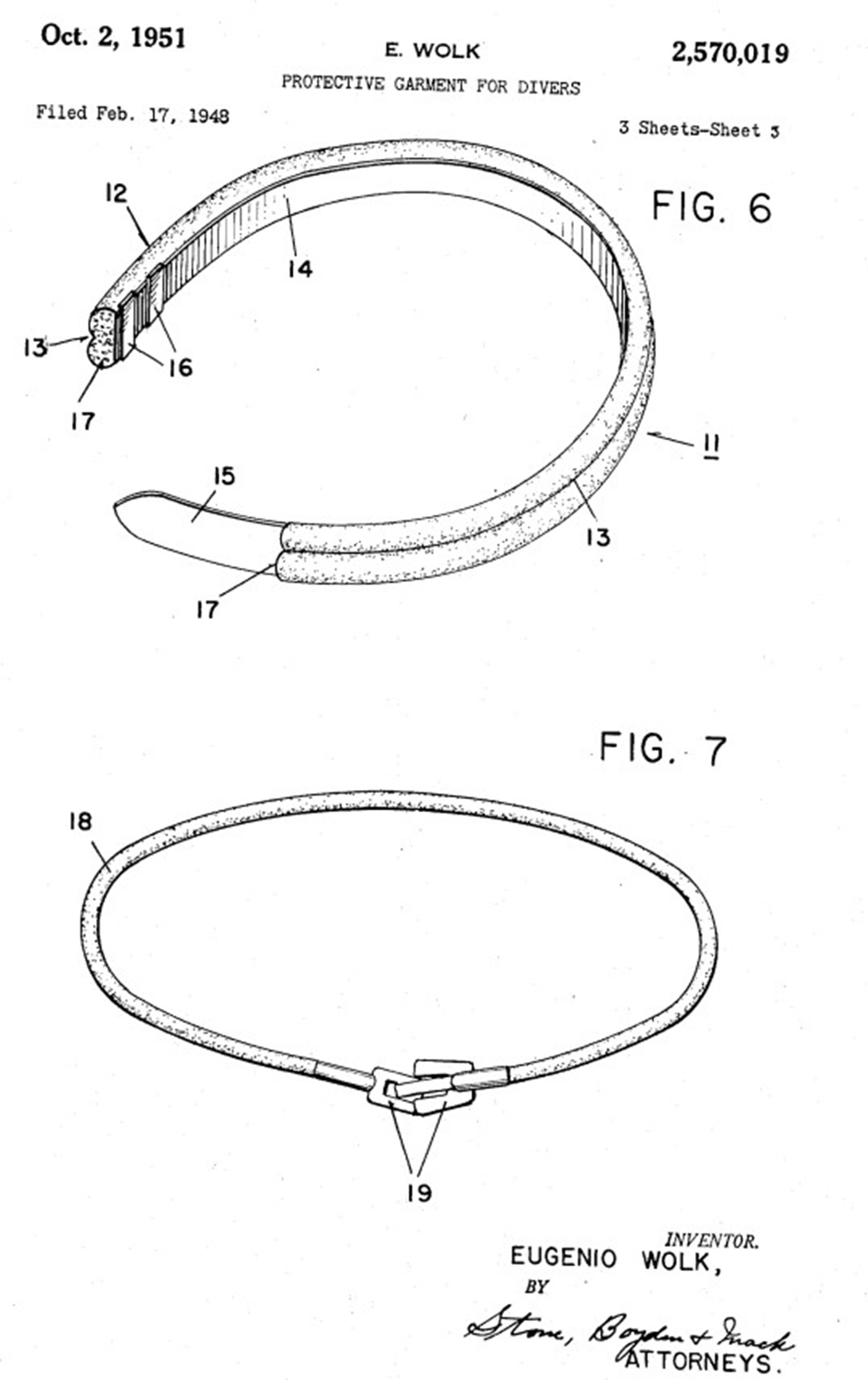
Fig. 25 |
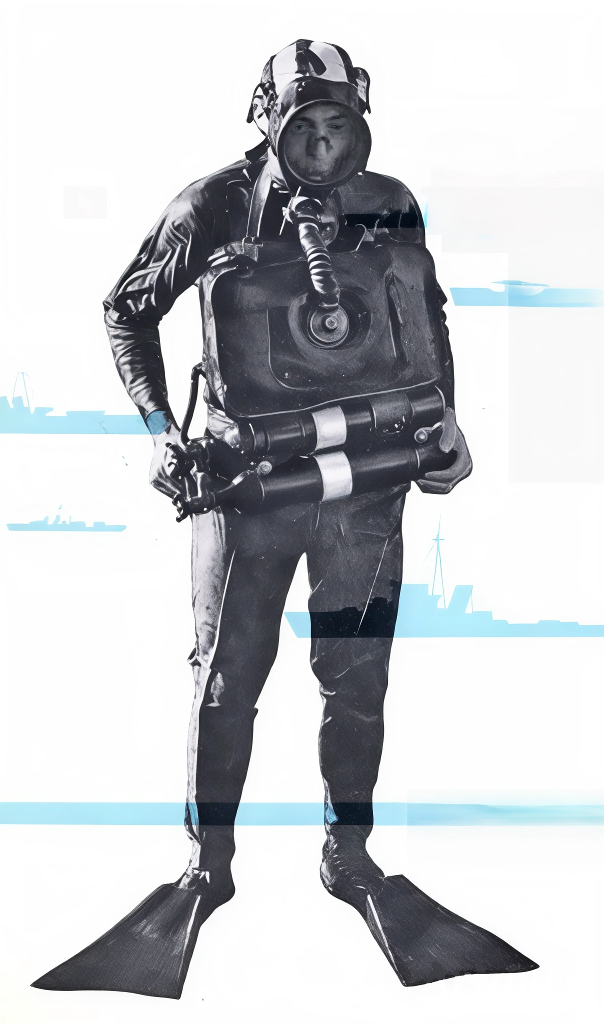
Fig. 26 |
Most military organizations in various countries, including Italy, chose asymmetrical versions (see Fig. 27) as fins for their frogmen. These were derived from the model patented by Owen Churchill in the late 1930s and produced for the US Navy in thousands of units during the war. This version represented the evolution of the fins invented by Frenchman Luis Marie De Corlieu in 1933 and initially built and distributed in the US under license by Churchill himself. The units for the Italian navy were still produced by Superga, which later merged with Pirelli after the end of the war. The choice of the oxygen rebreather used in the movie (see Fig. 28) fell on the simplest and most economical model produced by Pirelli at the time, the “Polifemo” (see Figs. 29 and 30).
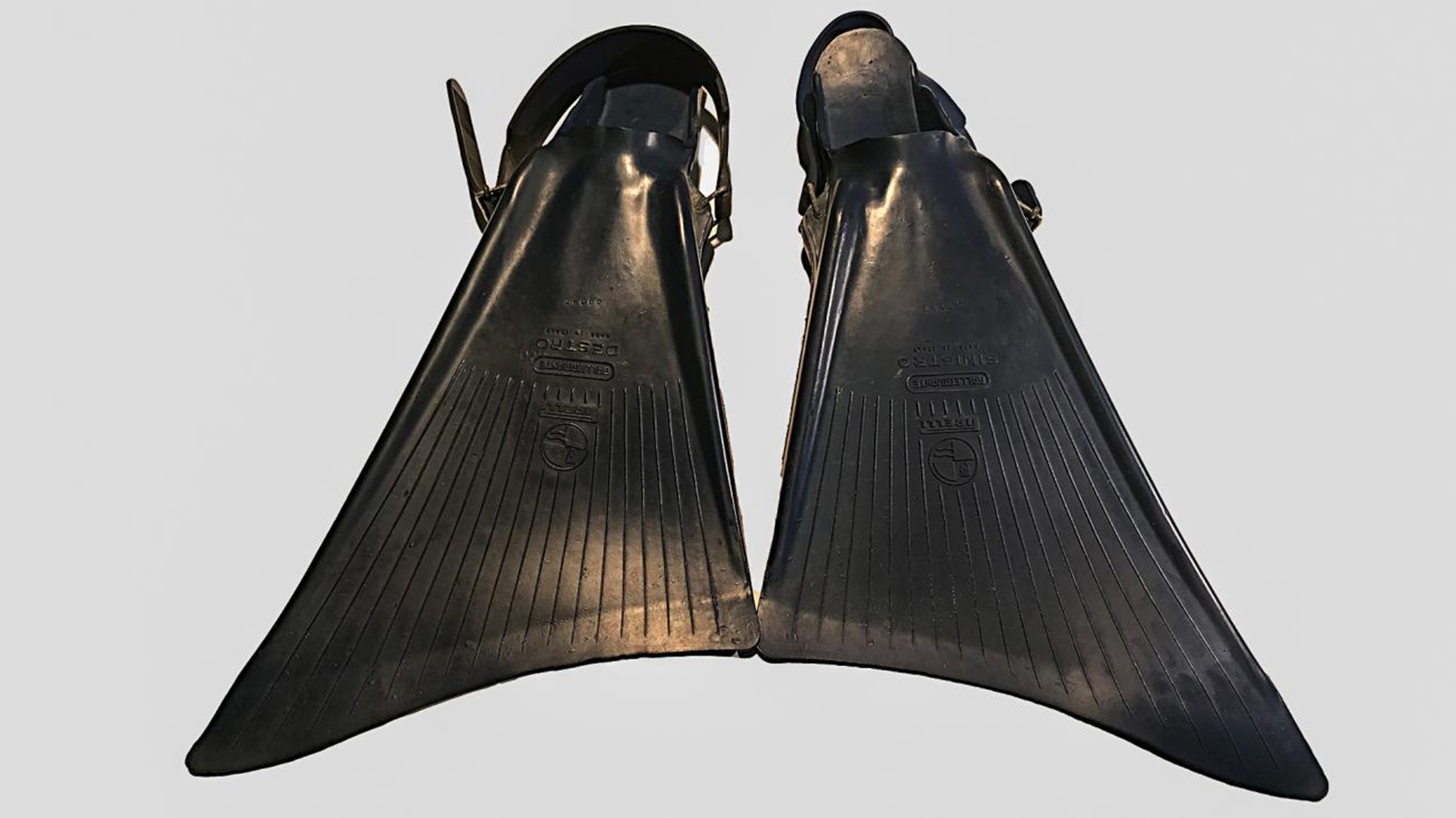
Fig. 27 |
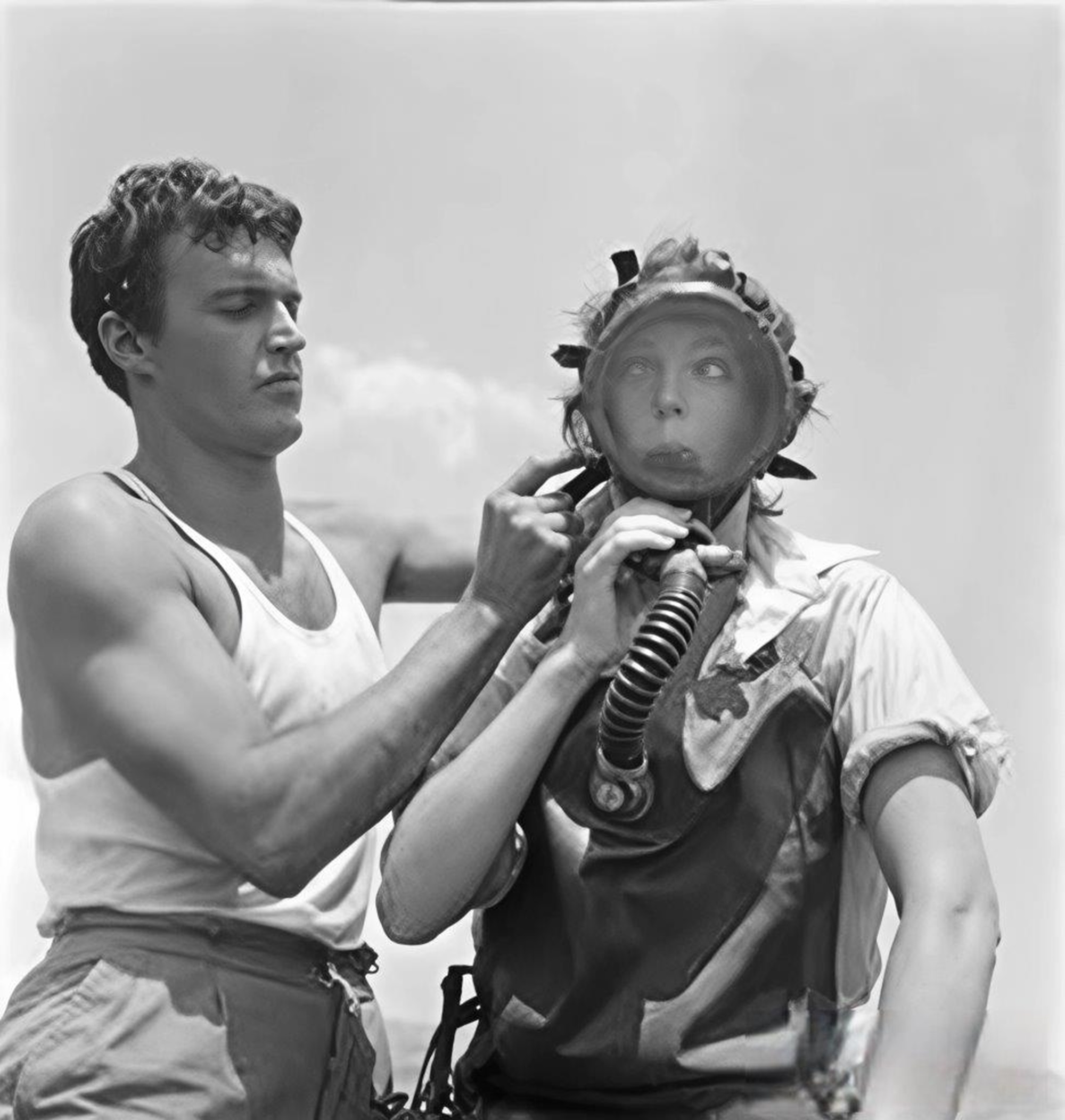
Fig. 28 |
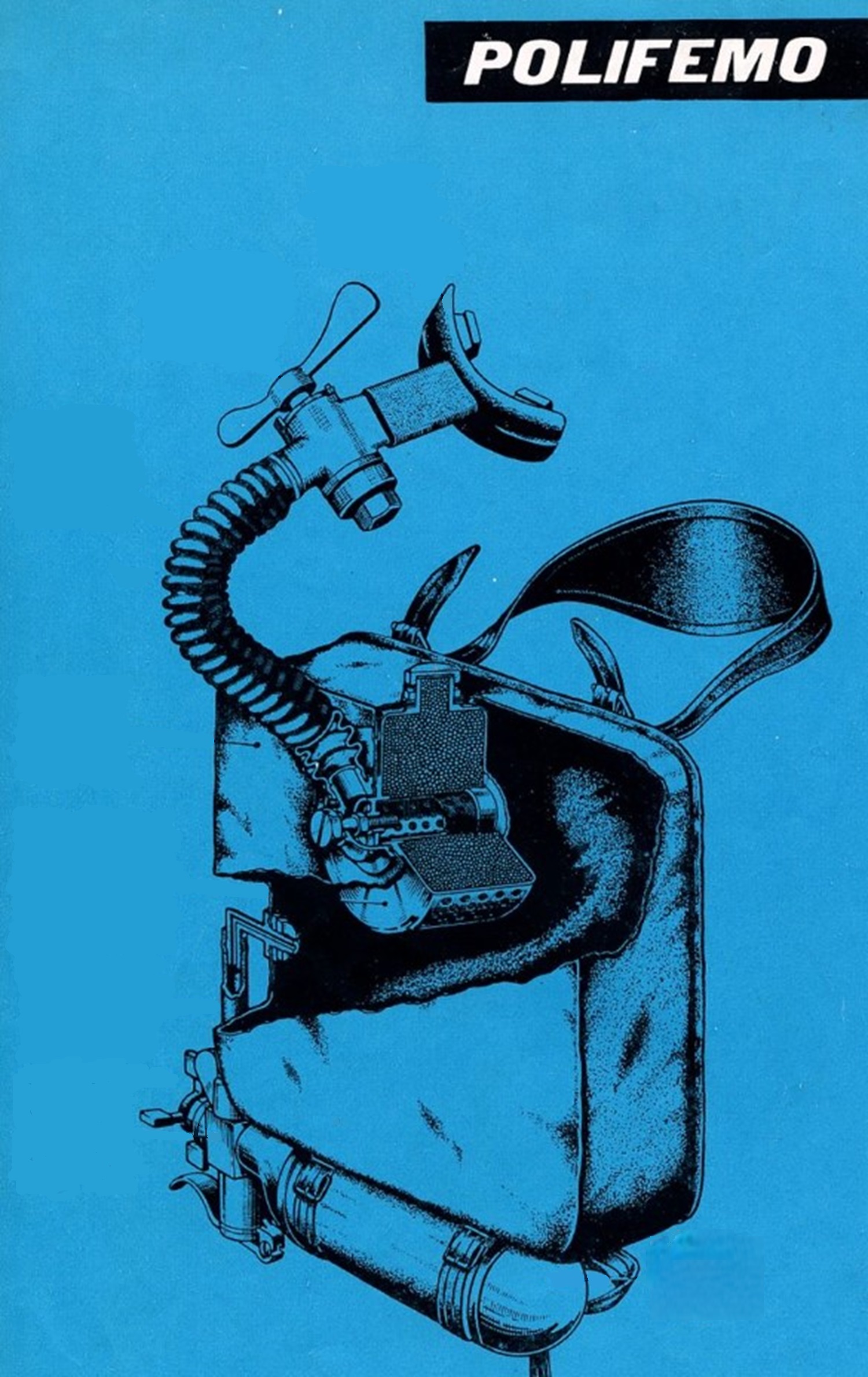 |
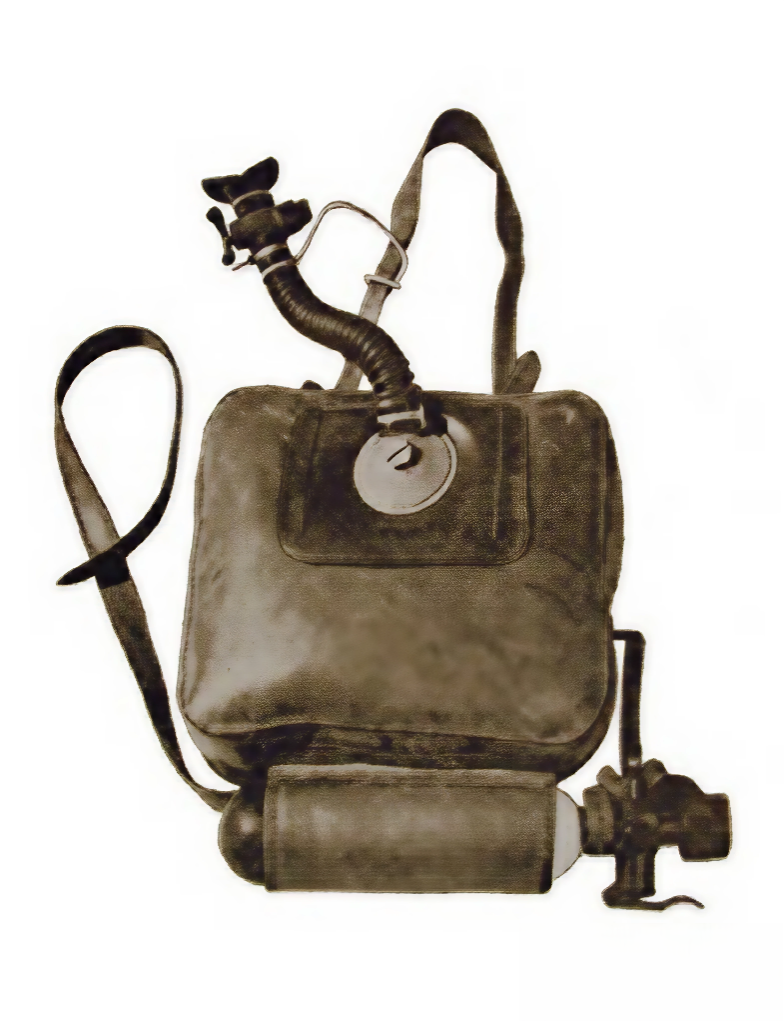 |
Fig. 29 Fig. 30
In the movie's opening scenes, where the two protagonists dive onto the wreck of a British destroyer to recover some important secret codes, the “Polifemo” rebreather is used with a Pirelli full-face mask provided with a round glass (see Fig. 28). This mask was directly derived from the one used in the Pirelli “G50” model (developed during the war), a model that would has been produced and distributed for several years with the trade name of “L.S. 901”.
In the same year, 1954, another movie was released, once again produced by the duo Carlo Ponti and Luigi De Laurentiis, entitled "Siluri Umani" (see Fig. 31). This work would later be distributed abroad under the English title "Torpedos Humanos" (see Fig. 32). The movie features the attack carried out by the Italian Navy commandos on the British fleet moored in Souda Bay, Crete, on March 25, 1941. The attack was performed with the use of fast "explosive boats" (see Fig. 33) and resulted in the sinking of the British heavy cruiser York (see Fig. 34).
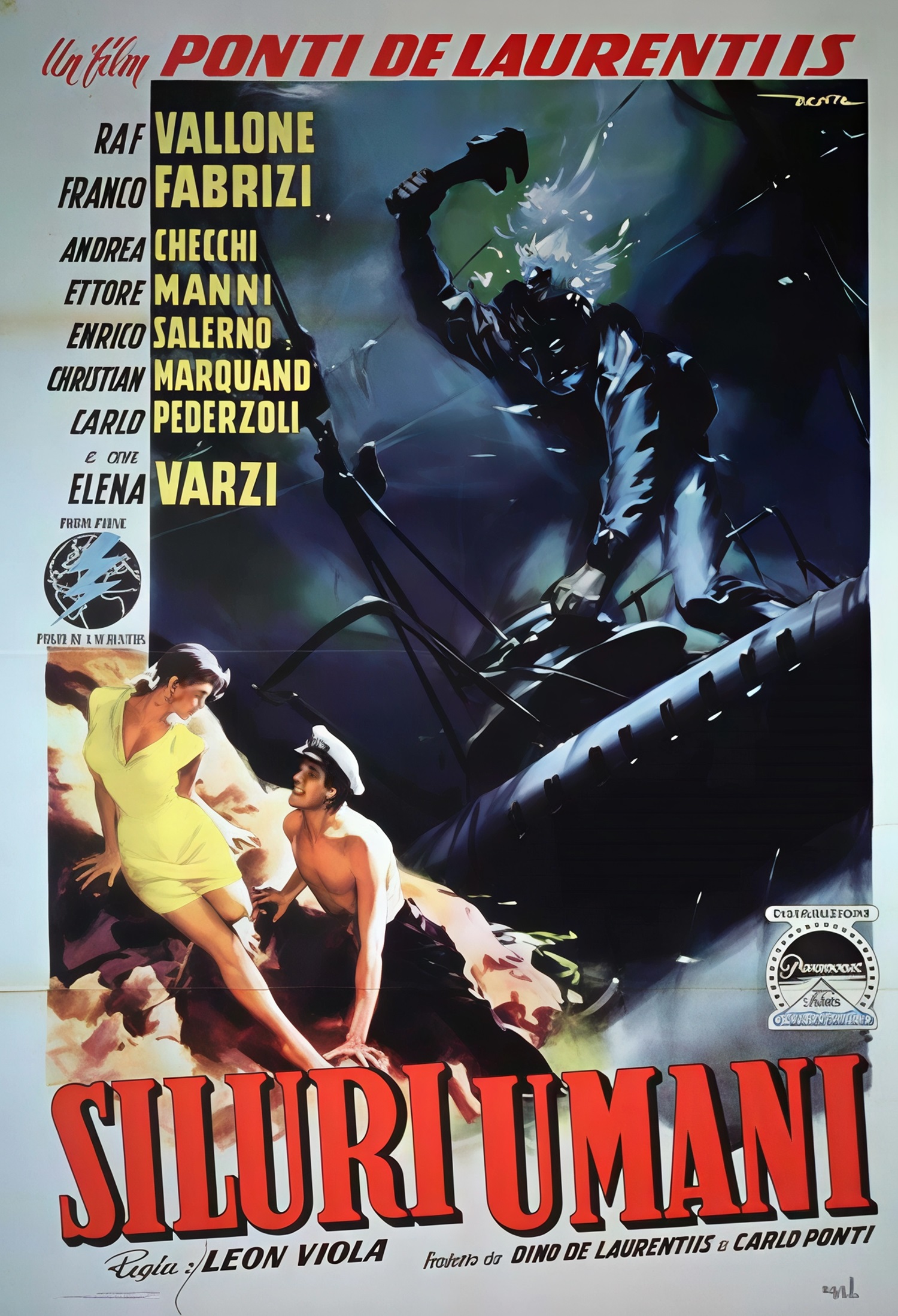
Fig. 31
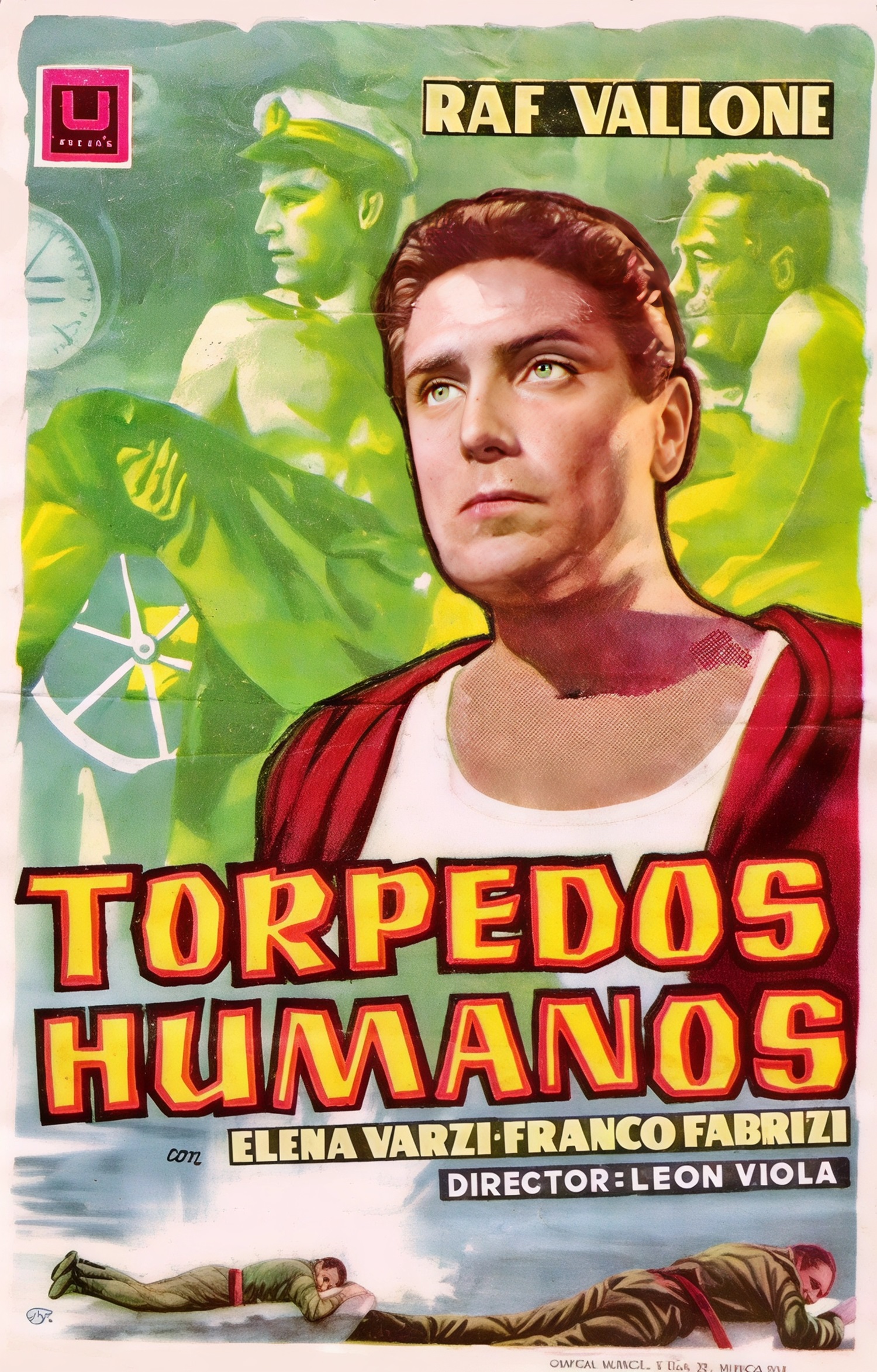
Fig. 32
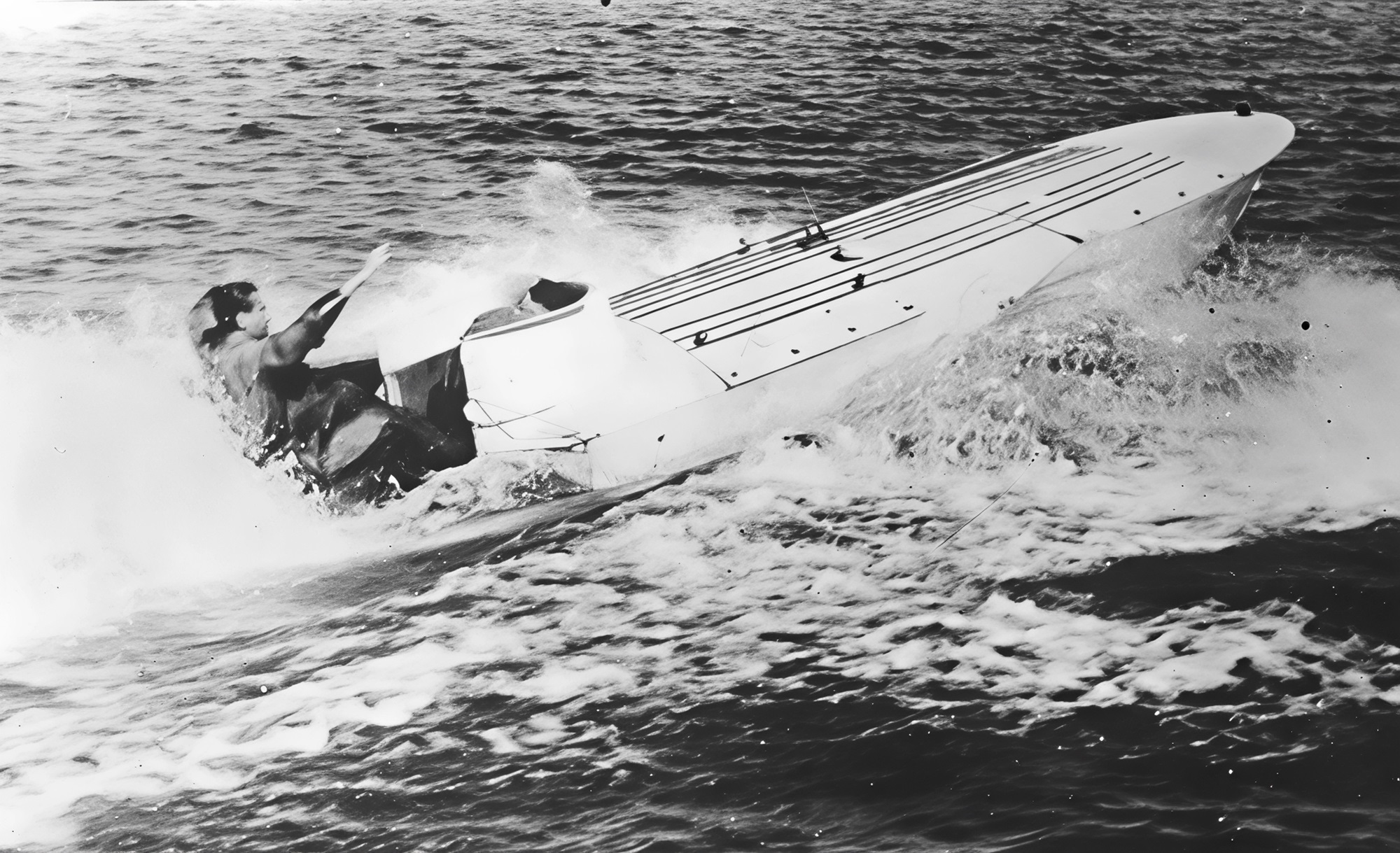
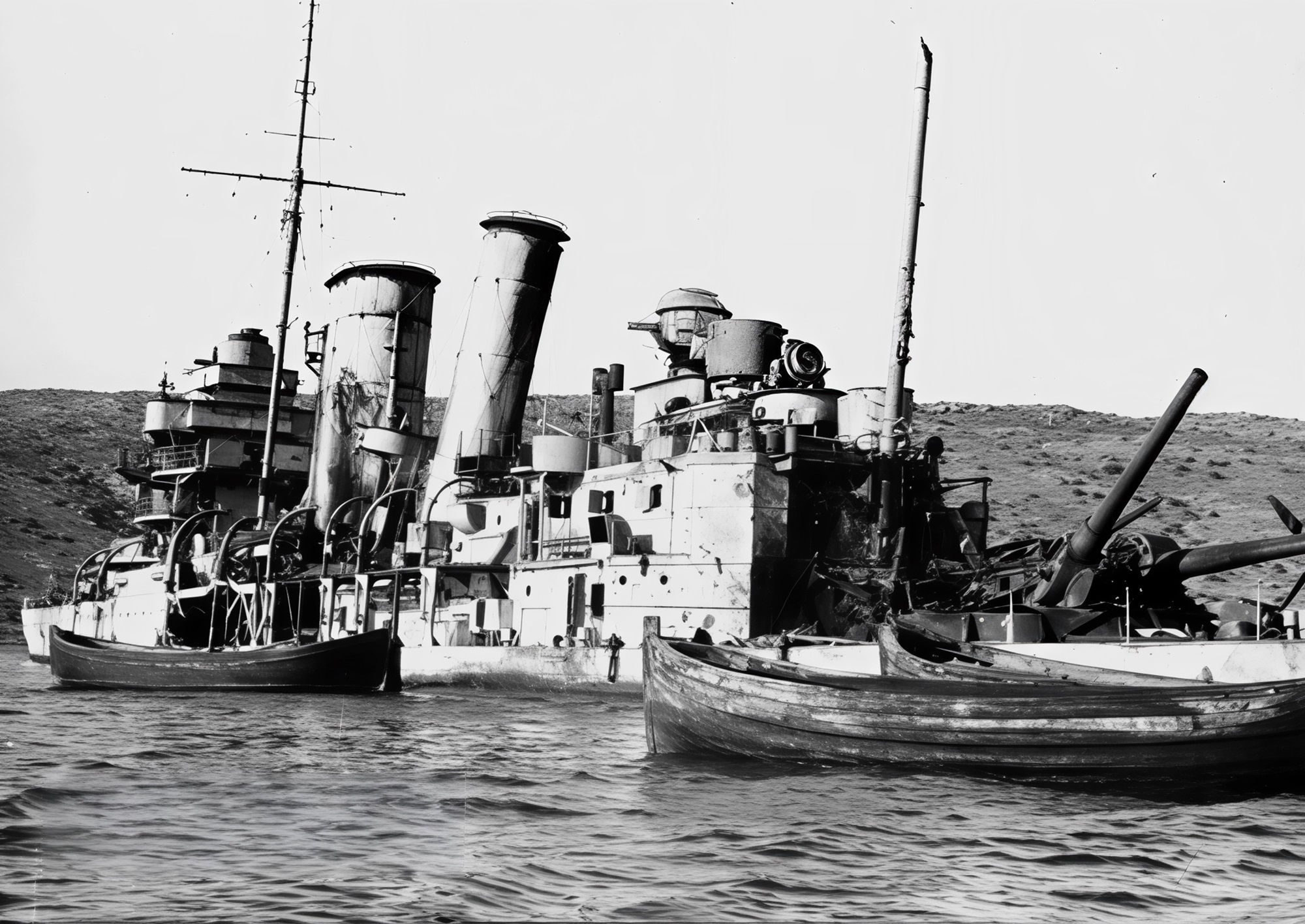
Fig. 33 Fig. 34
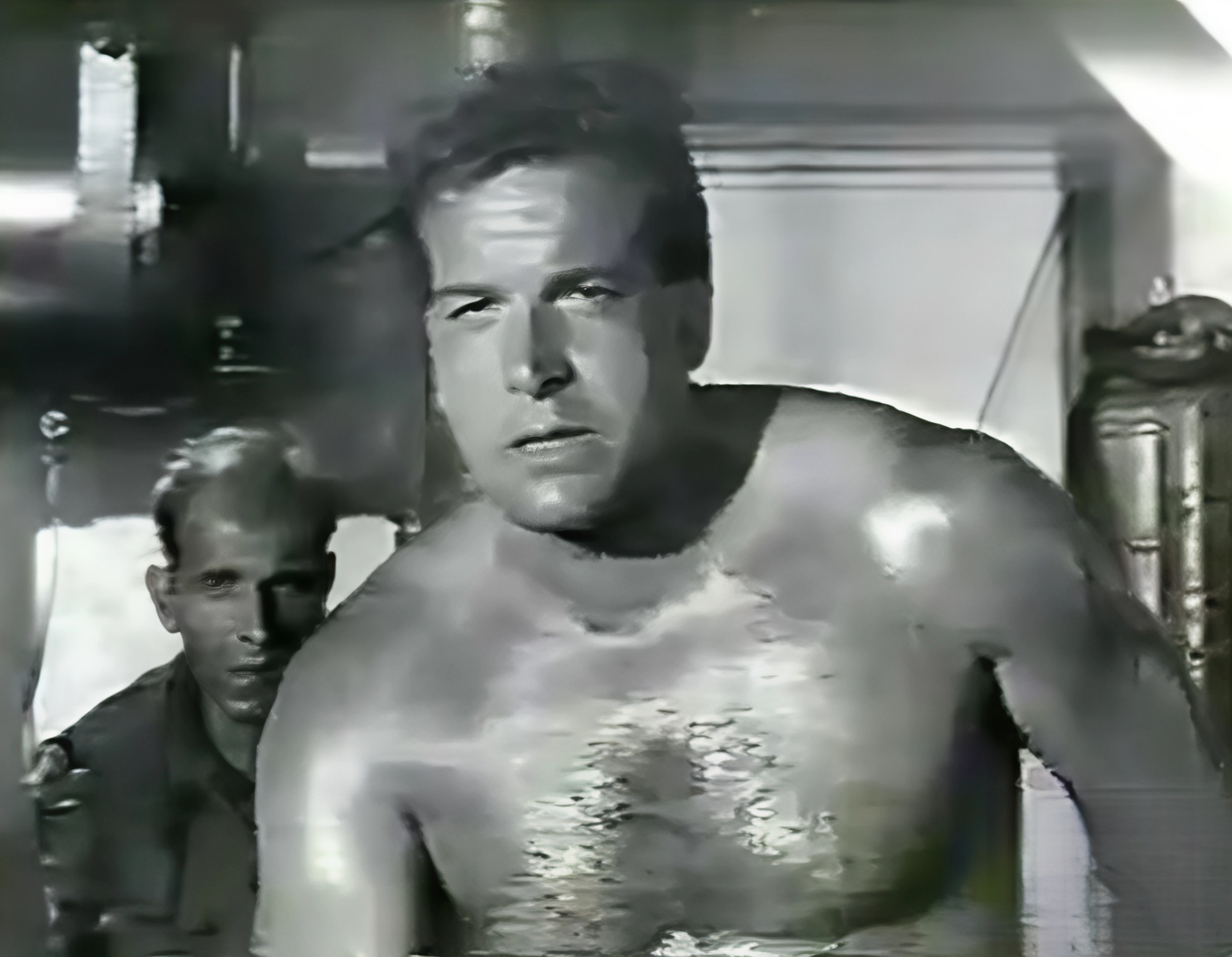
Among the most popular actors in the movie, who were Raf Vallone, Franco Fabrizi, Andrea Checchi, Ettore Manni and Elena Varzi, there were also the former Italian swimming champion and record holder Carlo Pedersoli, who would later become famous with the pseudonym of Bud Spencer (see Fig. 35), and Enrico Maria Salerno, who would also participate in the underwater shooting (see Fig. 36).
 |
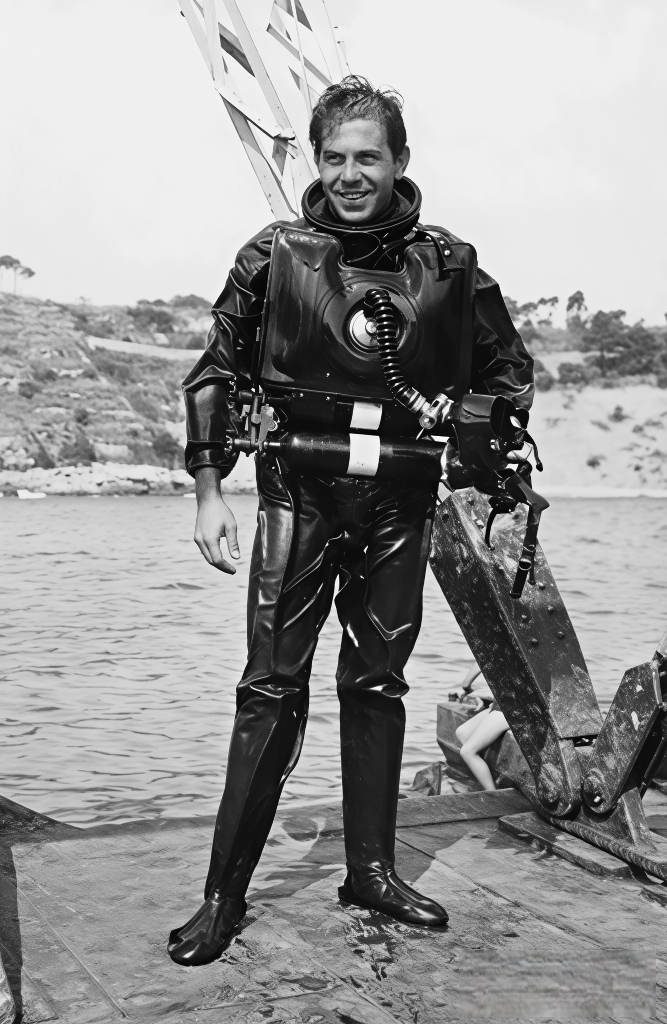 |
Fig. 35 Fig. 36
Although the main action in this film focuses on the mission of the explosive boats, which were purely surface missions, the opening sequence is dedicated to a rescue operation for the crew of an Italian submarine, which was hit and sunk by British torpedo bombers. This sequence is based on the true story of the Italian submarine “Iride”, commanded by Lieutenant Francesco Brunetti, which, on August 21, 1940, was first sighted and then sunk by British torpedo bombers in the Gulf of Bomba, east of Tobruk, Libya. At the time of the sinking, the “Iride” was transferring 4 SLC “pigs” from the Calipso torpedo boat on its deck. These units were destined to attack the British fleet in the port of Alexandria, Egypt. A limited number of the submarine's crew members were trapped, but still alive, in a section of the wreck that was lying on the bottom at 15 meters deep. These men were saved by the same operators of the "pigs" including Birindelli, Tesei, Toschi and De La Penne.
Again, since the original equipment was not available, Salvas gears were used, similar to those employed during the shooting of "I Sette dell’Orsa Maggiore". Some of the underwater sequences from that movie (e.g., the underwater marchers) were also reused in "Siluri Umani". Unfortunately, no restored copies of this film exist, and the few images from the shootings showing the operators in underwater action are of poor quality (see Figs. 37, 38, 39, and 40). In the movie, the same operators who rescued the submarine's crew were the same ones who carried out the assault with the explosive boats, and this, from a historical perspective, is a fake. In fact, the explosive boats personnel were part of a different military corps, which was also part of the 10th MAS Flotilla, but distinct from that of the SLC operators and that of the assault swimmers (gamma frogmen).
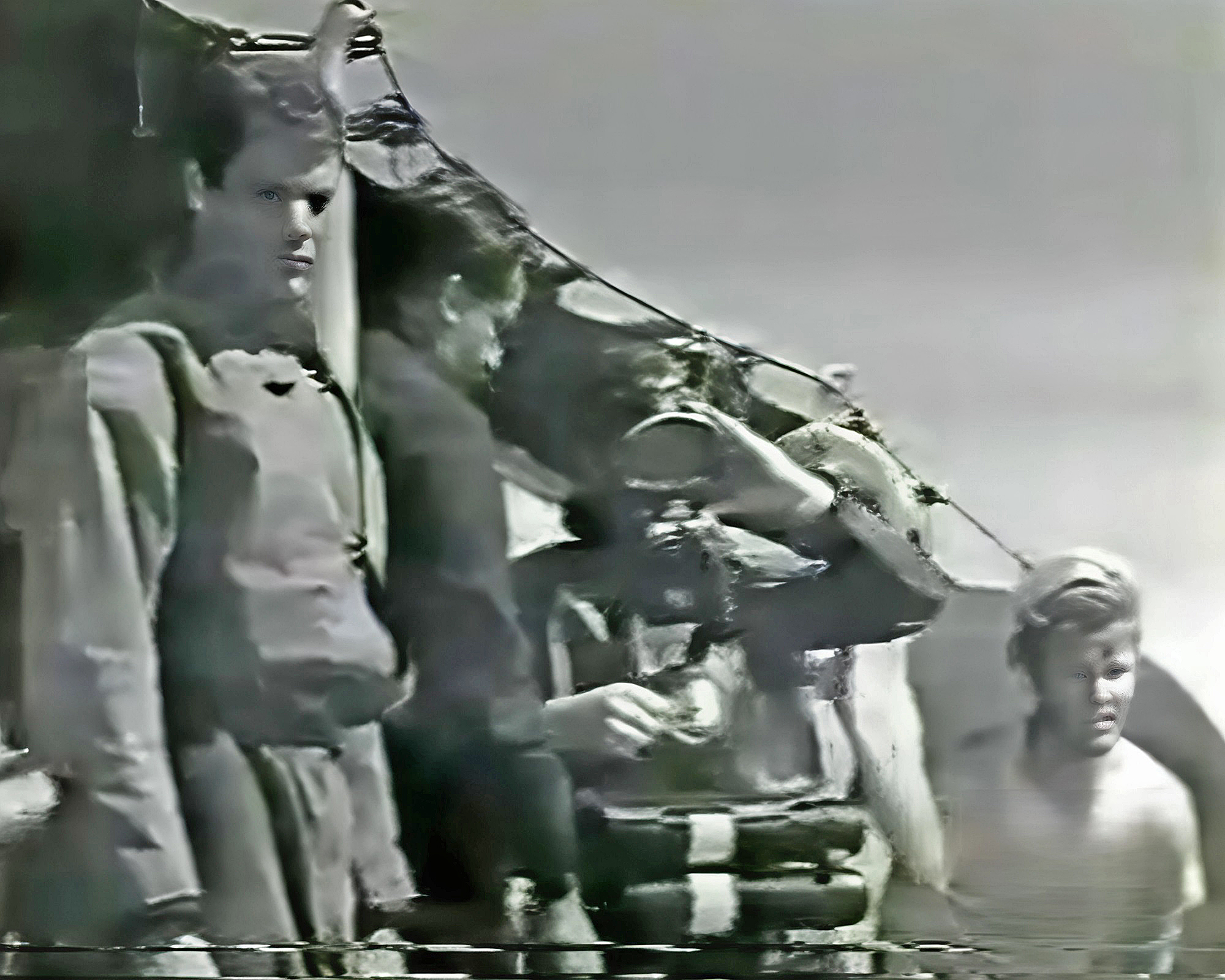
Fig. 37 |
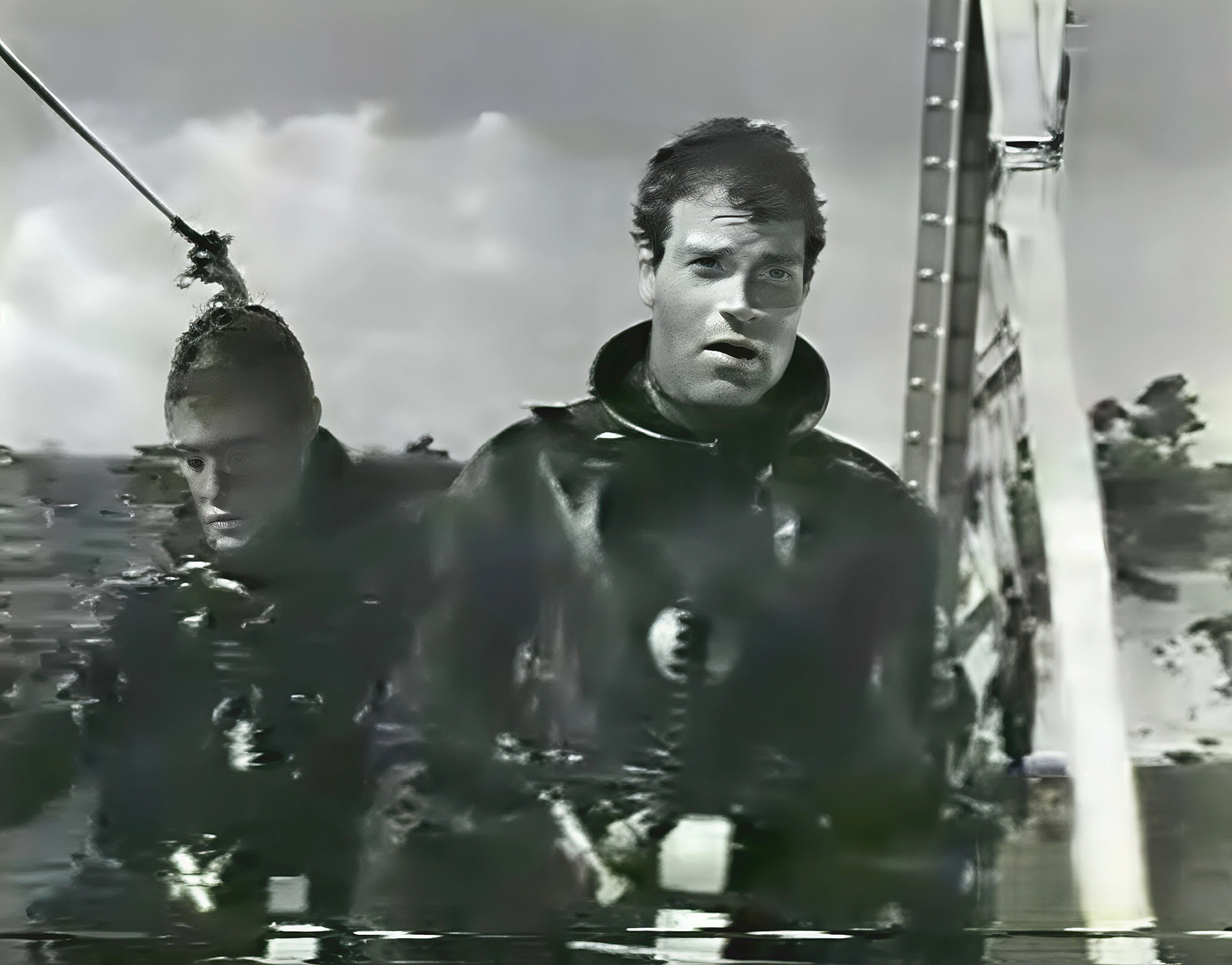
Fig. 38 |
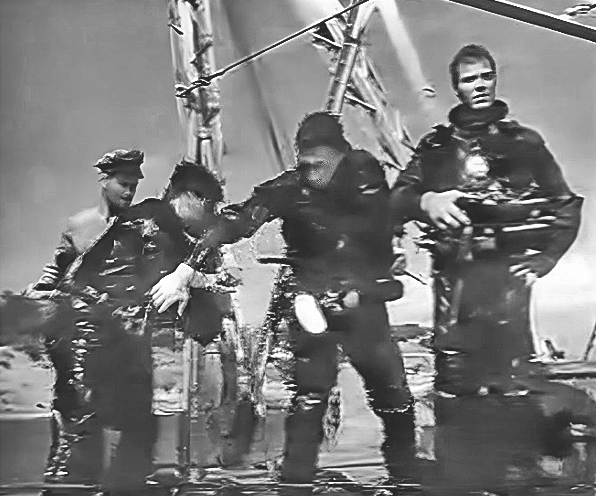 |
 |
Fig. 39 Fig. 40
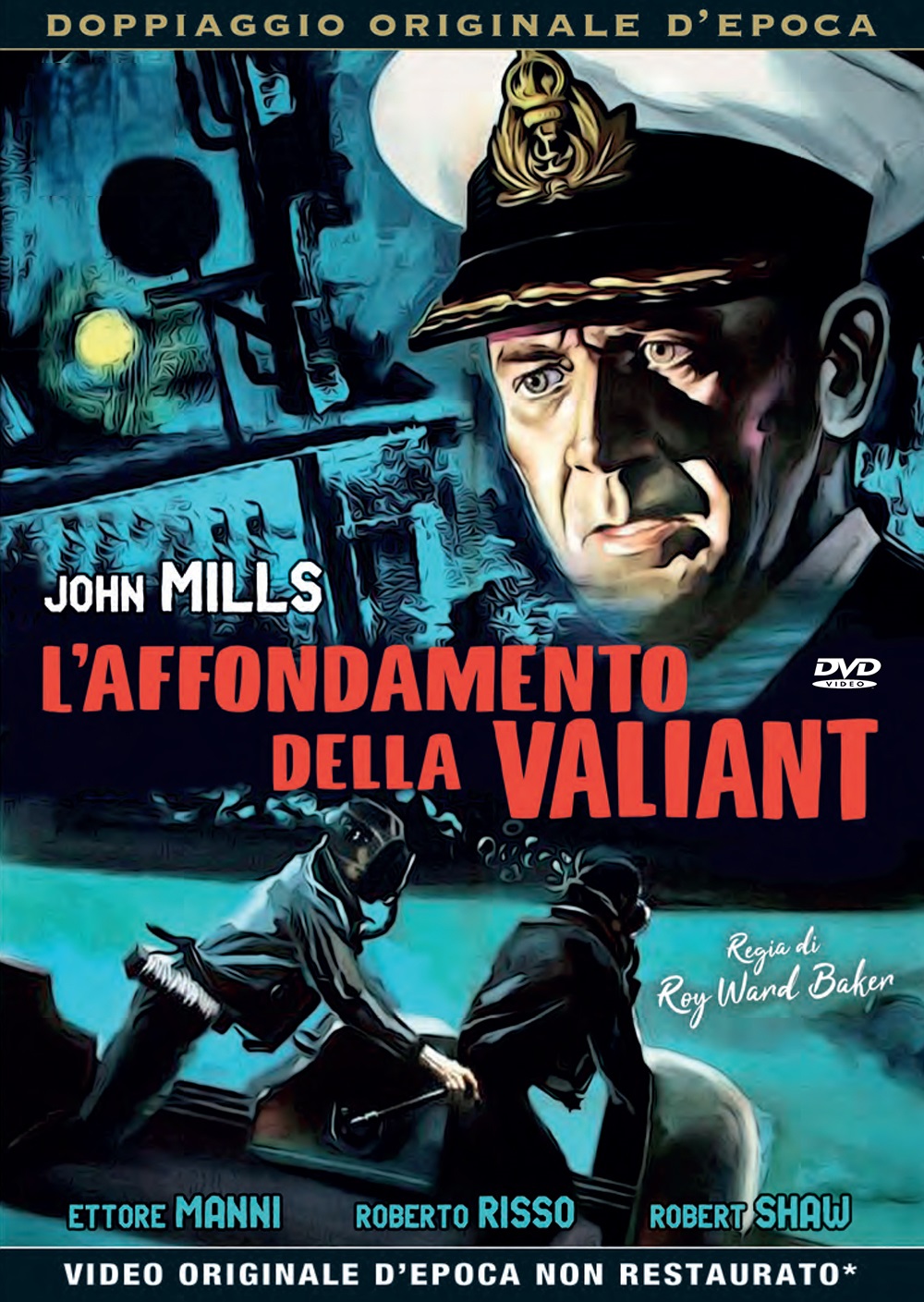
““L’affondamento della Valiant” (see Fig. 41) was a 1962 Italian-British co-production directed by Roy Ward Baker. The original English title was “The Valiant” (see Fig. 42).
 |
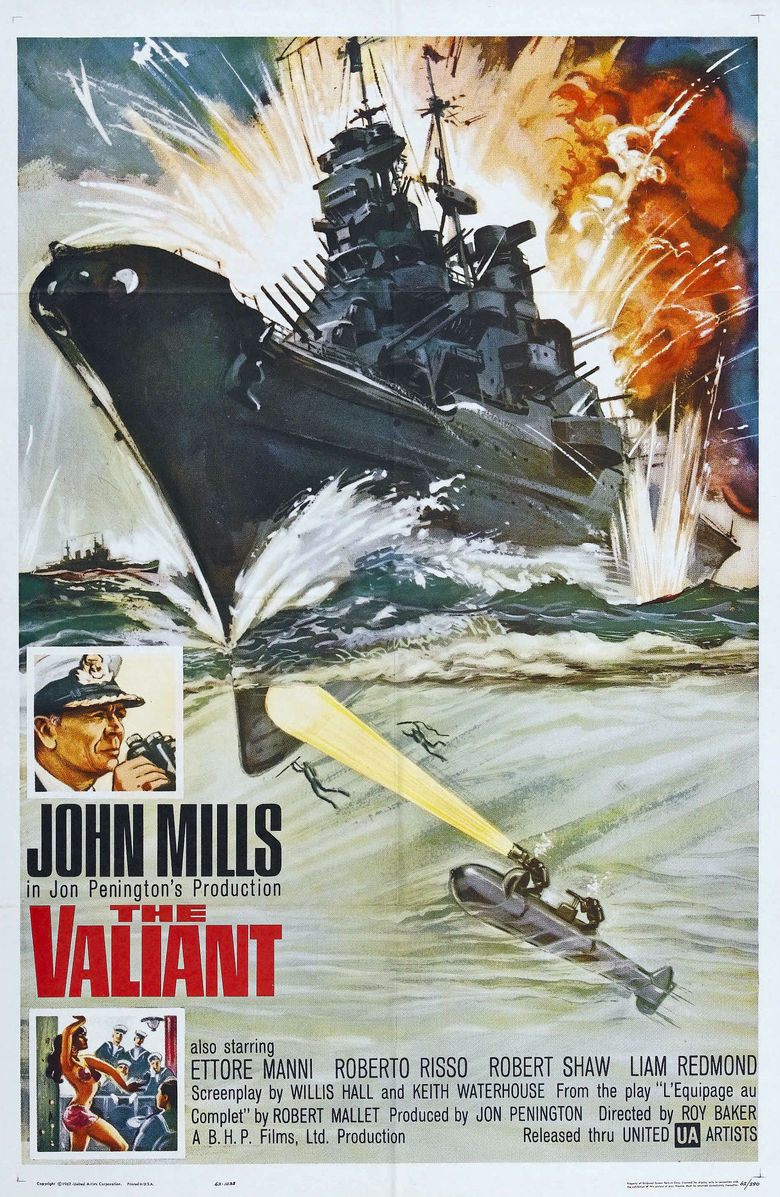 |
Fig. 41 Fig. 42
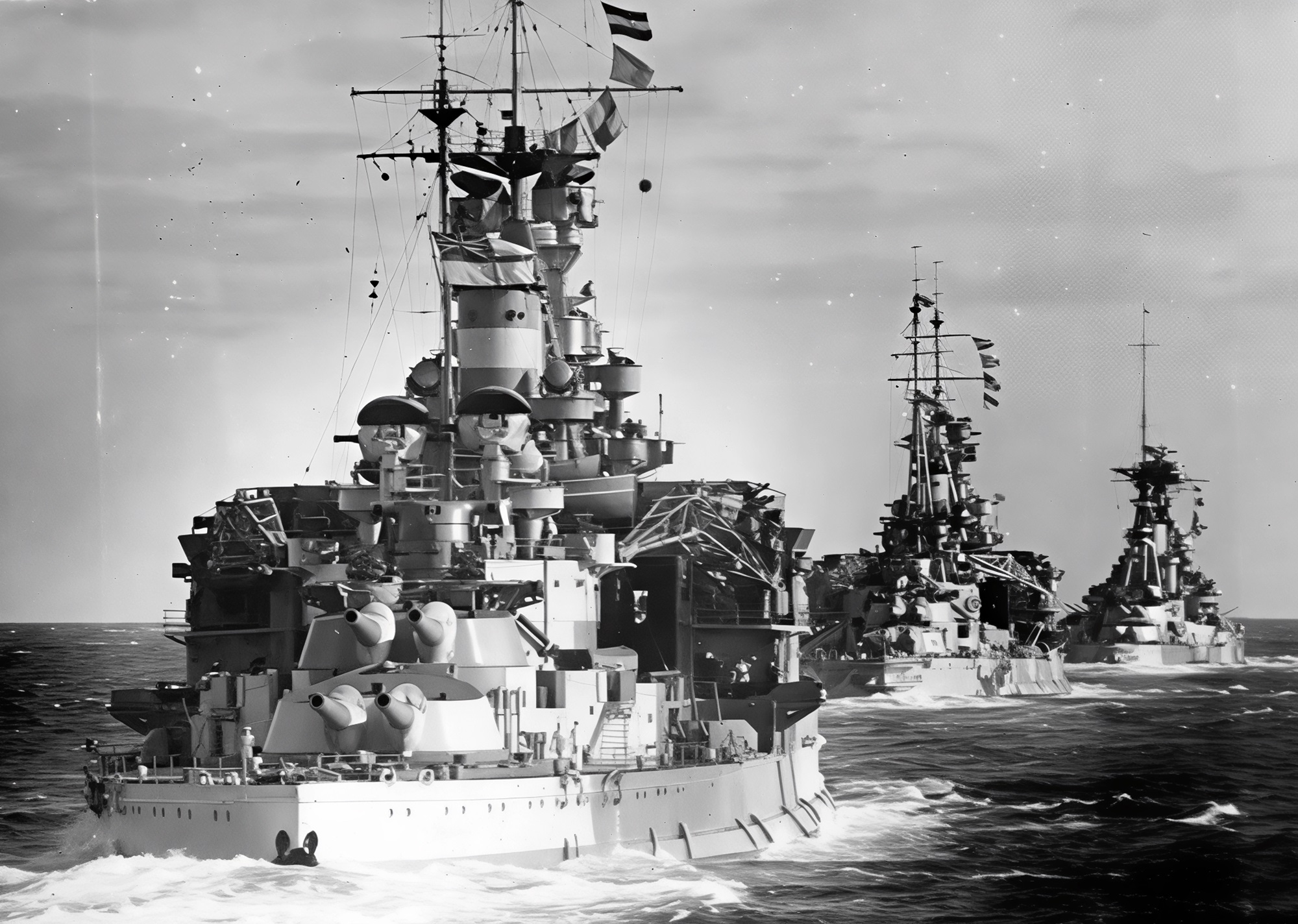
This work tells the events surrounding the sinking of the British battleship “HMS Valiant” (see Fig. 43) in the port of Alexandria, Egypt.
During the night between December 18 and 19, 1941, two Italian Navy SLC operators, Lieutenant Luigi Durand de la Penne (see Fig. 44) and Chief Diver Emilio Bianchi, along with two other SLC crews, Naval Engineer Captain Antonio Marceglia, with Chief Diver Spartaco Schergat, and Naval Weapons Captain Vincenzo Martellotta, with Chief Diver Mario Marino, after being brought close to the target by the submarine Sciré, commanded by Frigate Captain Junio Valerio Borghese, mined the British battleship “HMS Valiant” with the warhead of their "pig”. Discovered while attempting to escape, they are imprisoned aboard the English ship and do not disclose their mission target until the last moment. This allows all the sailors on board to leave the ship just before the warhead bursting. The explosion severely damages the ship, but the two Italians survive and finish the war as military prisoners. After the war, the English commander personally awards the two sailors for bravery and heroism.
 |
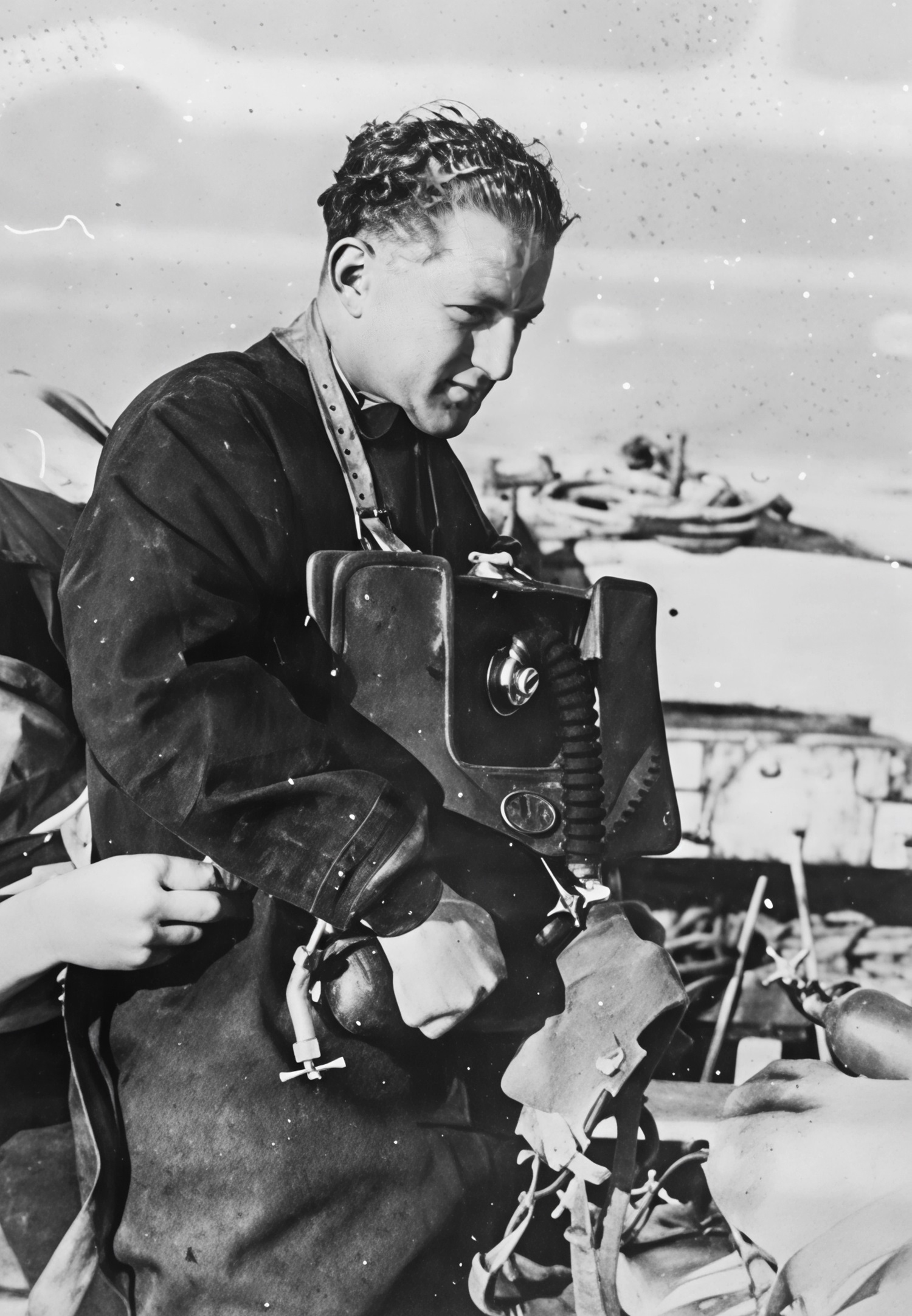 |
Fig. 43 Fig. 44
The actors who played the main roles in the movie were John Mills (commander of the Valiant), Ettore Manni (Luigi Durand de la Penne), Roberto Risso (Emilio Bianchi), Leonardo Cortese (commander Junio Valerio Borghese), and Laurence Naismith (Admiral Andrew Cunningham).
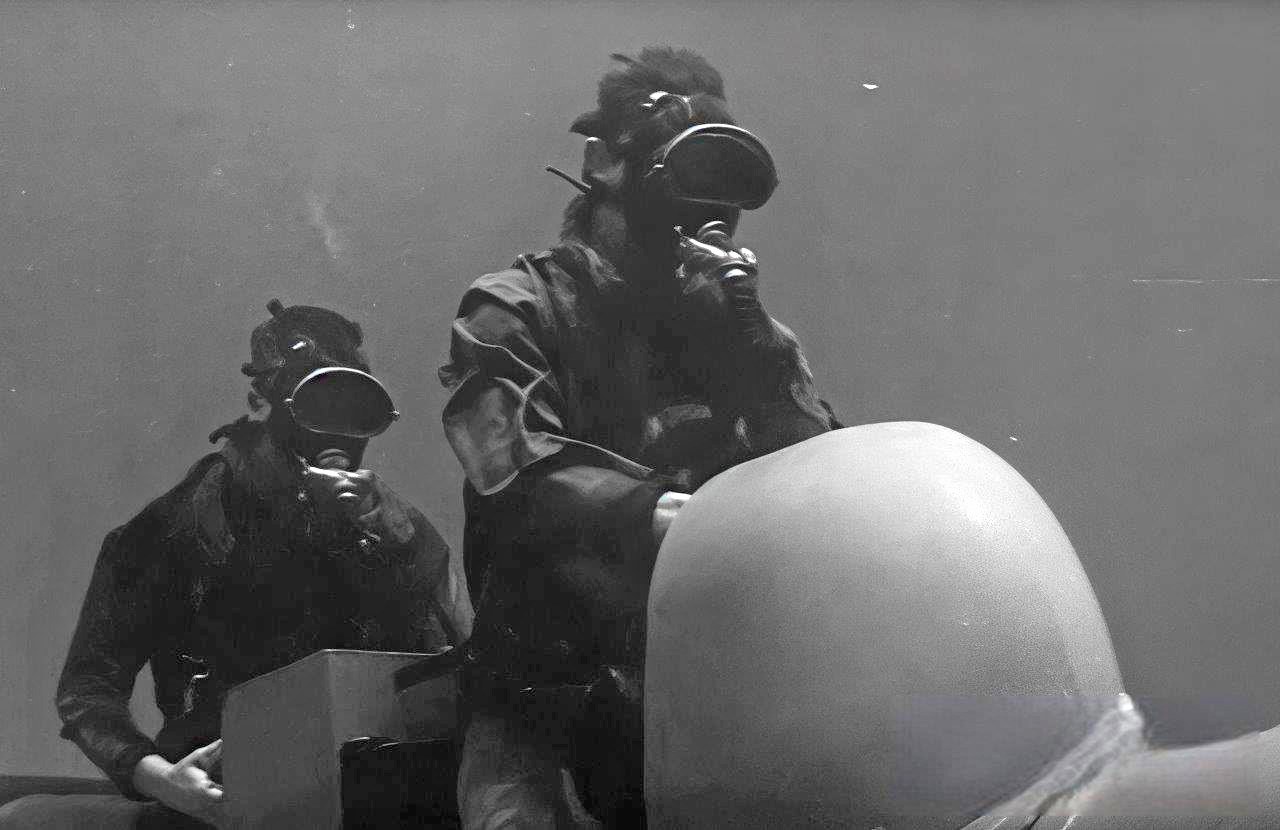
The cinema adaptation of this mission is extremely faithful, and all the details and events, told in the several records and books dedicated to this important chapter in the history of the Italian Navy's assault crafts, are effectively reconstructed. In this movie, too, the underwater equipment used was that produced by Salvas and described previously (see Figs. 45, 46, 47, and 48).
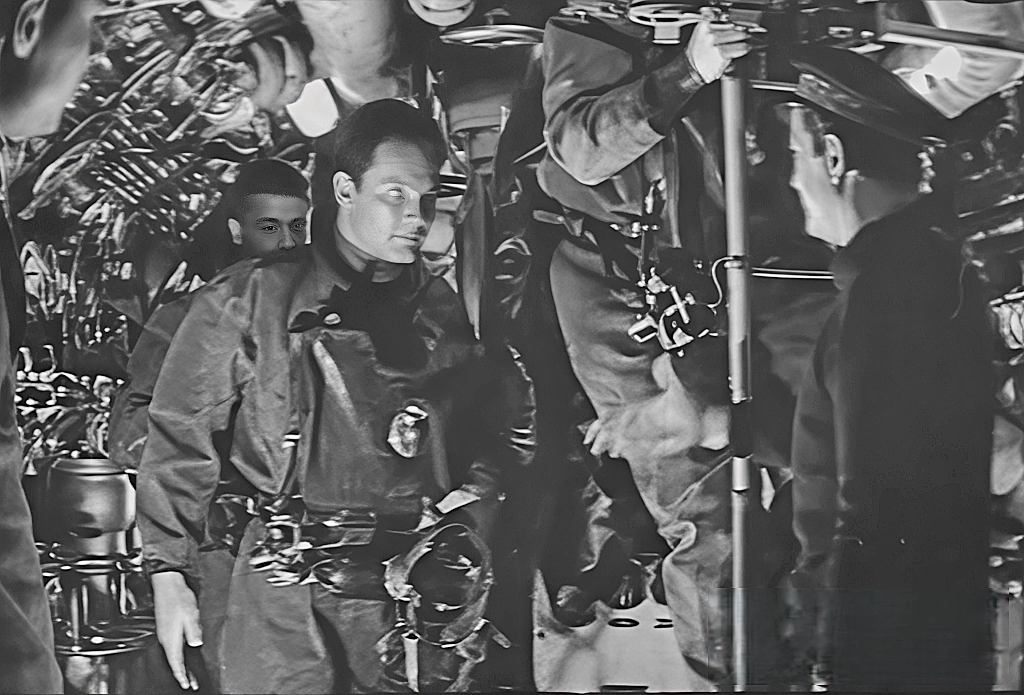
Fig. 45 |
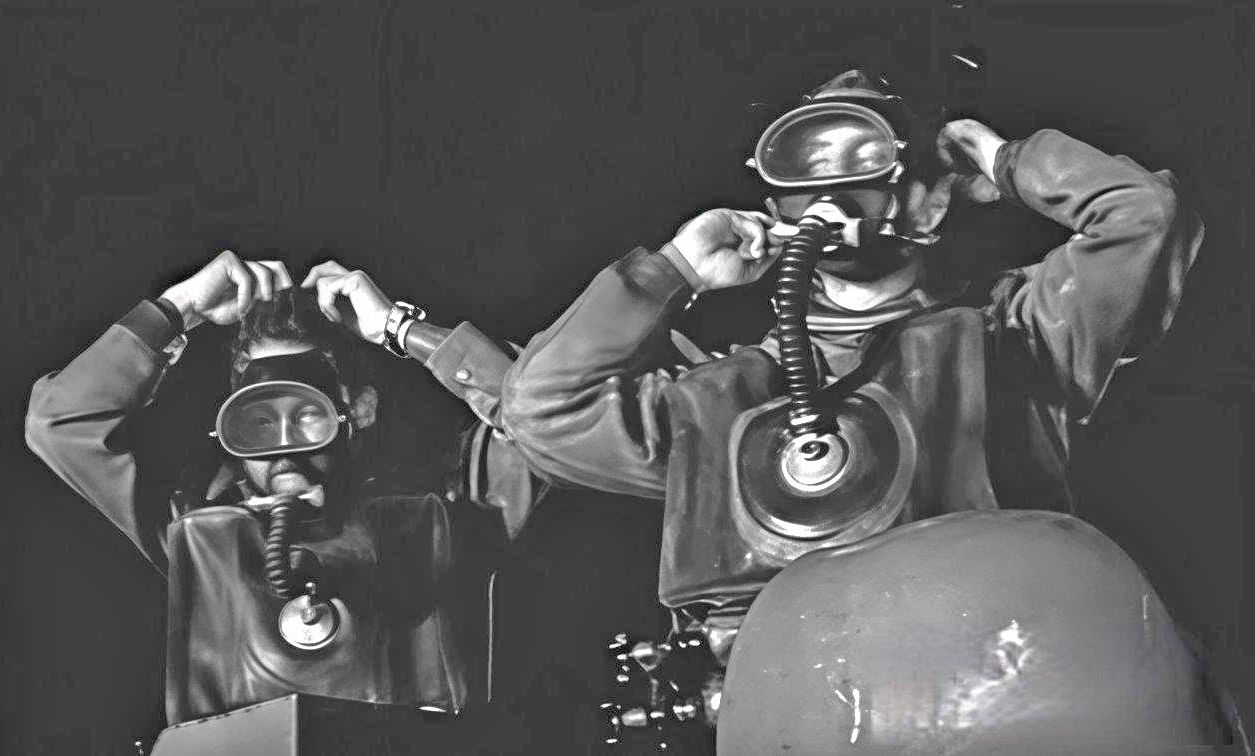
Fig. 46 |
 |
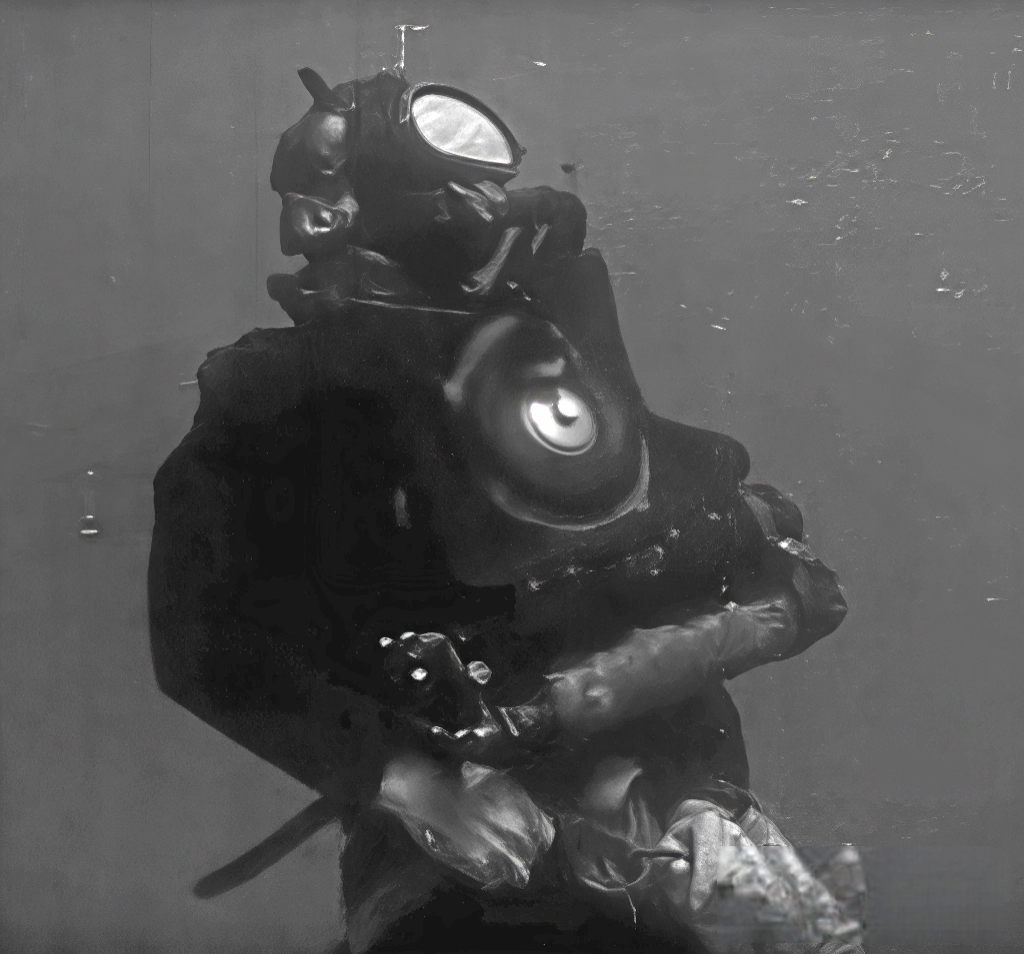 |
Fig. 47 Fig. 48
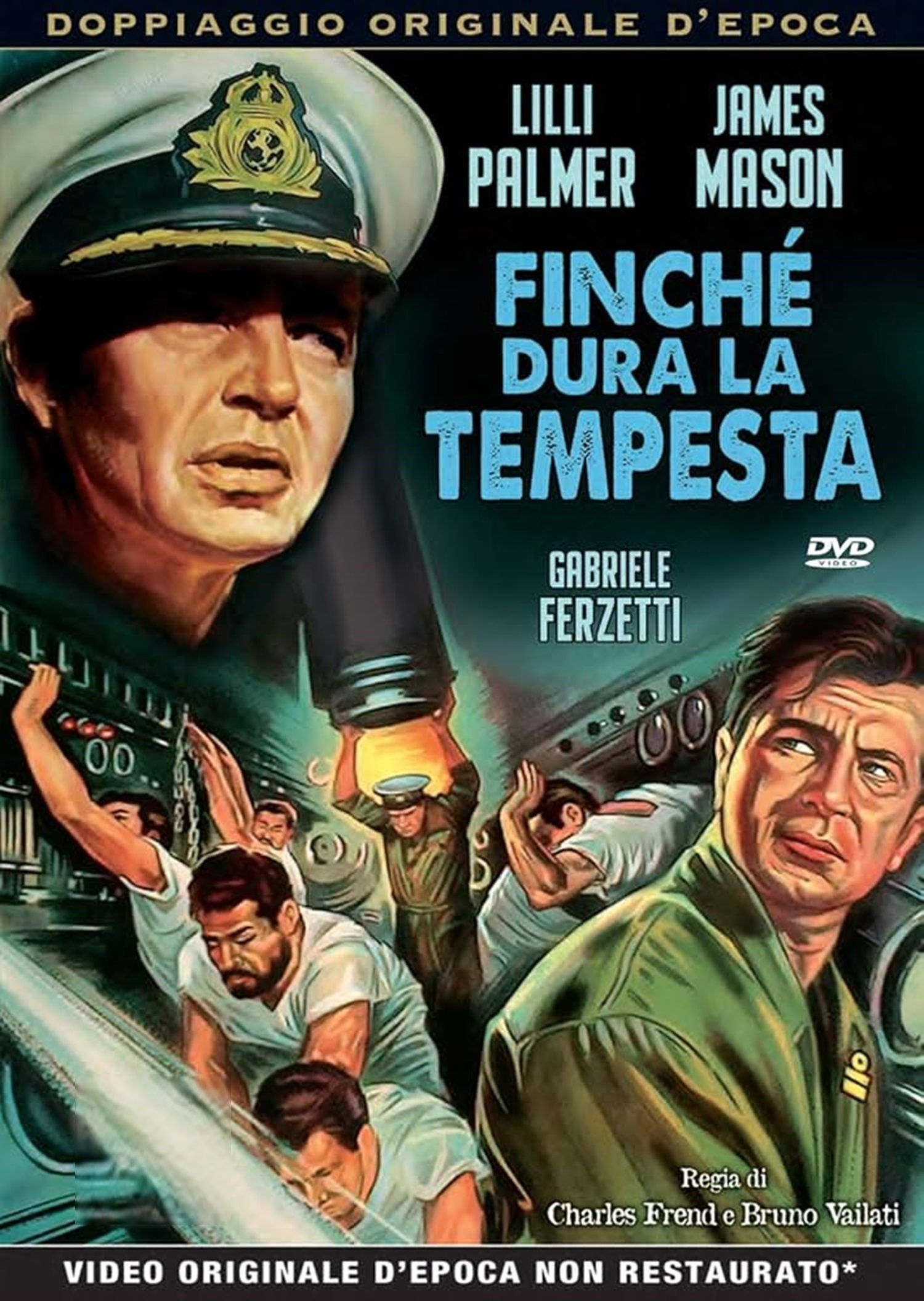
We conclude our review of cinema movies inspired by wartime events featuring Italian Navy submarines and their operators with the 1963 Italian-French production “Finché dura la tempesta”, directed by Charles Frend and Bruno Vailati (see Fig. 49). The English title of the film is “Torpedo Bay” (see Fig. 50).
 |
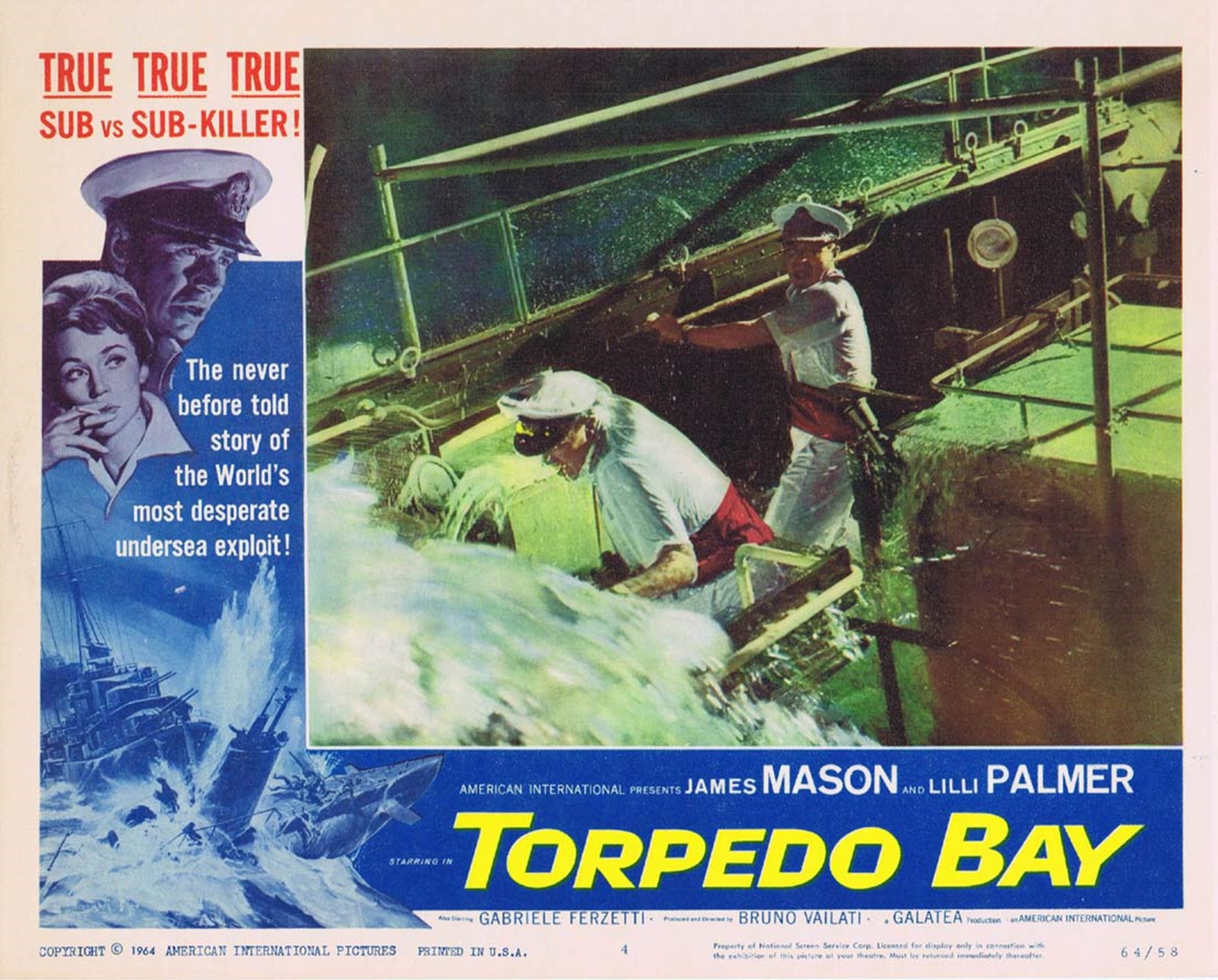 |
Fig. 49 Fig. 50
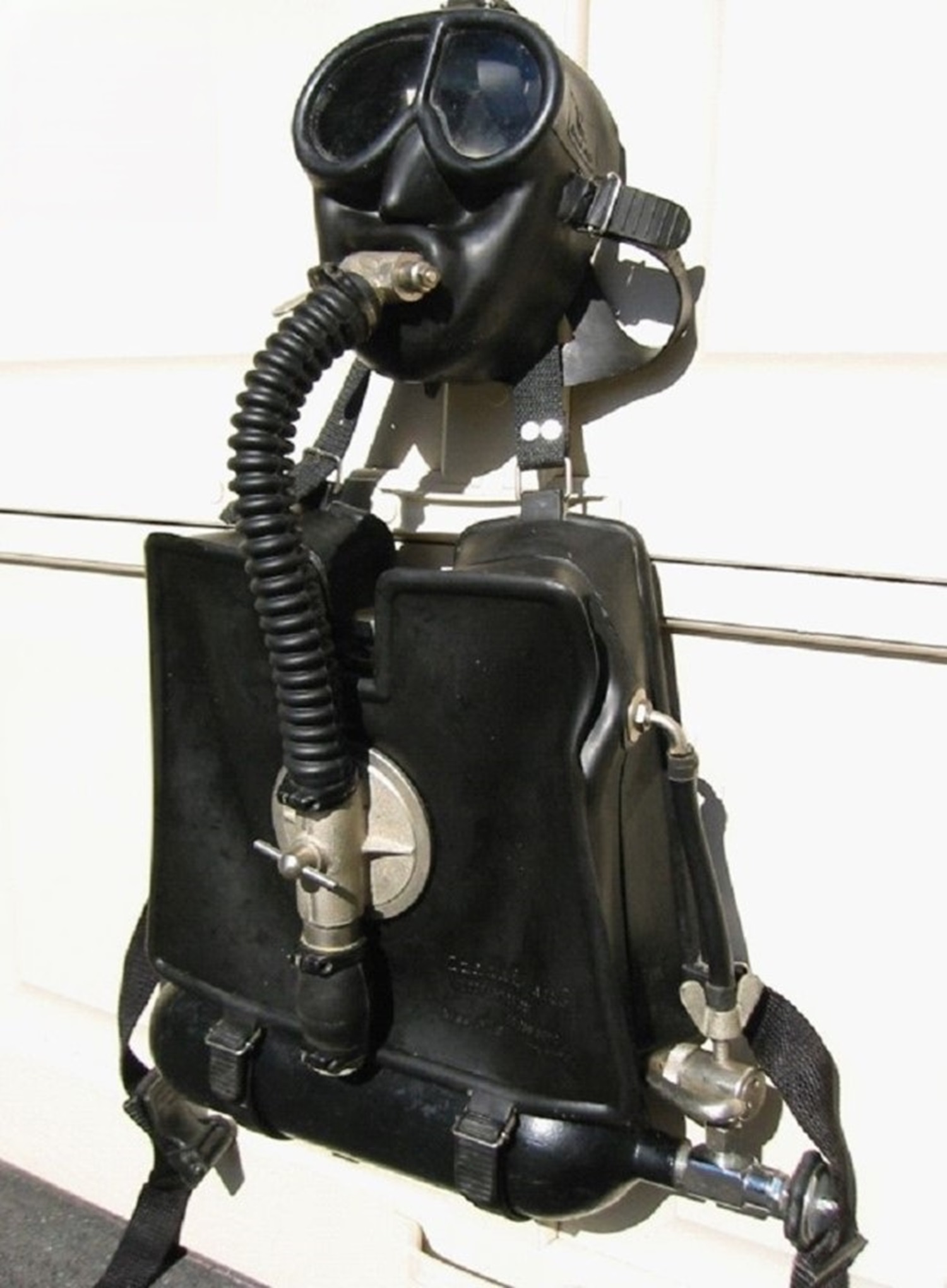
This work is inspired (in a fictionalized manner) by true events that occurred to Lieutenant Commander Adalberto Giovannini, aboard the submarine Michele Bianchi, during The Second World War. The story takes place in 1941 in the Strait of Gibraltar and covers an Italian submarine attempting to cross that strait to reach the Atlantic. A British destroyer follows in its wake and attempts to sink it. Damaged by depth charges, the submarine takes refuge in the neutral port of Tangier, Morocco. The commanders of the two enemy vessels become acquainted and appreciate each other, even as they attempt to complete their assigned missions in every way possible. The final part of the movie includes several sequences showing the Italian submarine's operators in action with oxygen rebreathers (ARO) outside the vessel resting on the harbor floor. In this case, the device used in the shooting was the oxygen rebreather model 57/B produced by Cressi from Genoa, a highly successful product widely used in FIPS underwater diving schools but also by several military organizations of the time (see Fig. 51). The dry suits and full-face masks (see the typical mask with half-moon shaped glass shown in Fig. 52) remained those produced by Salvas and already described previously.
 |
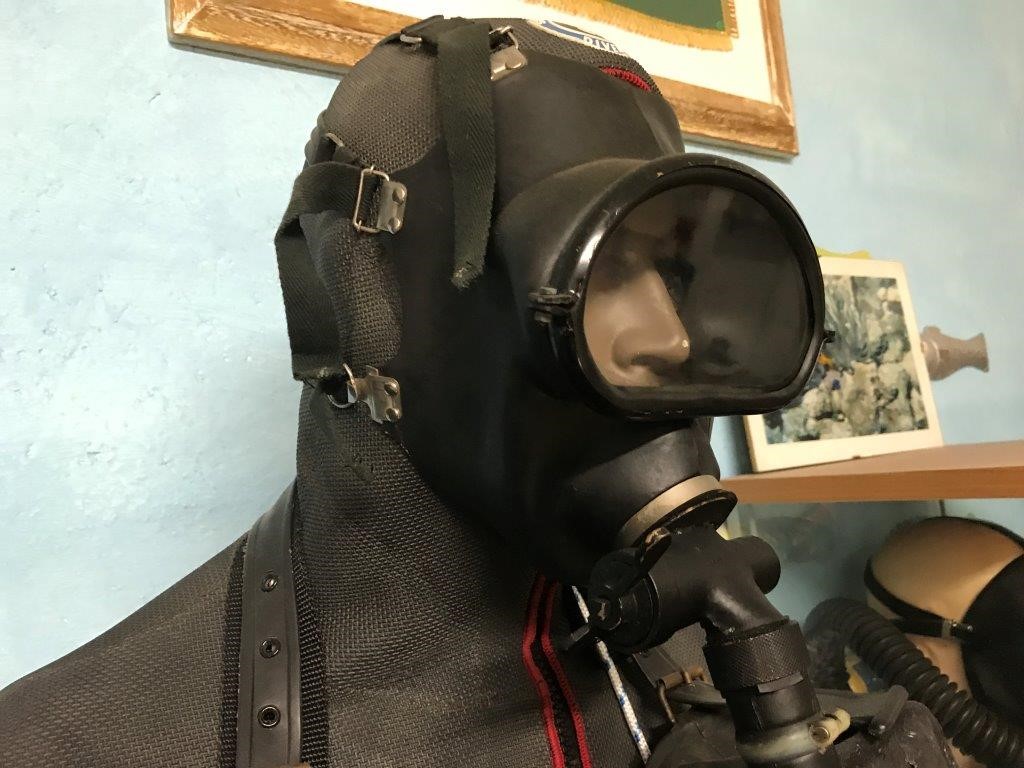 |
Fig. 51 Fig. 52
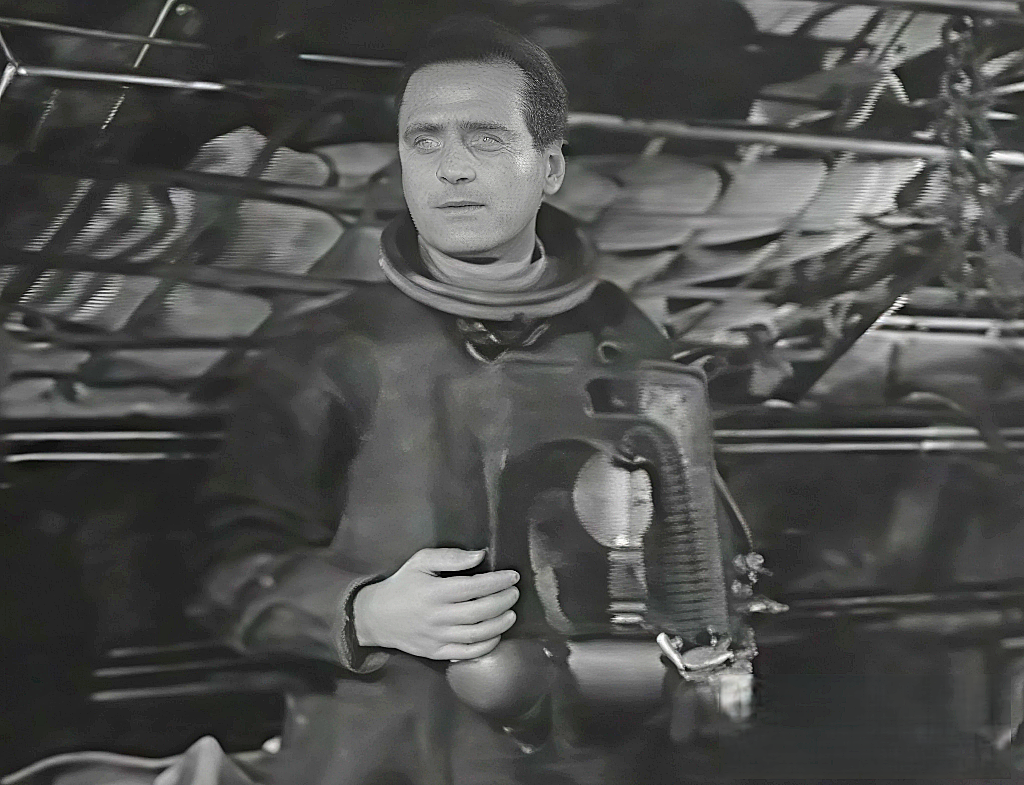
Unfortunately, again, since there are no restored copies of this movie, the few images taken from the sequences showing the submarine’s operators equipped with this gear are of poor quality (see Figs. 53 and 54).
In these images, we can recognize some of the actors who participated at the shooting, such as Gabriele Ferzetti (Captain Leonardi), Alberto Lupo (Magrì), and Renato De Carmine (Ghedini).
 |
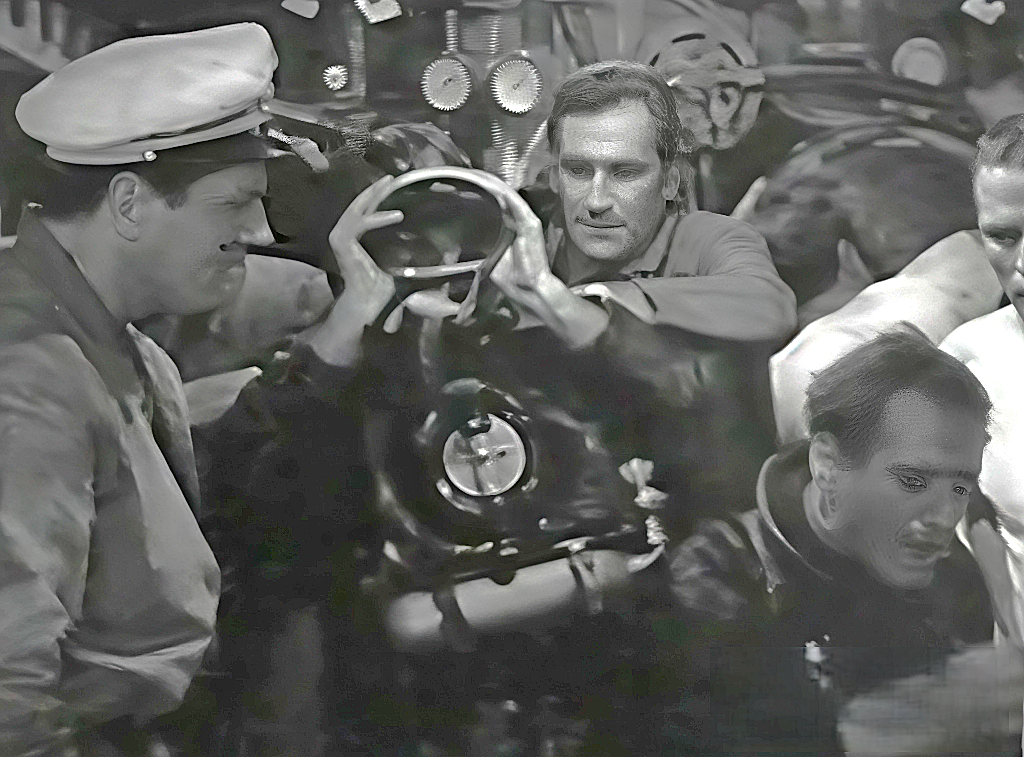 |
Fig. 53 Fig. 54
_____________