The device appeared in some advertisements in the second half of the 1980s, when it was apparently on sale in Germany and Japan. Nothing else is known about it, nor who manufactured it or where. Nor is it known whether it was intended to appear serious or whether it was an open joke. Let's see.
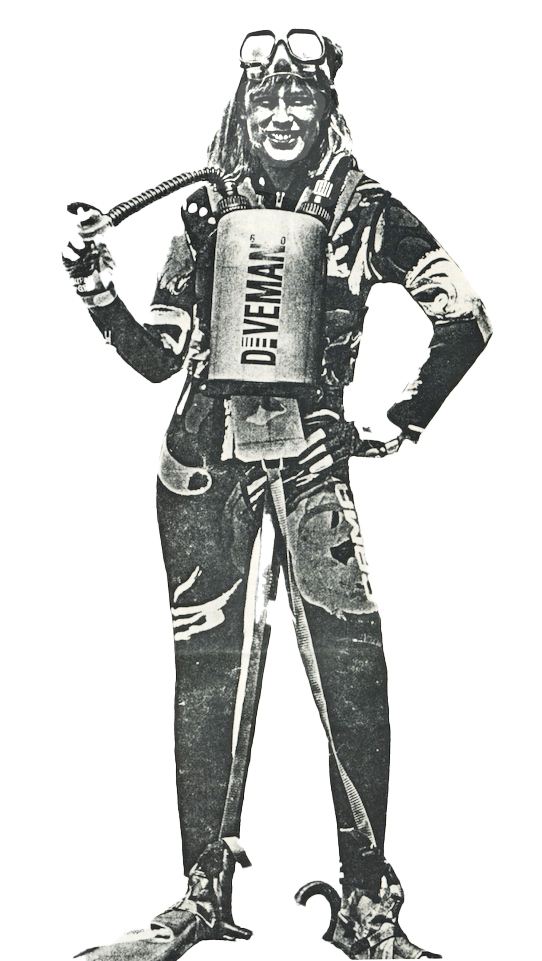
Diver with the Divemate worn |
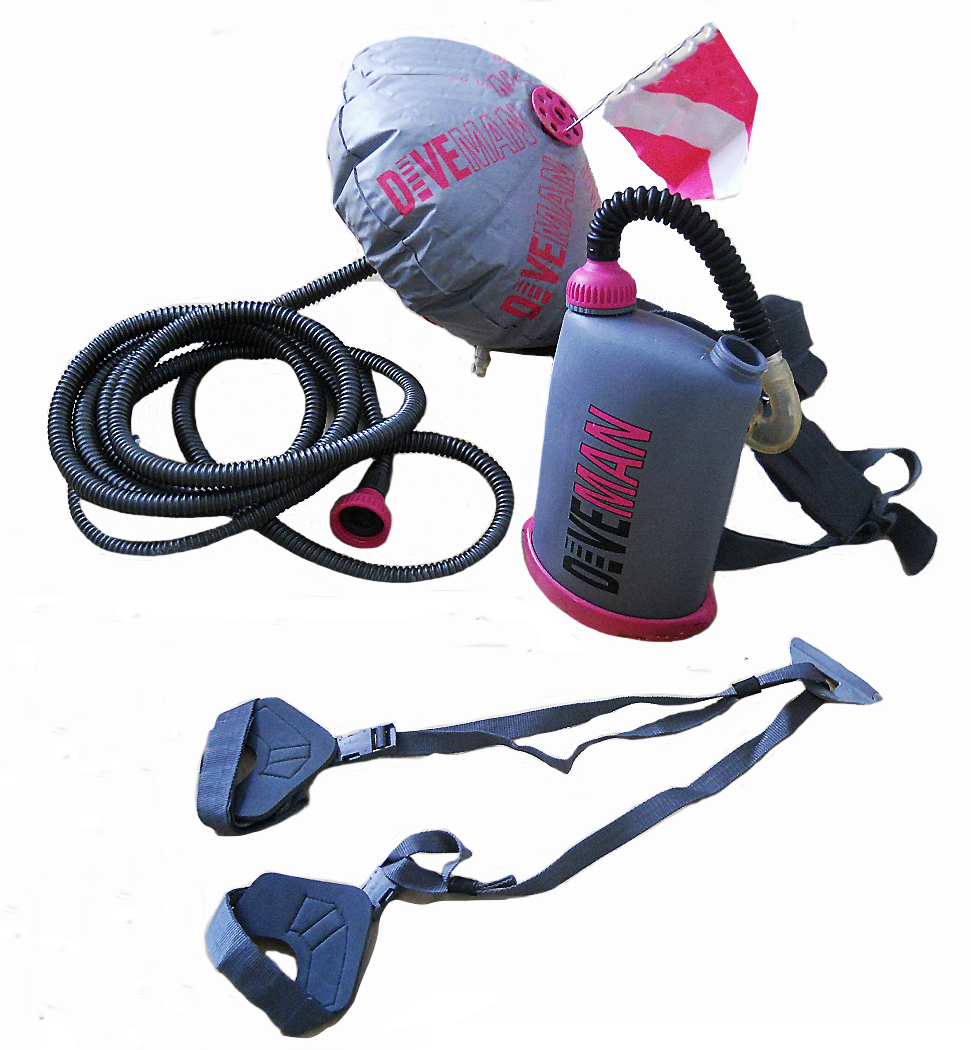
The Divemate in its components |
A large cylinder containing a soft plastic bag is worn on the chest using a special harness. The top lid of the cylinder has two screw-on fittings. A 6-meter-long hose extends from the left connection, its end buoyed by a standard dive marker balloon and equipped with a non-return valve. A short corrugated tube with a mouthpiece for breathing connects to the right connection. Two long straps, which are attached to the feet, come out from the open base of the cylinder.
The operating principle requires the diver to swim breaststroke, whether without fins as in the two explanatory drawings or with fins as in the advertising photo is unknown. When the legs are extended, the straps stretch the plastic bag creating a vacuum inside that draws air from the surface, inflating it. It's not specified whether there's a valve that prevents air from being sucked out of the unfortunate diver's mouth at this stage. In the next stage, when the legs are in the retraction phase, the diver inhales air from the casing, which, compressed by the ambient pressure, retracts into the cylinder ready for the next cycle.
Obviously, breaststroke swimming must be continuous, without interruptions and in rhythm with the diver's breathing.
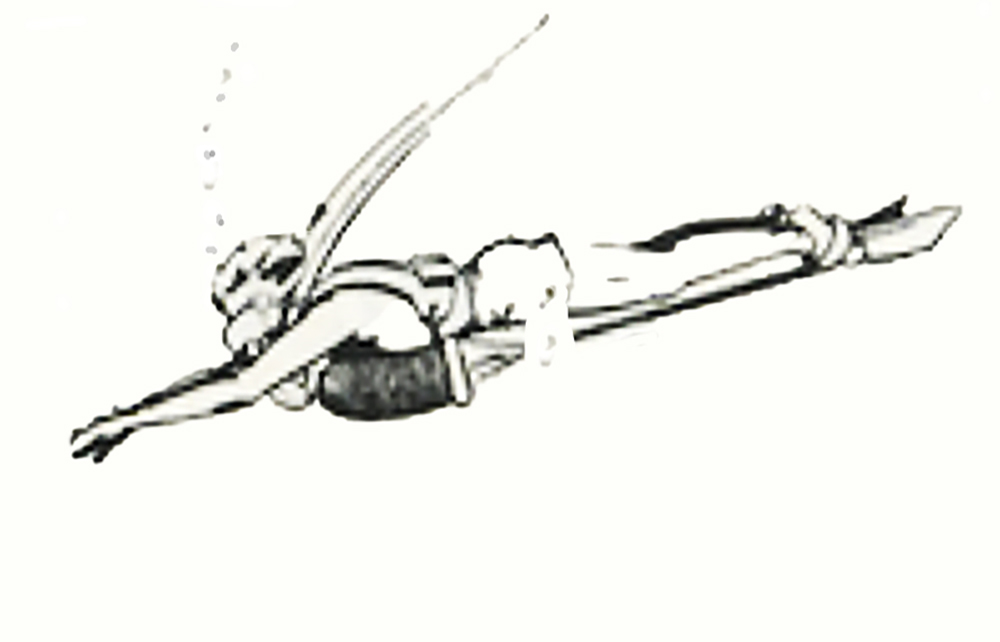
Suction phase from the surface |
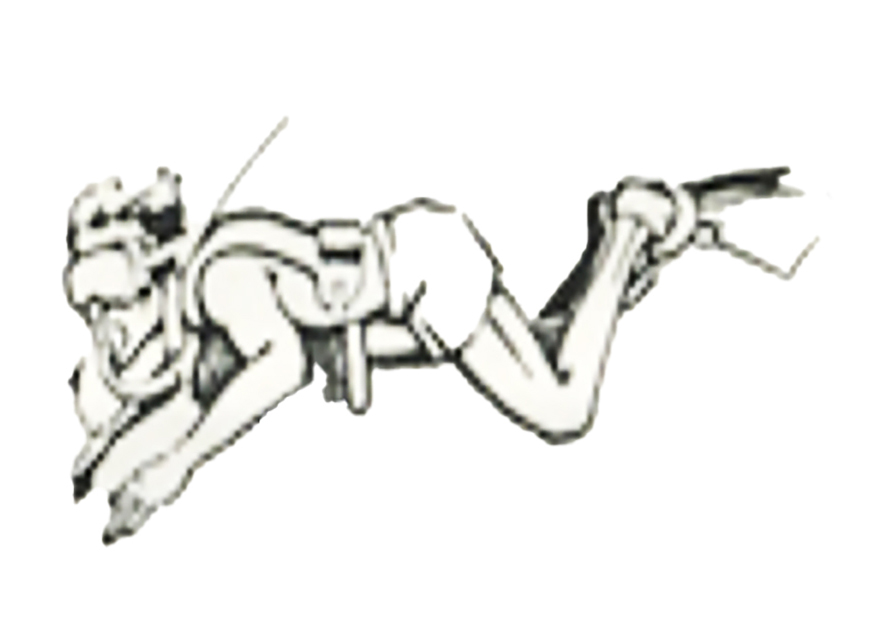
Diver's inspiration phase |
In practice, the diver can never stay still unless they hold their breath, which is difficult given the constant effort required to activate the air pump. He cannot rest on the bottom; they cannot hold anything in their hands, as their hands and arms are engaged in breaststroke swimming. He cannot descend below the 6 meters permitted by the hose, a depth at which it must be difficult to "pedal" with enough energy to deliver air to their lungs at a pressure of 1.6 bar, especially since there is not a fixed point of support.
Who would have ever thought of diving with such an apparatus that was more imaginative than technical?
__________