Rome, Piazza del Popolo, specifically at Caffè Rosati, a traditional meeting place where the great business of Italian cinema is discussed. Francesco Alliata di Villafranca, the prince who at the time hoped to turn Sicily into the Italian Hollywood through his production company Panaria Film, meets Bruno Vailati, the organizer of The National Underwater Expedition to the Red Sea, to learn about and finalize all the details of the venture.
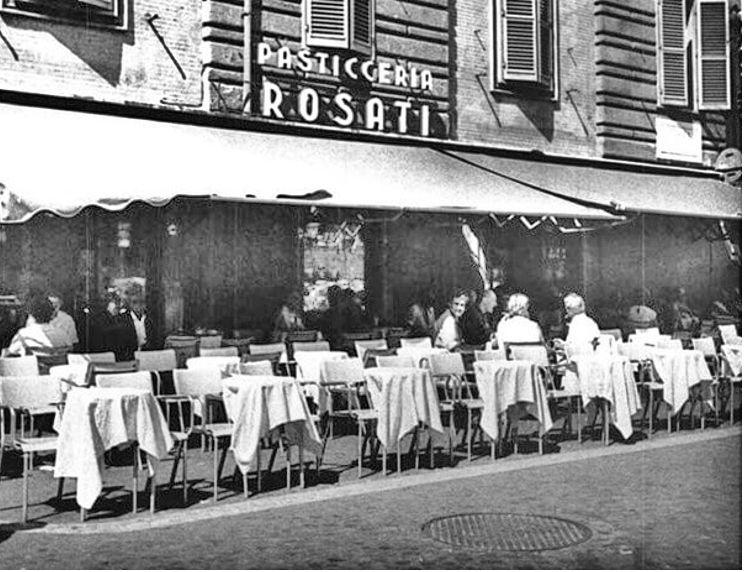
1 - The Caffé Rosati
Also present at the meeting, at Vailati’s invitation, is a young Folco Quilici, an unknown director who had distinguished himself with a short film titled Pinne e Arpioni (Fins and Harpoons), which had won an award at the Cortina d’Ampezzo Festival of Sports Cinema. The encounter lasts only a few intense minutes, yet it is enough to persuade the noble producer to offer him a position as second camera operator. The offer is accepted immediately. However, given his limited underwater experience, Quilici will mostly be seen working at shallow depths, breathing from an oxygen rebreather, which he purchases second-hand at the Rome Trade Fair shortly before departure. In addition to those already mentioned, the expedition will also include Raimondo Bucher, world record holder in free diving, as director of the sports section; Enza Bucher, Italian champion in underwater spearfishing and Raimondo Bucher’s wife; Silverio Zecca, the ‘amphibious man’; the painter Priscilla Hastings, who will descend to the seabed herself in order to create her drawings; the journalist and photographer Gianni Roghi; cinematographer Masino Manunza; photographer Giorgio Ravelli; the hydrobiologist Dr. Francesco Baschieri Salvadori; the hydrobiologist Dr. Luigi Stuart Tovini of the University of Rome; and finally Dr. Alberto Grazioli as the expedition’s physician.
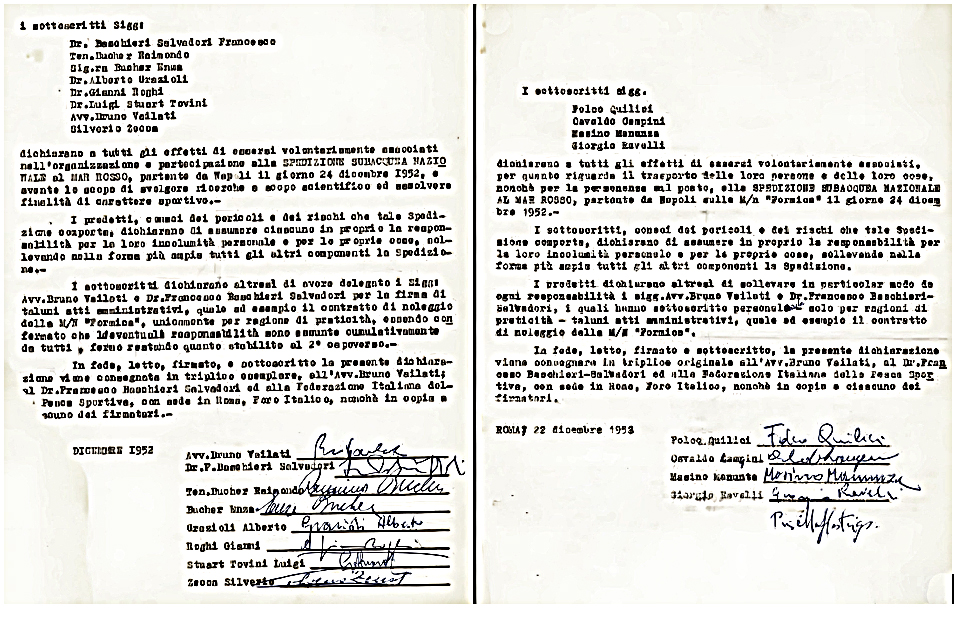
2 - The members of the Expedition and their signatures
Shortly before departure, in order to attract the attention of the press and thereby lend greater prestige to the expedition, Raimondo Bucher decides to reclaim the freediving depth record, which was then held by Ennio Falco and Alberto Novelli. His new record takes him down to a depth of -39 meters. Finally, after overcoming numerous bureaucratic and financial difficulties, at six o’clock in the morning on 27 December 1952 the National Underwater Expedition to the Red Sea sets sail from Naples, bound for the Dahlak Islands in Eritrea. The expedition departs carrying the new record and the attention of the national press, backed by meticulous organization led by the director and underwater cinematographer Bruno Vailati and the hydrobiologist Dr. Francesco Baschieri Salvadori. It is sponsored by the Google Club of Milan and supported in equipment by the Salvas of Rome company. It should be noted, however, that in his second book, "Sesto Continente," Quilici states that Mares also supplied equipment, but perhaps he was simply trying to curry favor with the Rapallo company. Indeed, in his first book, "Adventures in the Sixth Continent," that brand is not mentioned, nor is it mentioned in any other book or reportage about the Expedition.
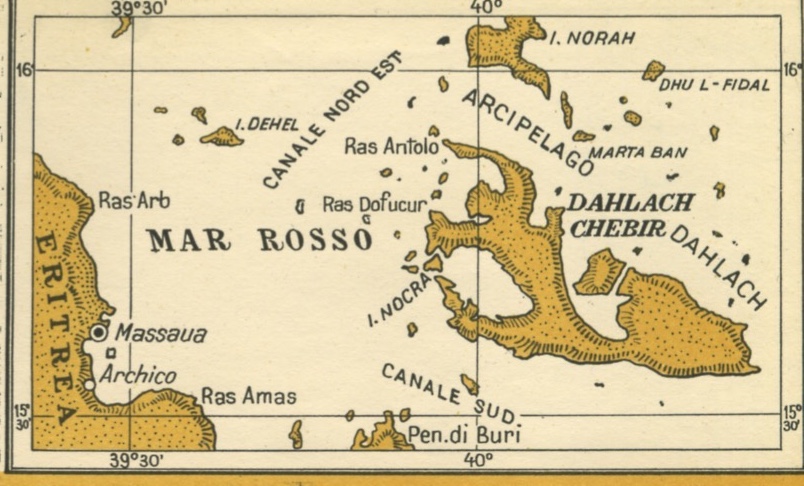
3 - The Dahlach archipelago
The vessel is a 135-ton boat named Formica, used for short coastal transport between Giglio Island and Porto Santo Stefano. But why the Dahlak Islands? First of all, for economic reasons: the aim was to organize an expedition in tropical seas while remaining at a reasonable distance from Italy, thereby keeping costs manageable. Elsewhere in the Red Sea, Cousteau and his Calypso had already explored for more than a month an area around the Farasan Islands on the Arabian side, while Hans Hass had concentrated his work in the waters of Port Sudan. The Dahlak Islands, however, well known for their abundant marine life and coral formations of great scientific value, had not yet been visited by a single underwater explorer or researcher. Moreover, the archipelago lies only a few miles from Massawa, Eritrea’s second most important city and the principal port of the former Italian colony.
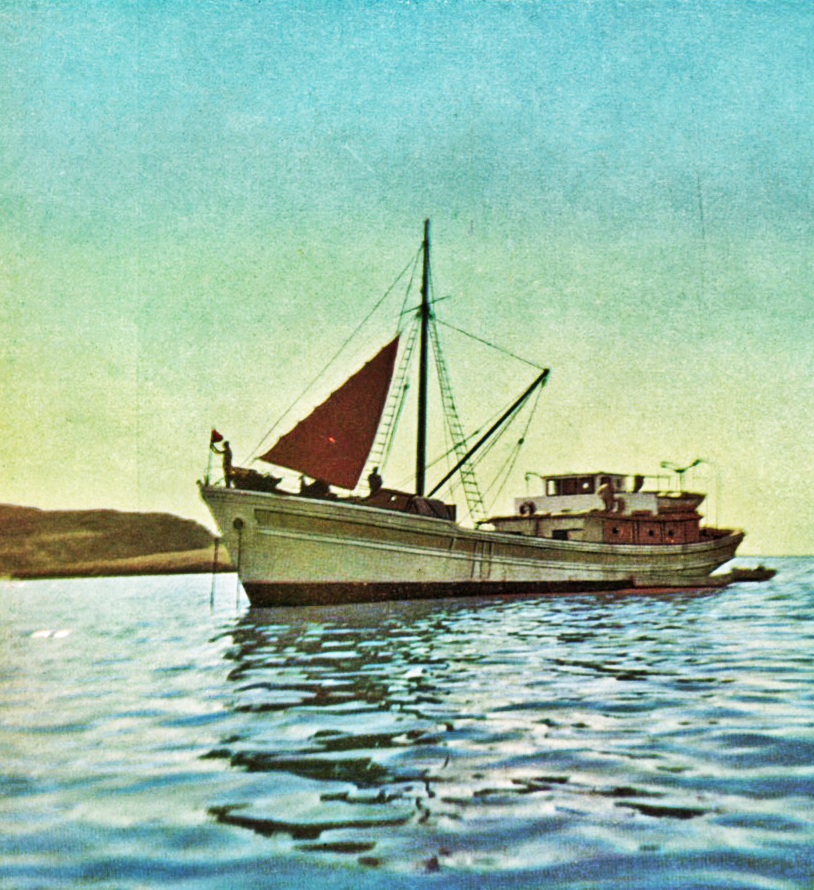
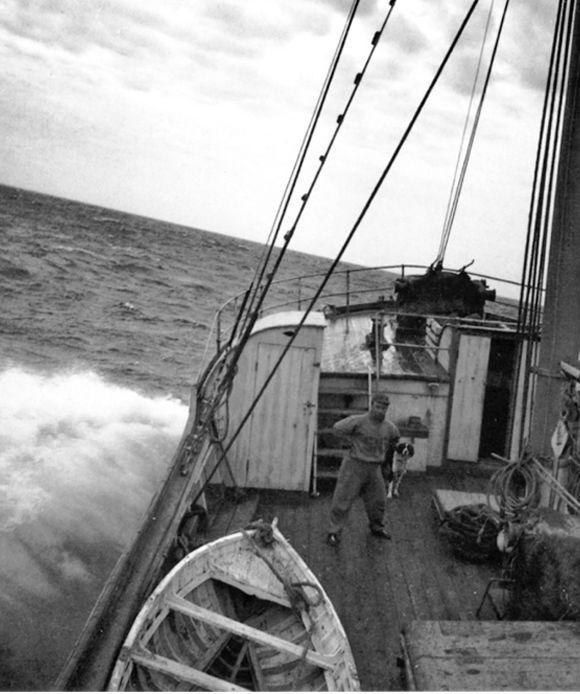
4 - The Formica at anchor (ph. Quilici) 5 - Navigation is not always smooth
After a month of rather rough navigation, the expedition finally reaches its destination, only to encounter its first problems. When the exact departure date from Naples had been set, Vailati had sent a letter to Rochester, the headquarters of Kodak, requesting that about one hundred boxes of Ektachrome film be delivered directly to Eritrea. Yet there was no trace of the shipment, despite repeated phone calls to Asmara airport to check whether the parcel had arrived. These endless days of waiting turn out to be a stroke of luck for Quilici, who is able to refine his technique with the oxygen rebreather and become more familiar with the marine environment. When it becomes clear that the film from America will never arrive, Vailati gathers his last coins and flies to Rome to look into the matter. The Kodak branch in Italy immediately informs him that the film should have been ordered in Italy rather than in the United States and, above all, paid for in advance. Determined to save the expedition, Vailati sells his car, pays Kodak, and returns to his companions in the Red Sea with a large trunk full of film. By then, however, the season has changed, and with the rising water temperatures the fish, until then found near the surface, have moved to deeper waters. What was to be done? They now had meters upon meters of film at their disposal, but the main actors had disappeared. The solution was to move north, where the waters were cooler. At last, after a long run of bad luck, the work can begin. Each member carries out their own task: some photograph, some film, others collect specimens. Important catches are made; sometimes as many as nine hours are spent in the water. The work is demanding and exhausting, but the satisfaction is immense.
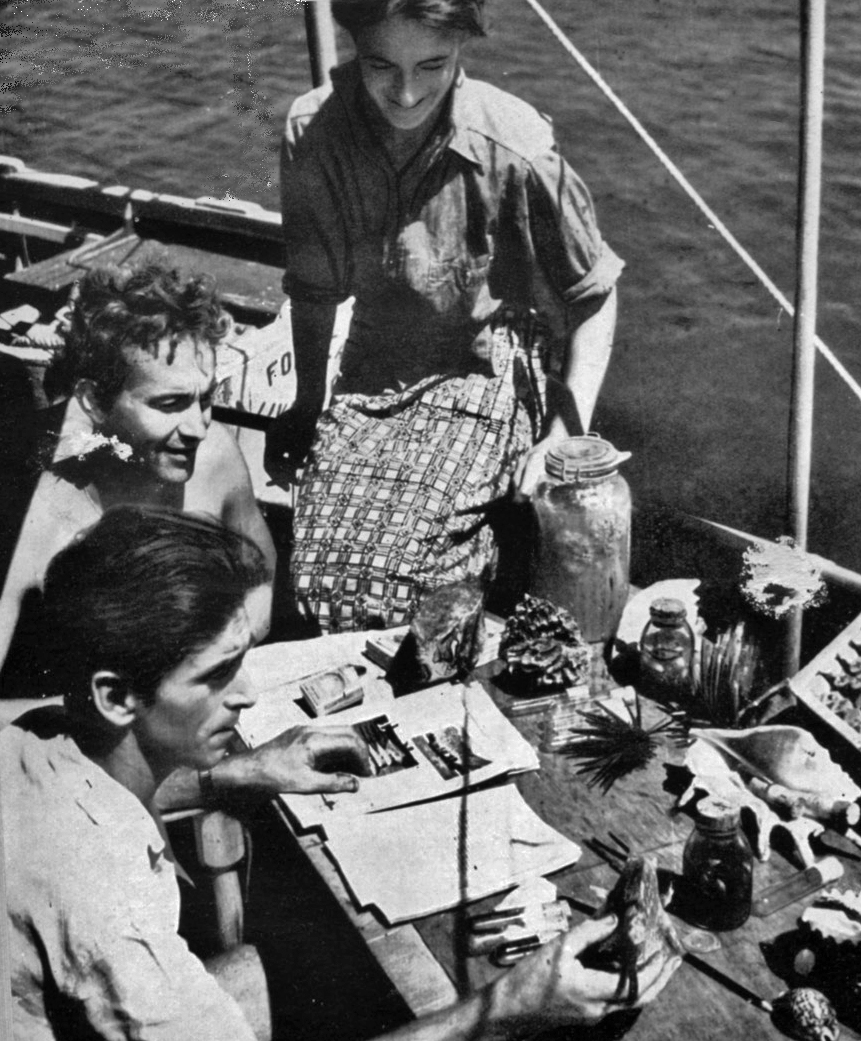
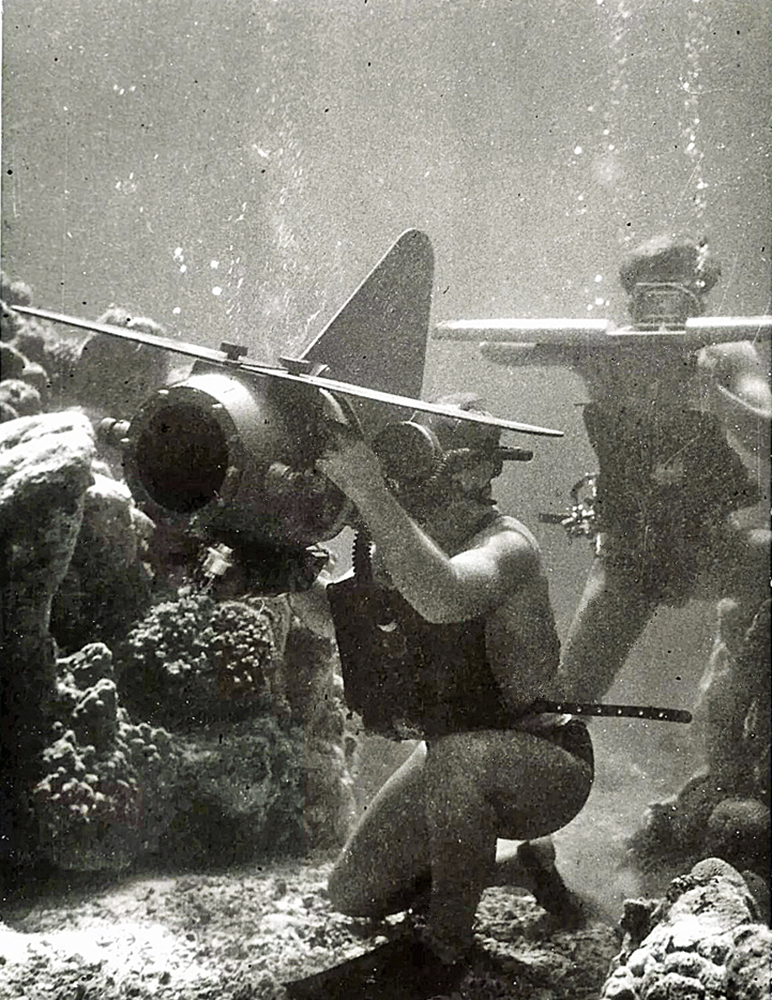
6 - Controllo dei reperti scientifici (ph. Quilici ) 7 - Due operatori sul fondo
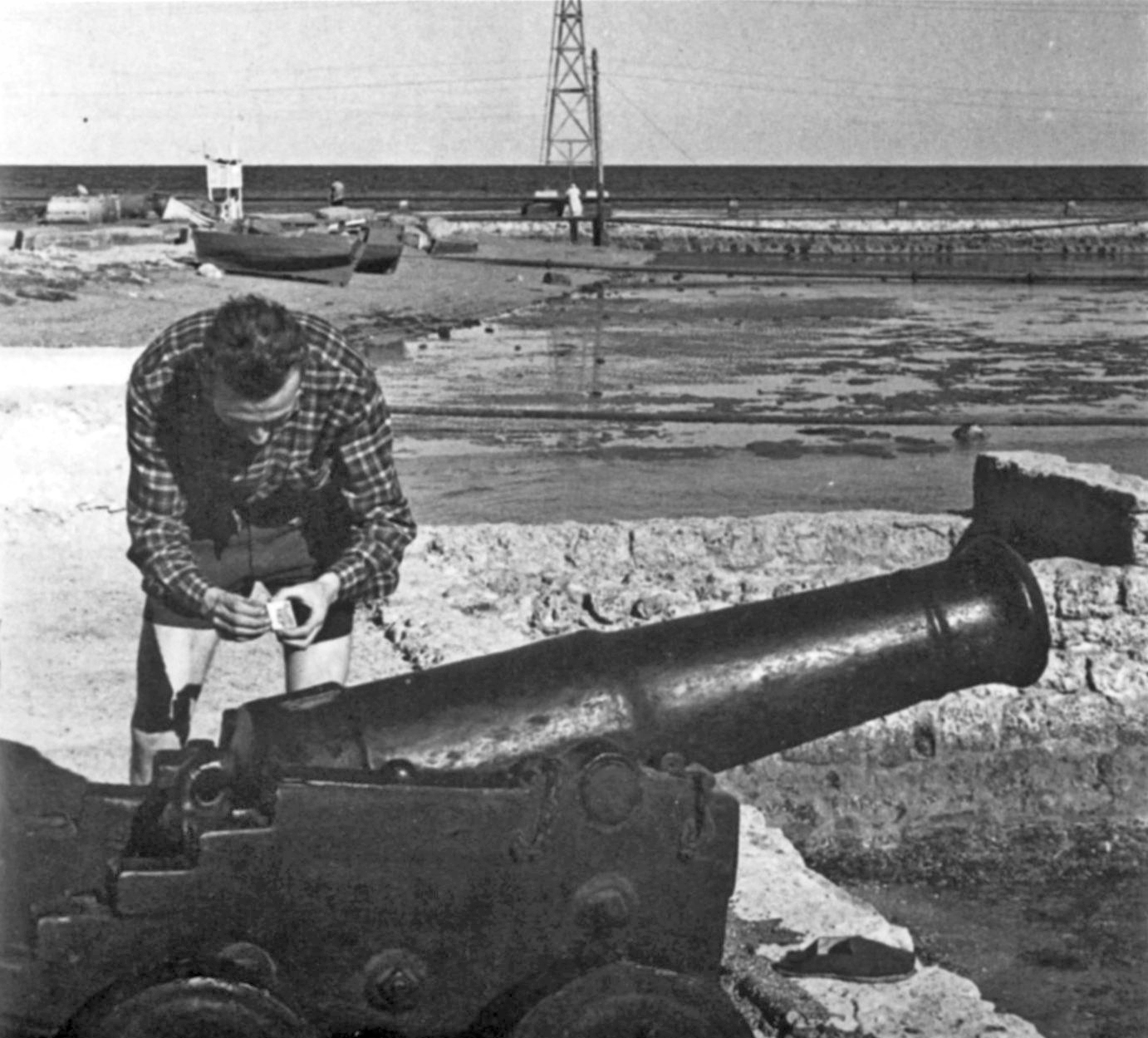
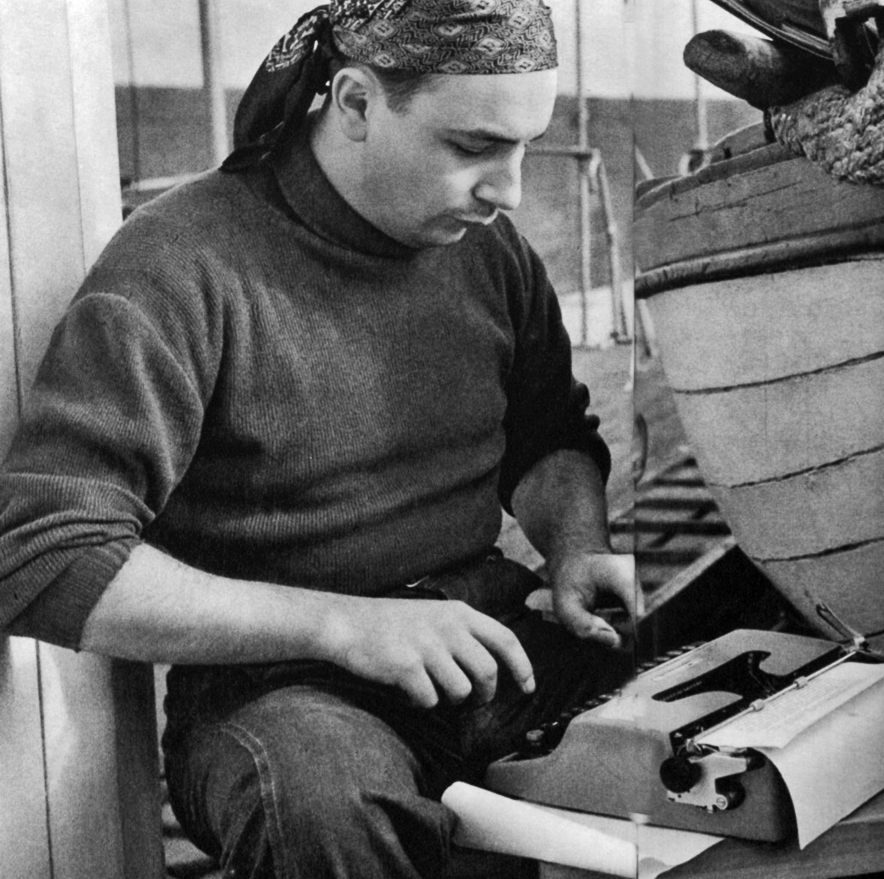
8 - Un antico cannone 9 - Quilici al lavoro a bordo del Formica
All this continues for four months, but as always, though in those places everything seems to move more slowly, time is relentless. And so, with many more adventures still to be lived, specimens to be collected, and prey to be speared, the moment finally comes to return to Italy. During the expedition’s stay in the Red Sea, specimens of marine fauna and flora of scientific interest amounting to four tons were collected; material that, once back in Italy, would allow scholars to carry out a careful assessment of the area’s biodiversity. To document that extraordinary adventure, more than seventy thousand meters of film were shot and over four thousand photographs were taken.
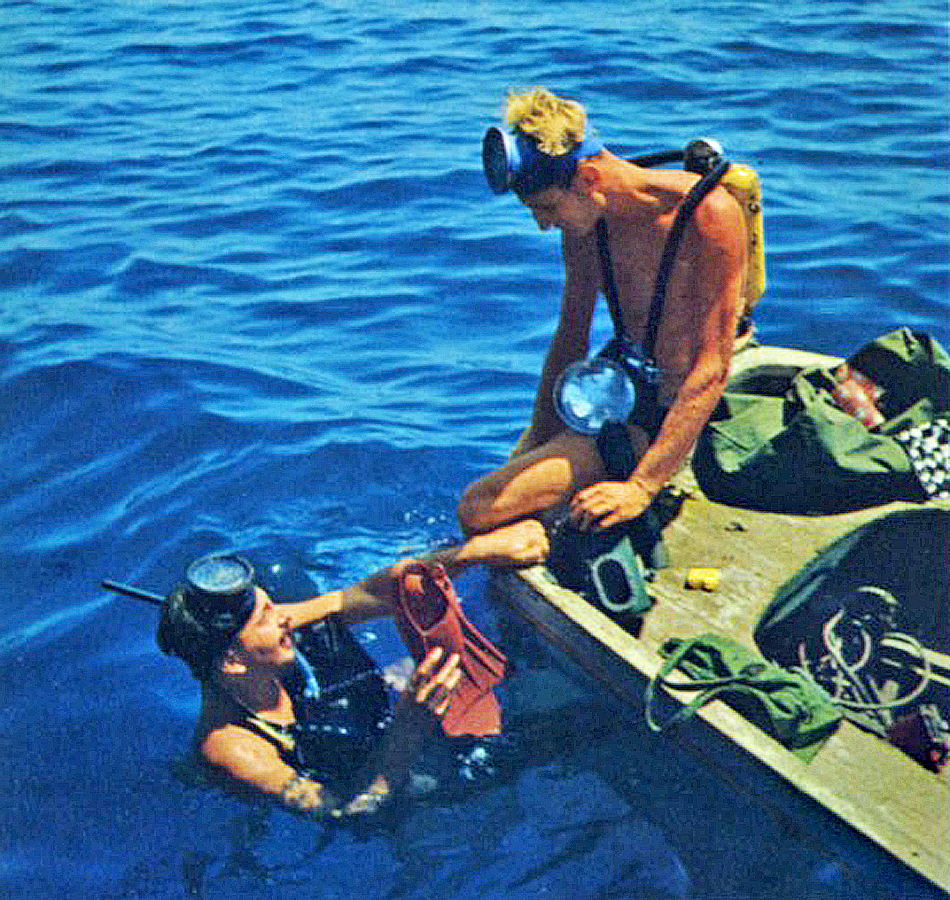
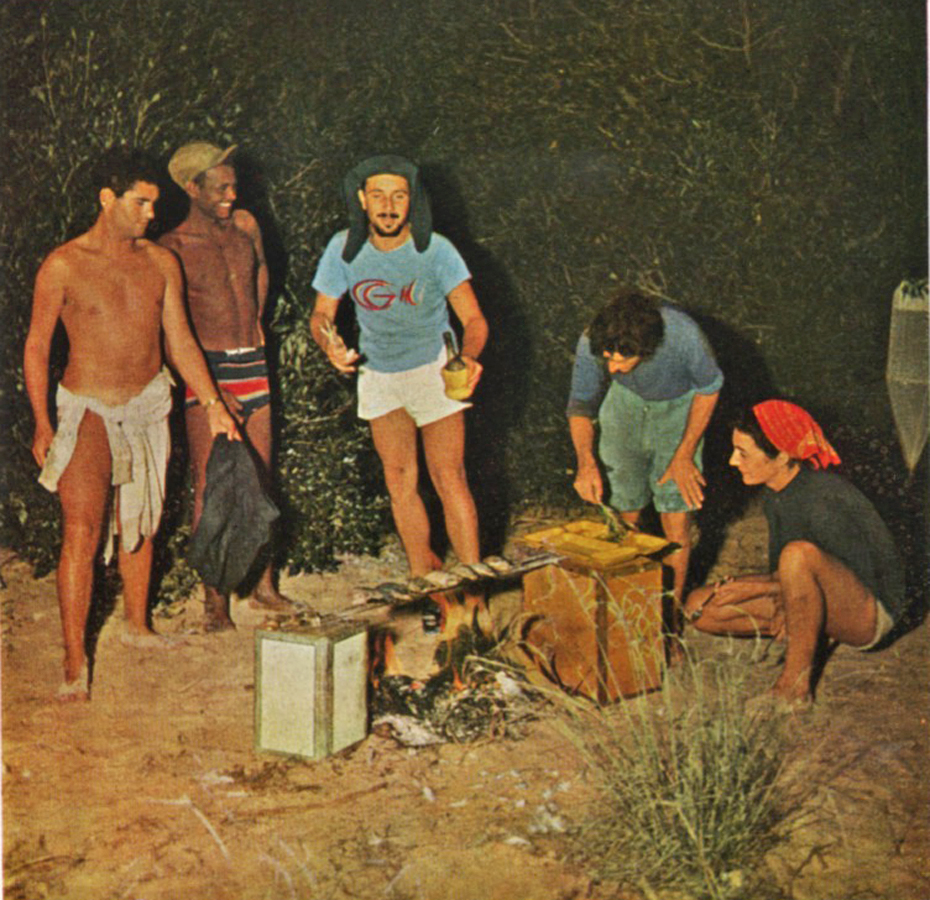
1 10 - Giorgio Ravelli (in the boat) and Folco Quilici 11 - Dur Ghella isle - grilled fish for dinner
This meticulous documentation would later be used to publish books and to edit a documentary film made in two parts. The first part covers the period from December 1952 to the following May, recounting the journey from Italy and the exploration of the Dahlak archipelago aboard the Formica. The second part was filmed in October and November 1953, with air transfers and underwater activity along the coral reefs of Egypt and Sudan aboard the smaller Maria Gabriella, an 80-ton boat. But why was a second expedition necessary? Box-office considerations. Sharks was the documentary’s original title, though fortunately it would later be replaced with something less aggressive and more evocative: The Sixth Continent. Upon their return, well aware that the work was far from finished, the film crew gathered in Rome to meet with the production team. Eighty percent of the production was controlled by Delphinus, a company created specifically by Prince Francesco Alliata, heir to the legacy of the renowned Panaria. During the meeting the producers immediately expressed their wish to alter the storyline of the documentary, transforming it into an adventure in which the expedition leader falls in love with a woman. Distracted from his duties as a scientist, he would thus cause the deaths of his collaborators, who were to be torn apart by the jaws of monstrous sea creatures. The dismay was immense: hours upon hours of hard work seemed destined to become a third-rate commercial film. At this point, in an effort to persuade the producers to reconsider, Vailati deployed all his subtle powers of argument, eventually expressing himself with these significant words: “From the story of our underwater expedition we would like the film to convey the idea that man will one day be able to live underwater, to work there, and to exploit the riches of the seabed as if it were another continent, the sixth.”
Although their positions remained far apart, a compromise was eventually reached. This explains the need for a second expedition: a small crew would return to the Red Sea to film a powerful scene: the capture of a terrifying creature, symbolizing man’s decisive victory over the strongest beast of the abyss. Vailati, Quilici, Ravelli, Stuart Tovini, Zecca, Enza and Raimondo Bucher would depart. Suez was chosen as the meeting point, where the Formica would no longer be waiting for them but rather the Maria Gabriella, a boat rented locally that would take them to the enclosed waters of Sanganeb, near Omm el Kurush in Sudan. There the final cinematic episode would be filmed: the struggle with Mala Kebír, the “great devil,” which, even after being repeatedly harpooned, still had the strength to drag everyone toward the depths.
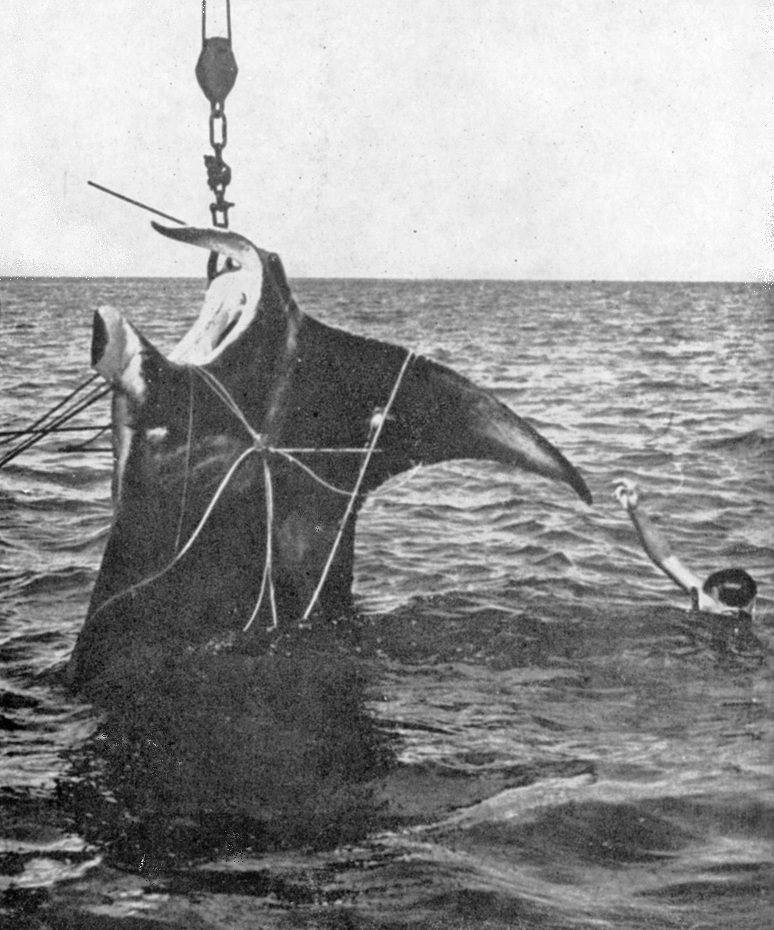
12 - The great manta ray is finally won
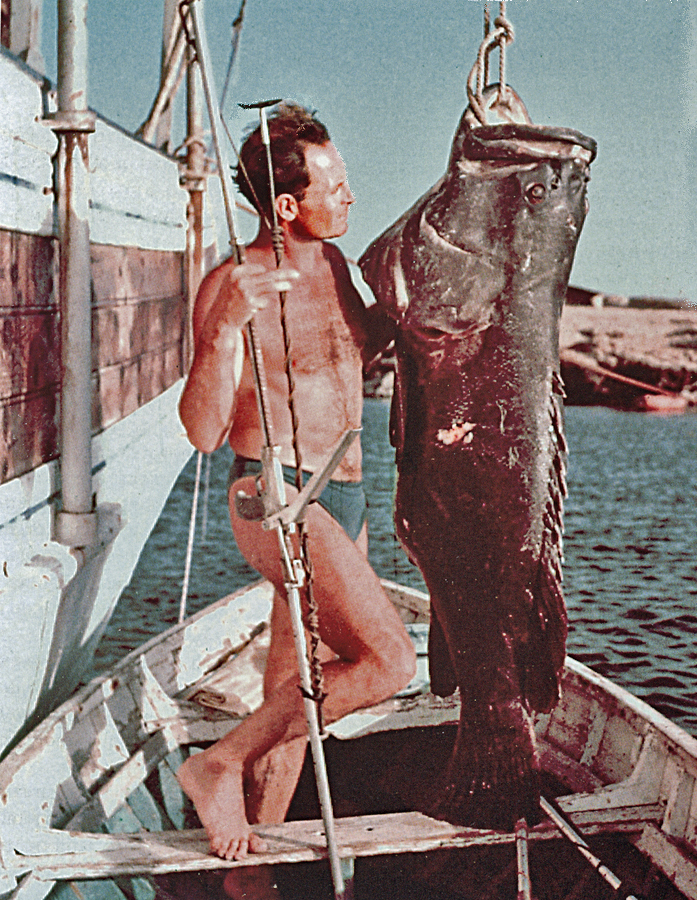
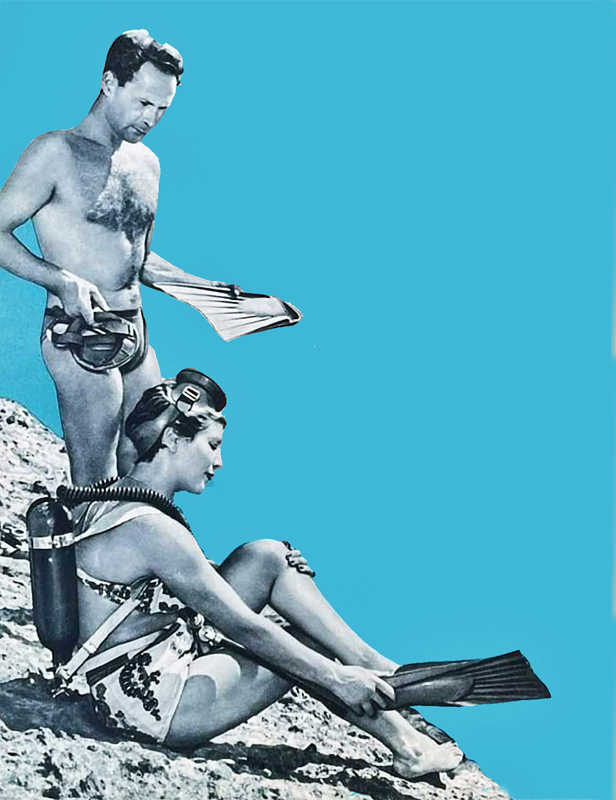
13 - Bucher with his soon-to-be-famous speargun 14 - Enza and Raimondo Bucher
Once the dramatic scene demanded by the producers had been completed - the capture of the giant manta ray, first harpooned and then finished with a knife by Raimondo Bucher - the crew set off again for Italy. Upon their return, heated debates immediately broke out among the expedition members about the direction the film should take: should it be more sporting in tone, as Bucher wanted, or more scientific, as Vailati insisted? Amid these endless discussions, Quilici and Masino began reviewing and cataloguing kilometres upon kilometres of film. At the same time, the inadequacy of Osvaldo Langini became evident. An excellent director and narrator of mountain environments, he proved ill-suited to directing an underwater film. The majority of the production, led by Prince Alliata, seeing little progress and remembering Pinne e Arpioni, entrusted Folco Quilici with the role of assistant director. From the outset the young Quilici demonstrated remarkable ability, but one quality in particular impressed the prince: his natural talent for weaving scientific material into a compelling narrative. Alliata did not hesitate any longer and entrusted him with the full direction of the film.
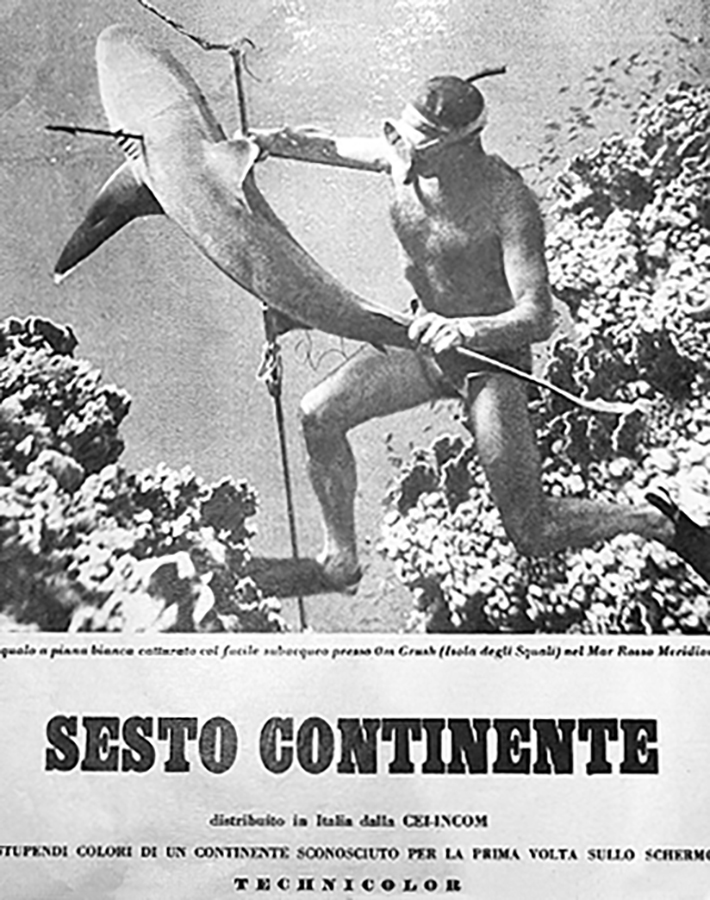
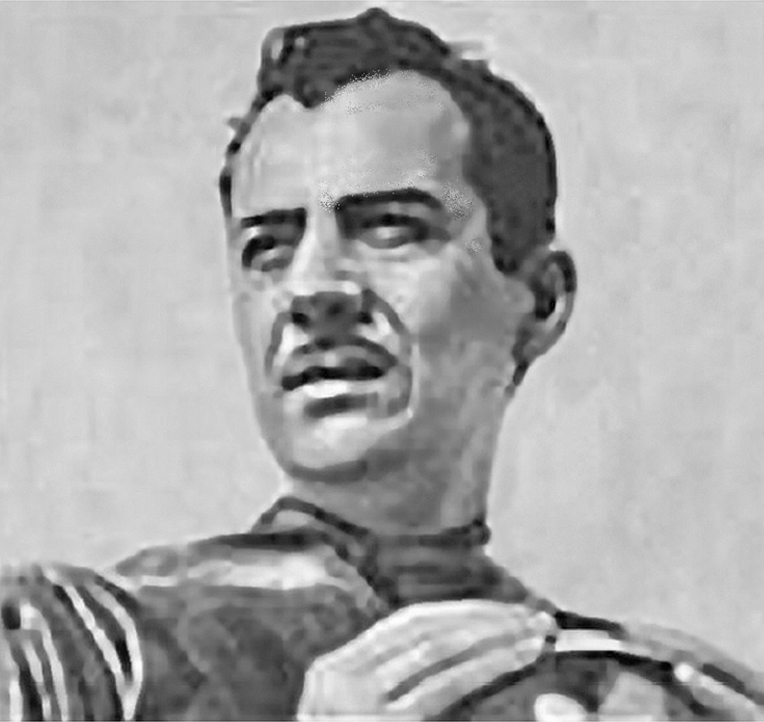
15 - locandina del film Sesto Continente di Quilici 16 - Bruno Vailati, organizzatore della Spedizione
The Sixth Continent is the first feature-length colour film ever made in an underwater environment. It was presented in competition at the 15th Venice Film Festival in 1954 alongside works such as Visconti’s Senso (The Wanton Countess), Fellini’s La Strada (The Road) and Kurosawa’s Seven Samurai, where it was awarded the Special Jury Prize. In 1955 it won first prize at the Mar del Plata International Film Festival. In 1956, in a bold move, the film was presented in France, almost as a challenge to Cousteau’s The Silent World, released that same year. The result was a success not only in cinema but also in literature.
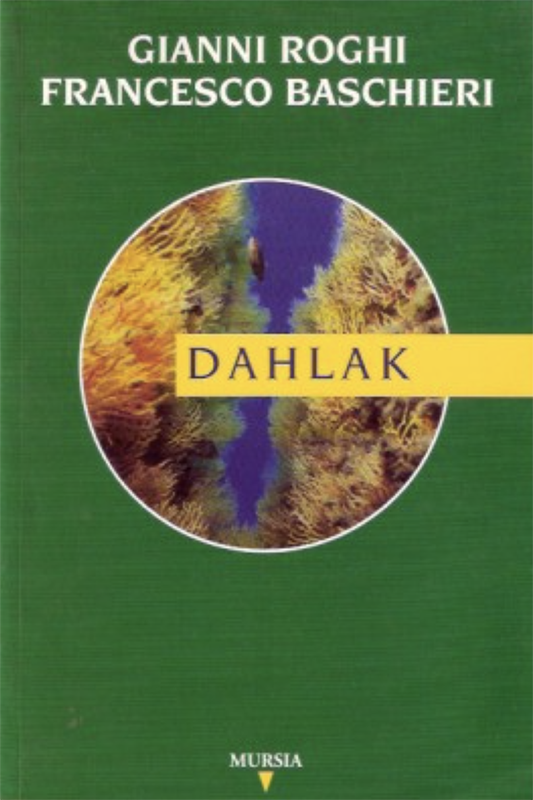
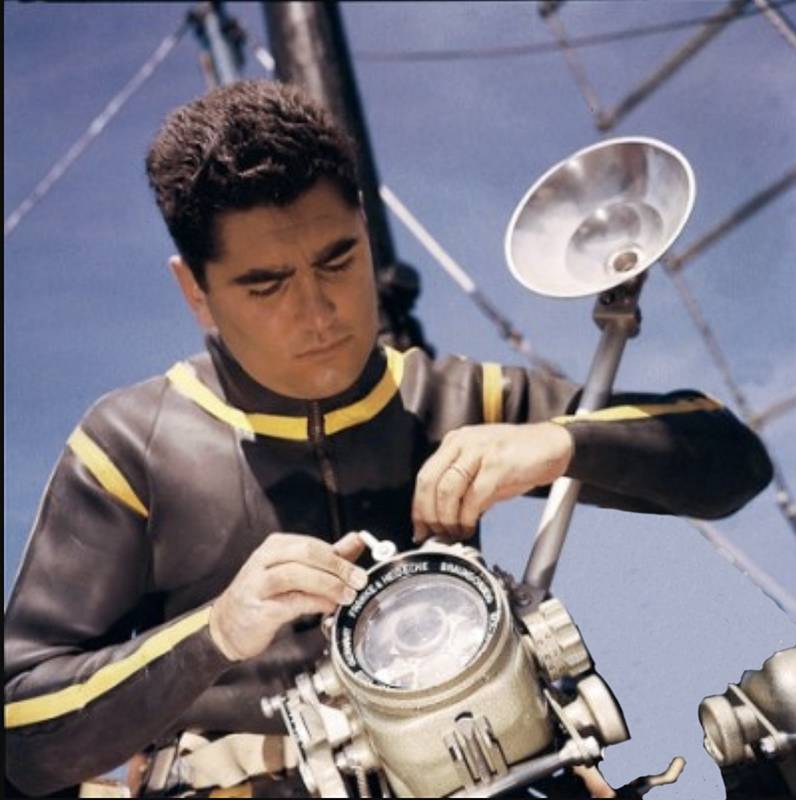
17 -The book Dahlak by Gianni Roghi 18 - The journalist Gianni Roghi
In 1954, although with some discrepancies from the film, Folco Quilici published the book Adventures in the Sixth Continent, followed by Dahlak, written by Gianni Roghi and Francesco Baschieri Salvadori. In 1955 Quilici published Mala Kebir, recounting the adventures of the second part of the journey, including the hunt for the “devil fish,” the giant manta ray, the dramatic scene requested by the producers.
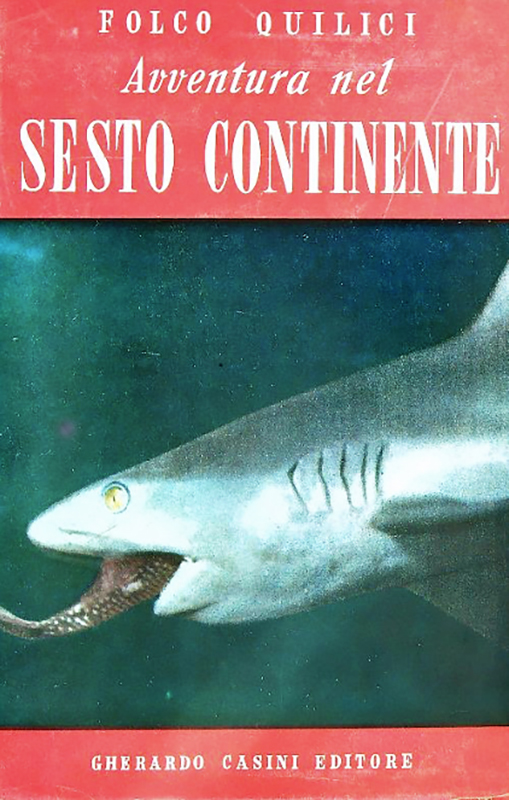
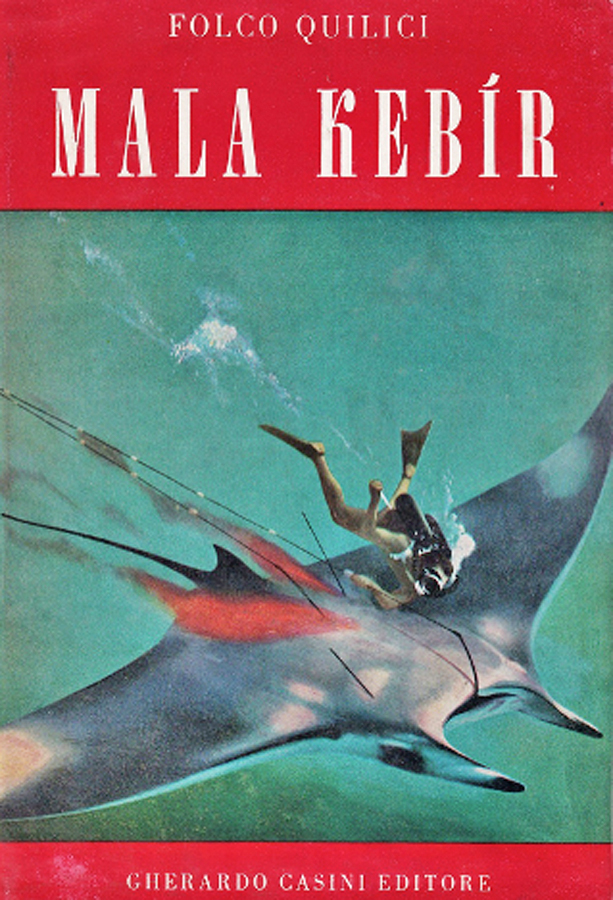
19 - Book Adventure in the Sixth Continent 20 - Book of Quilici Mala Kebìr
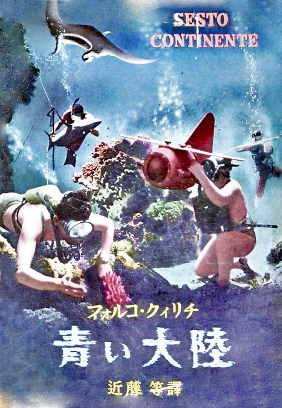
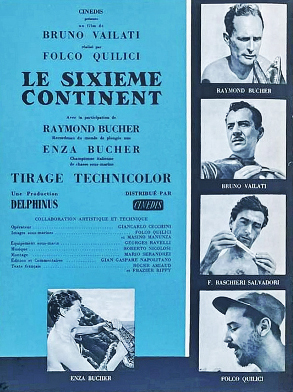
21 - Sixth Continent in Japanese edition 22 - Presentation of the film in France in 1956
Later translated into multiple languages, the books narrate with meticulous detail and skill the feats of a group boldly venturing, albeit with a fair degree of improvisation, into the unknown. These were the deeds of people who regularly dived on breath-hold without wetsuits, who were first stung by a fish only to discover it was poisonous, who experimented with everything firsthand. And even if conducted with less grandeur and resources than those of Hans Hass or J.Y. Cousteau, the National Underwater Expedition to the Red Sea remains an unprecedented scientific and sporting achievement, carried out by a handful of pioneers with an almost nineteenth-century spirit.
____________