From what is written on the back of old photographs taken at Vulcano and Filicudi, recovered from the memories of some pioneers of scuba diving, we know that in 1947 a group of vacationers left Genoa for the Aeolian Islands (fig. 1-2-3).
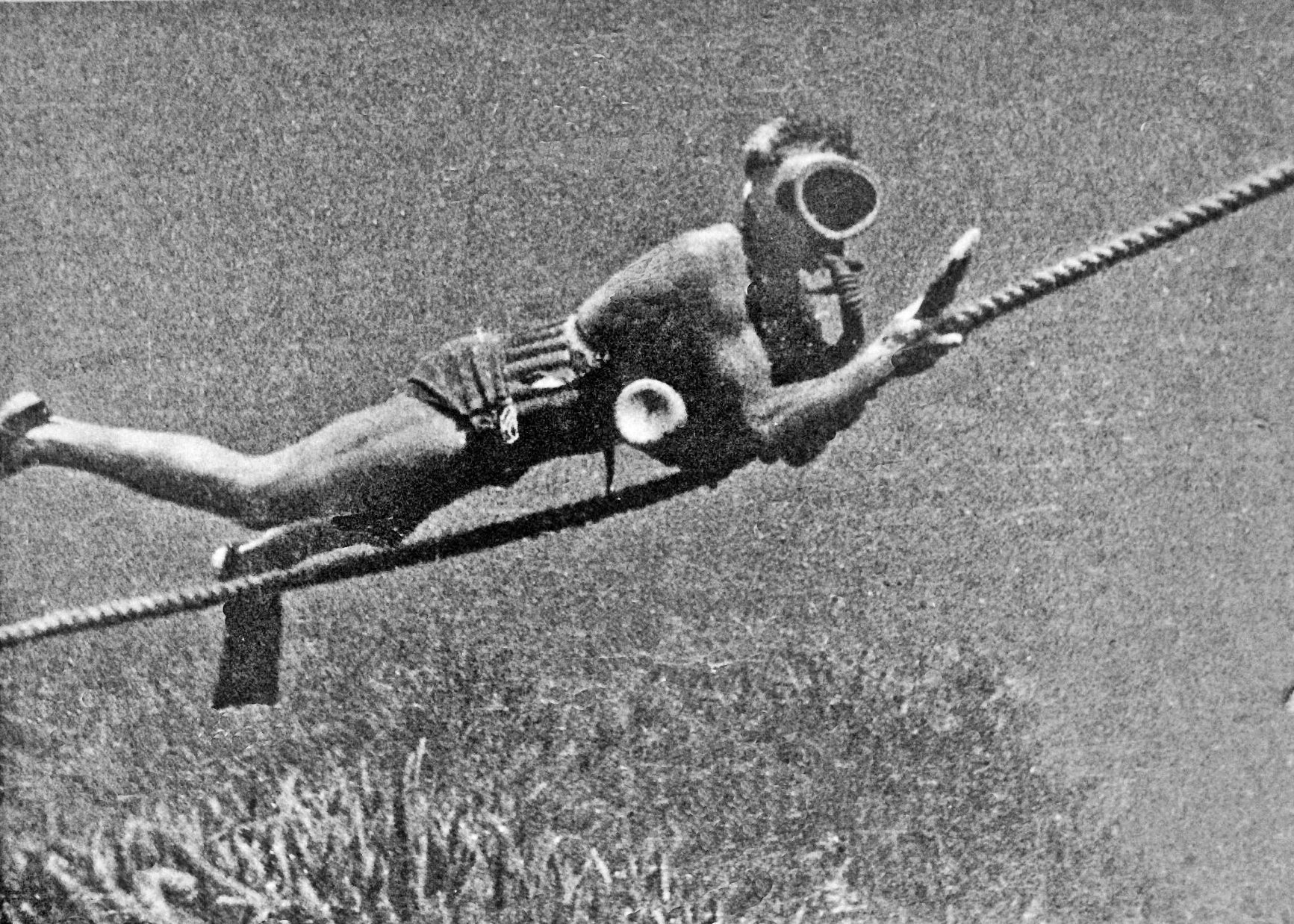
fig. 1 |
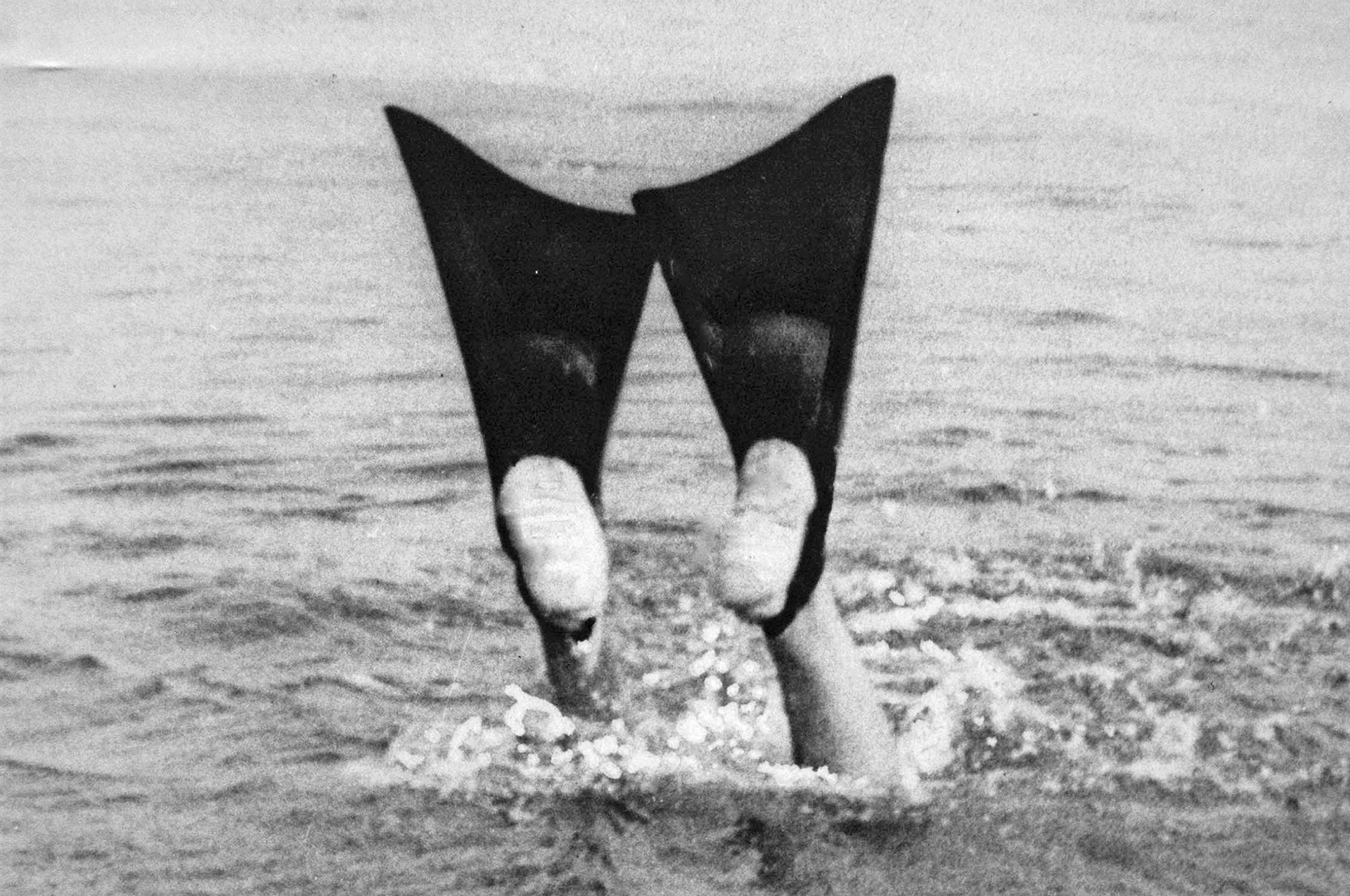
fig. 2 |
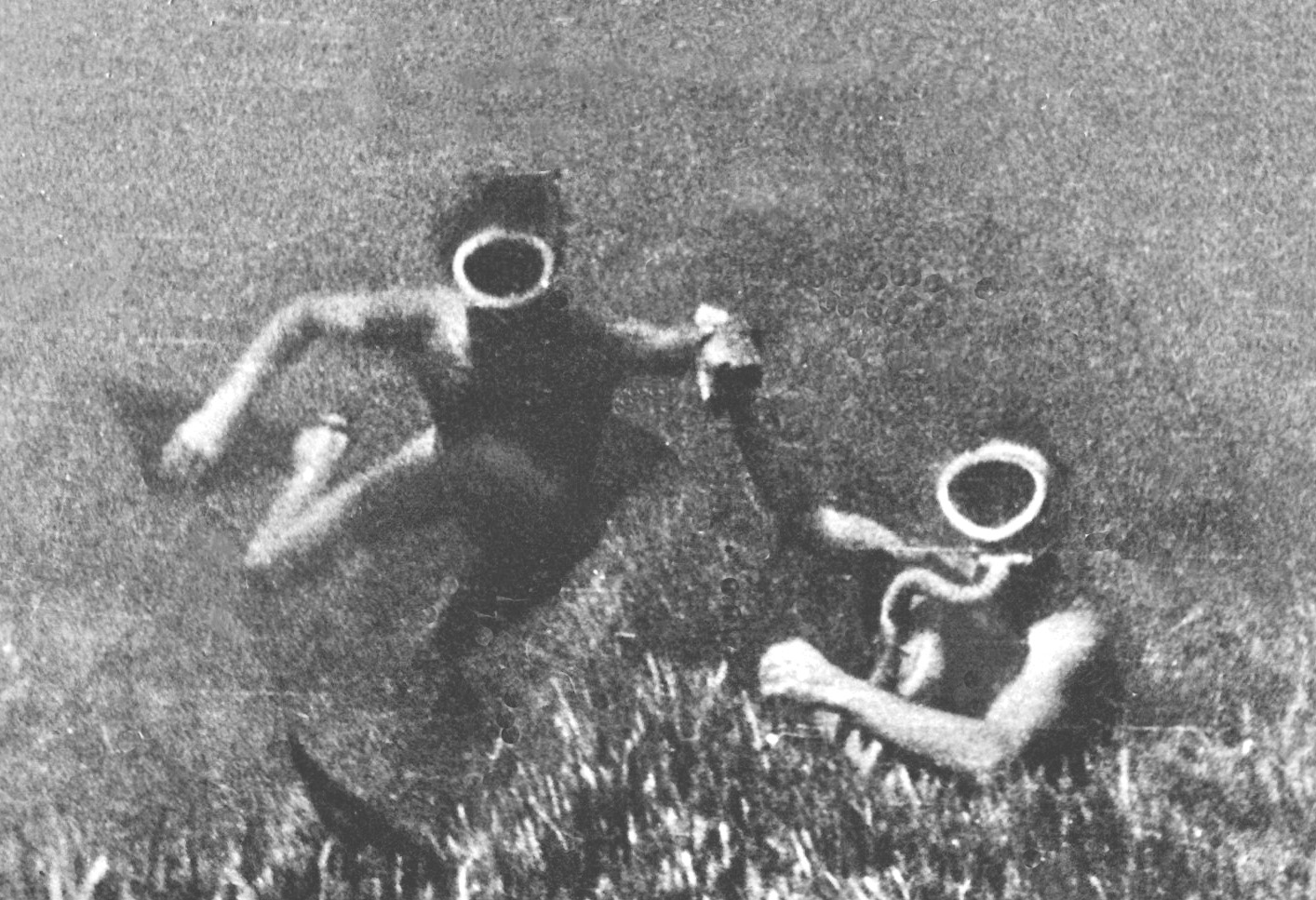
fig. 3 |
Among those people was Dario Gonzatti (fig. 4), a Genoese diver who would lose his life a few months later in the waters of Portofino, an episode that inspired Duilio Marcante to create the Christ of the Abyss. And there was Egidio
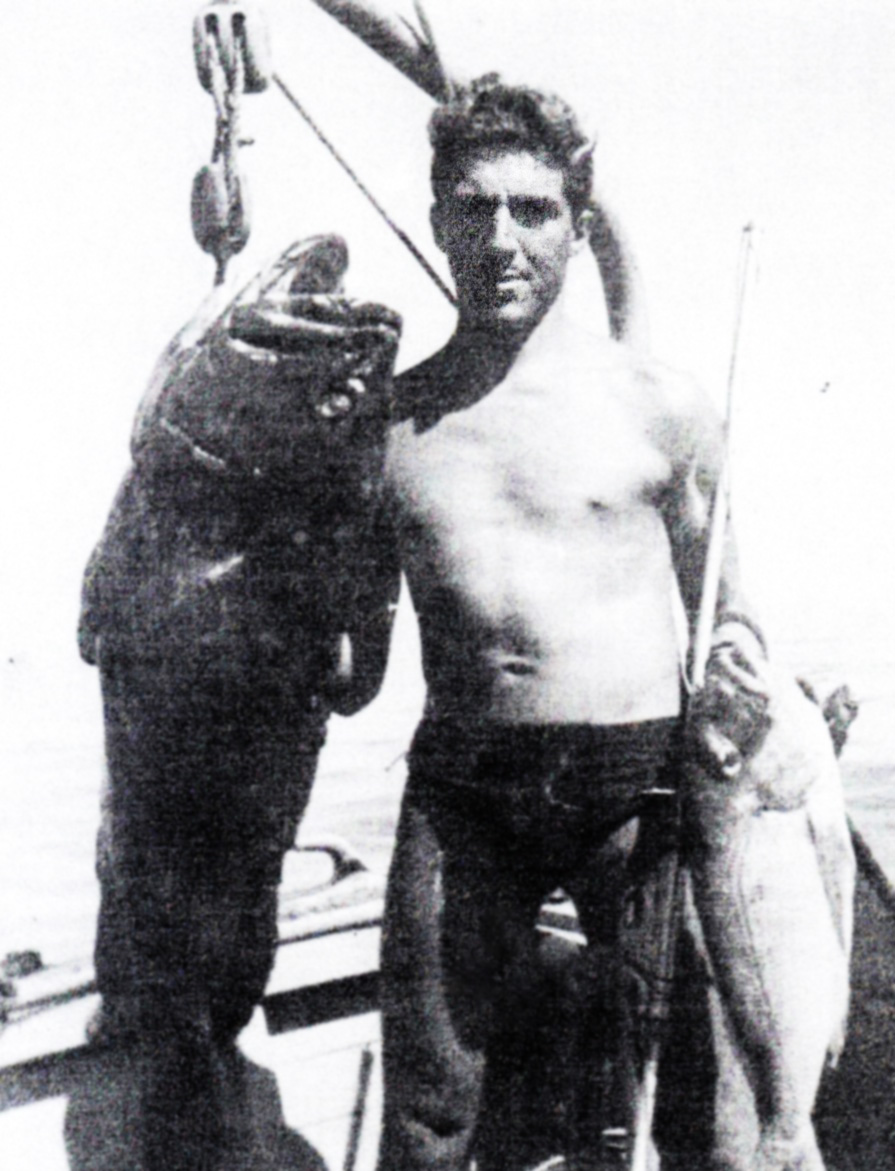
fig. 4 |
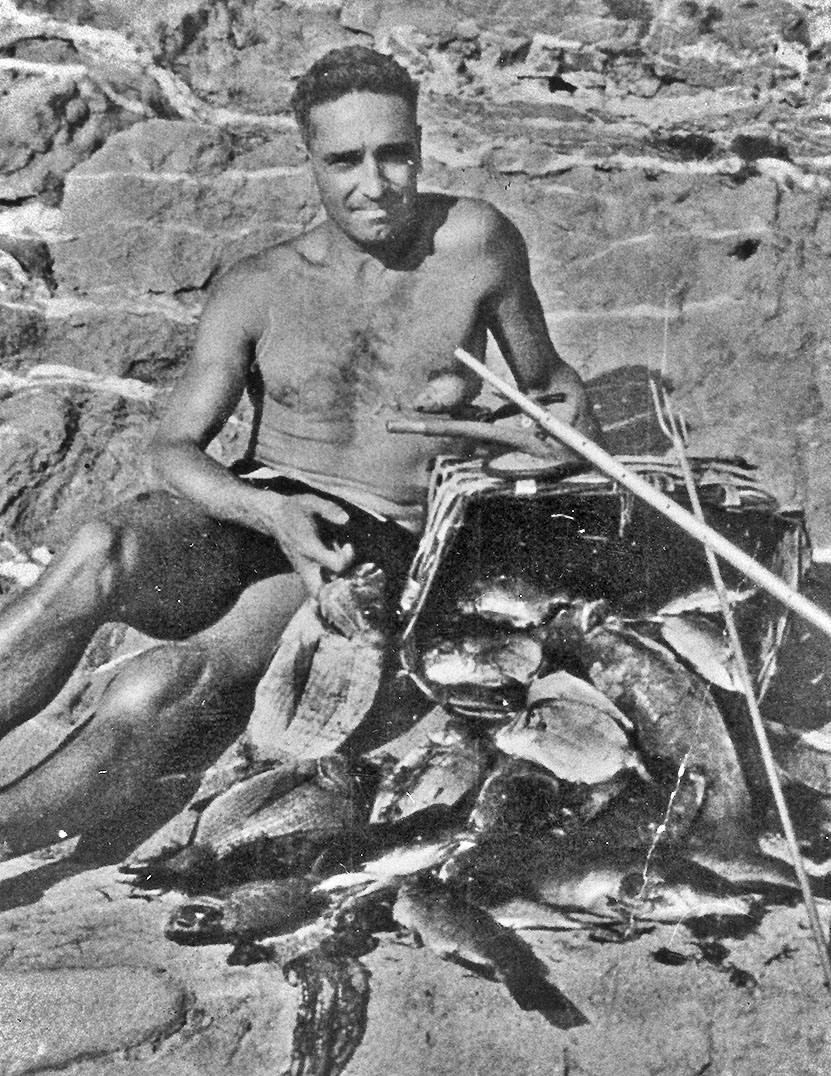
fig. 5 |
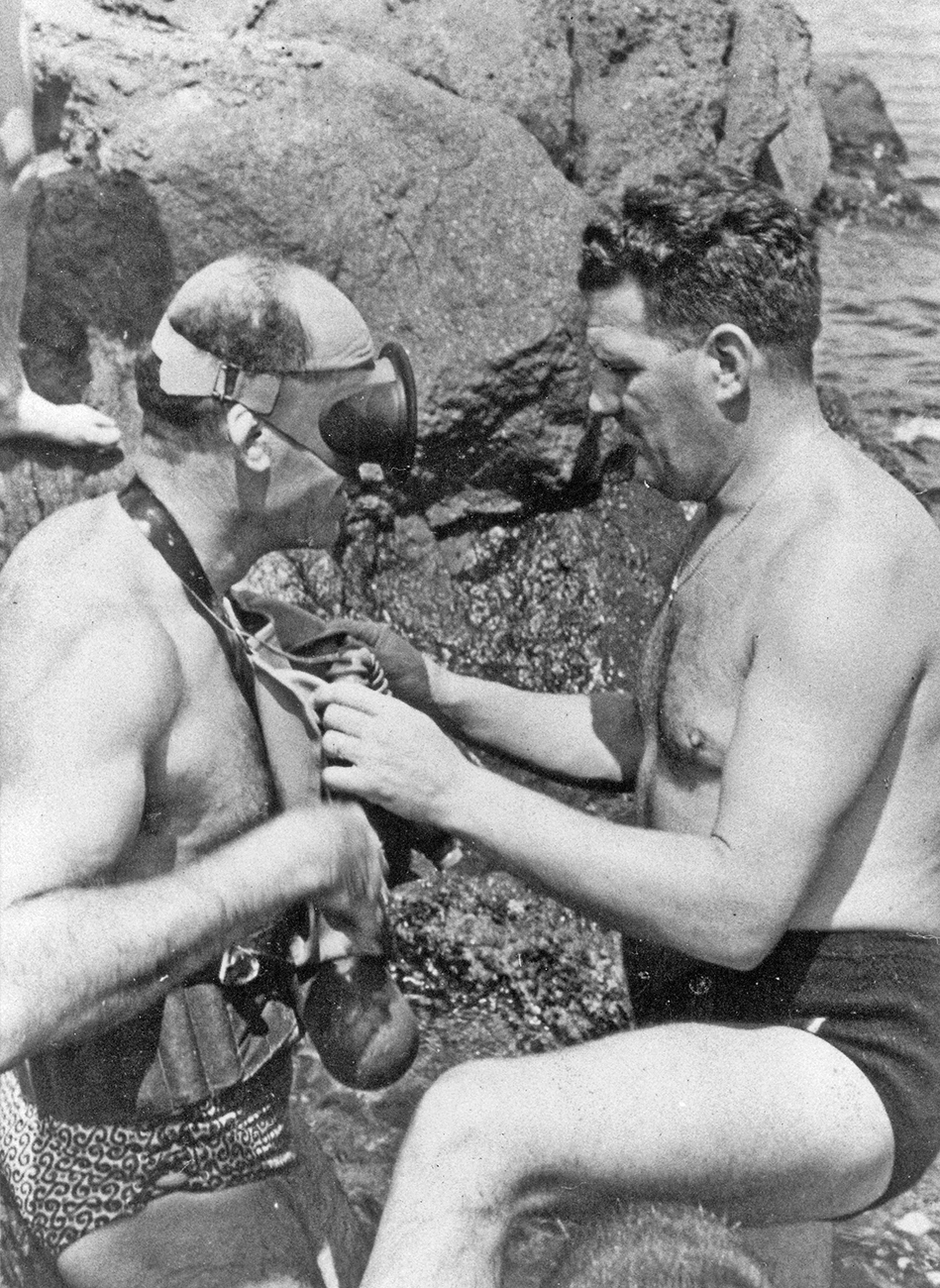
fig. 6 |
The following year, on May 15, 1948, at the premises at Corso Torino 38 in Genoa, where the craftsman Cressi had moved to continue manufacturing his equipment at a company level, several diving enthusiasts, including those who had visited the Aeolian Islands, met. They wanted to found what would become one of the first Italian diving associations, called the "Dario Gonzatti Underwater Sports Union". Article 3 of the minutes of that meeting states the following goals: promoting underwater sports, spearfishing, and organizing trips and courses related to the activity.
To implement the provisions of the Statute, a camp dedicated to diving was organized on the Island of Elba in collaboration with the Touring Club Italiano from July 11 to August 31, 1948.
Cesare Chiodi, president of the Touring Club from 1946 to 1964, wrote an article praising this sport, still unknown to him, in the magazine MONDO SUBACQUEO (fig. 7), published as a single issue by the U.S.S. in 1950. His final lines are a wonderful omen: ...perhaps the day is not far off when tourists to Capri will want to dive with mask and fins in the luminous waters of the Blue Grotto.
Everything is organized down to the smallest detail: tents, equipment, scuba lessons, entertainment.
At the "Soggiorno U.S.S." on Elba, Duilio Marcante (fig. 8) instructor of the new diving instructors; Luigi Ferraro and Edmondo Sorgetti (fig. 9) are also there, equipped mostly with homemade equipment. They now teach guests at the campsite to dive with the ARO, which they learned to use during the Second World War, when it was covered by military secrecy.
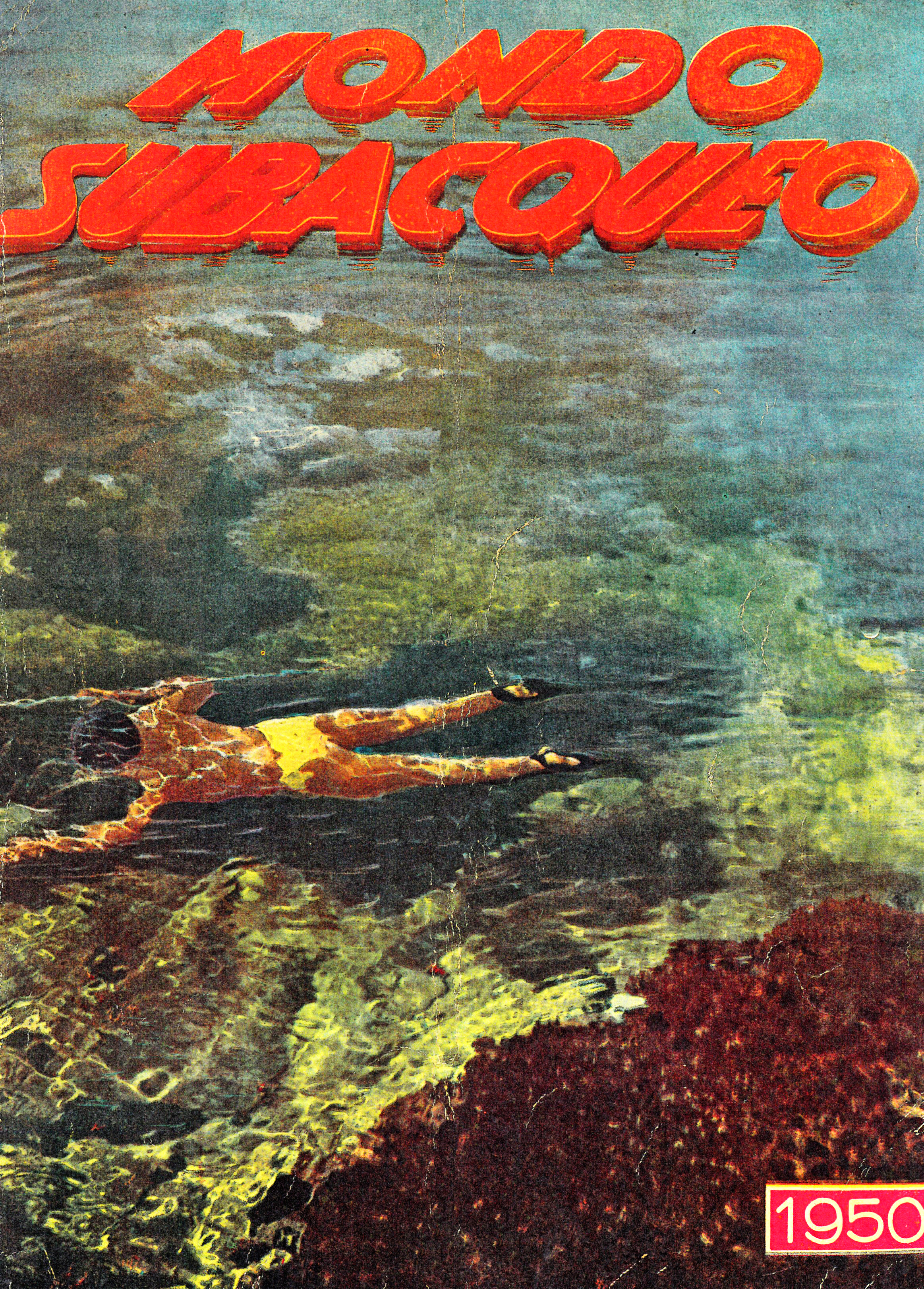
fig. 7 |
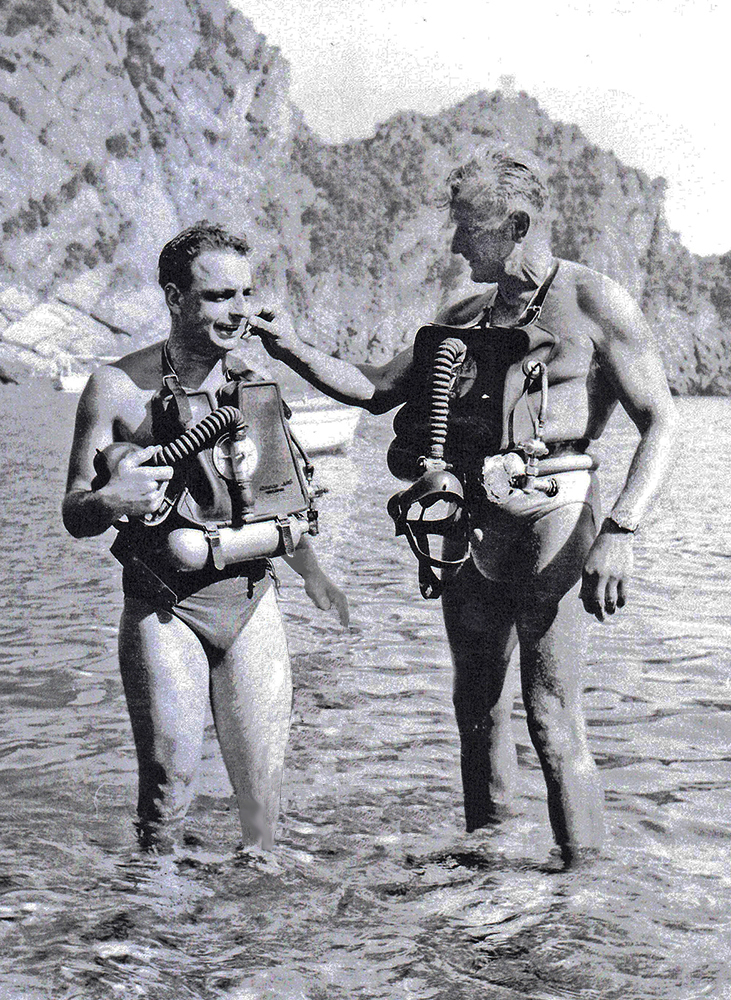
fig. 8 |
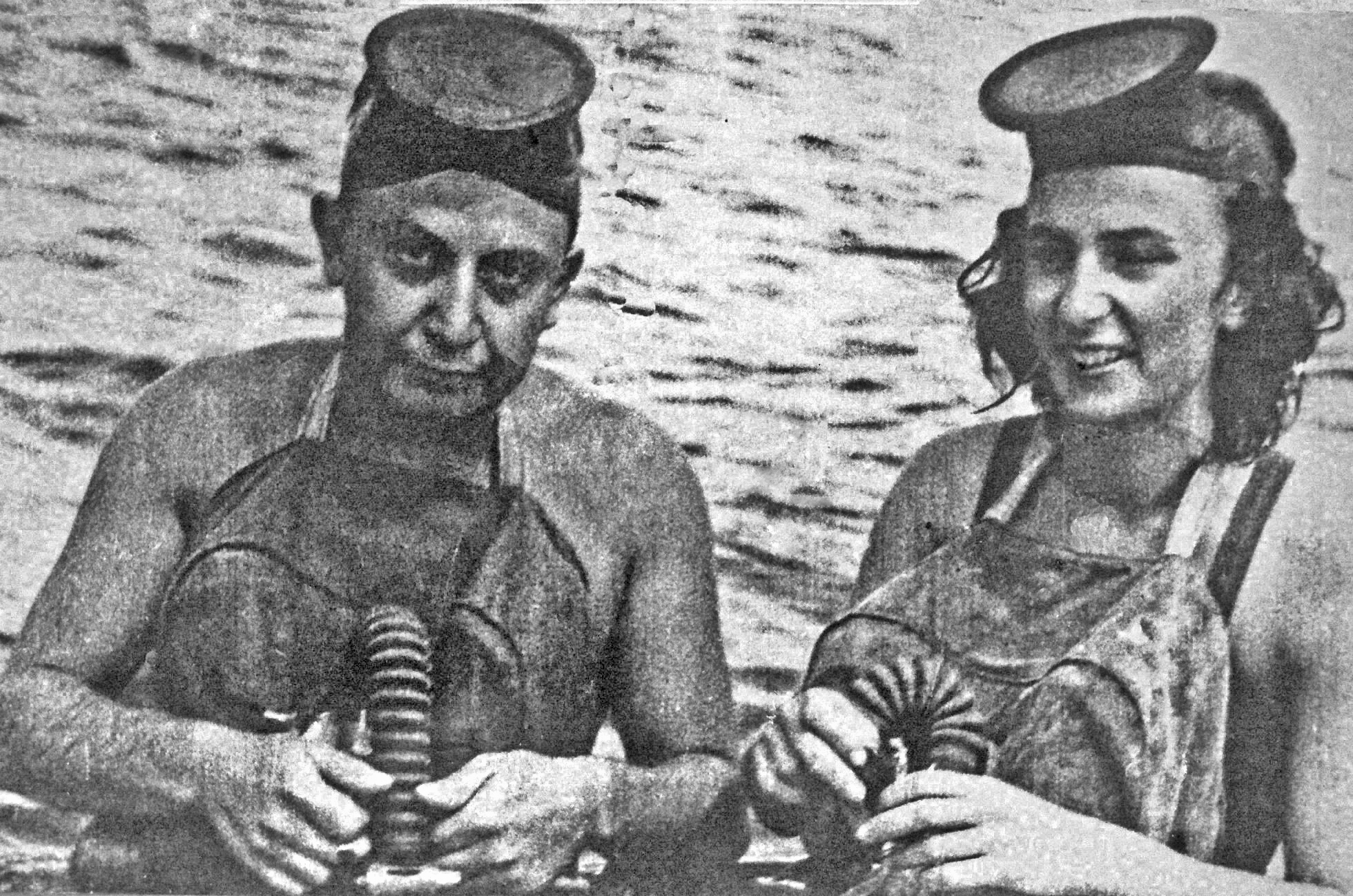
fig. 9 |
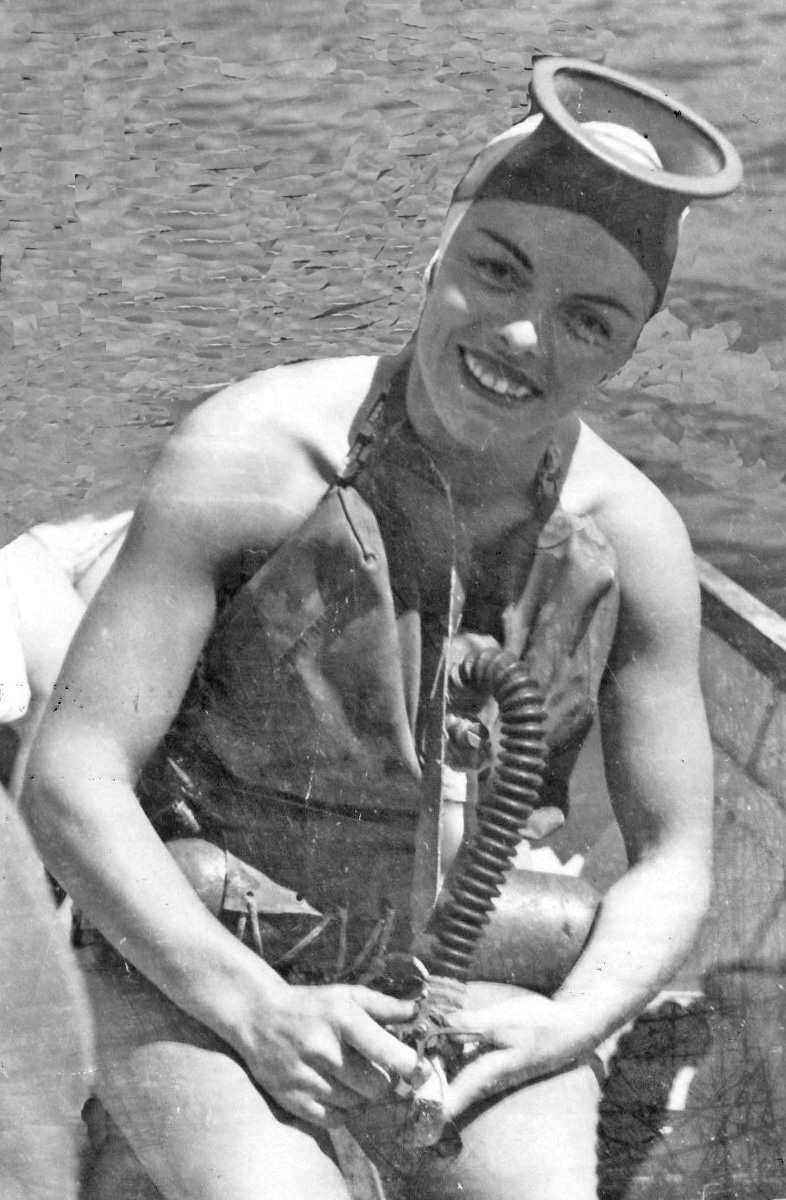
fig. 10 |
Among the students, Celina Seghi (fig. 10), then a famous ski champion in the three disciplines of downhill, slalom, and combined, was photographed wearing a mask and ARO.
Just six months after its establishment, the U.S.S. was already well-structured. To encourage as many people as possible to learn about what lay beneath the sea's surface and how to explore it, it was decided to publish "SPORT SUBACQUEO" (fig. 11), the first Italian newsletter distributed nationally as an insert to the magazine ITALIA VENATORIA.
Since the camping experience on Elba had been highly appreciated by the participants, two new destinations were proposed for the summer of 1949. The first was the island of La Maddalena from July 10th to August 31st, an ideal location for underwater hunters; the second is the TCI campsite in Ischia from July 10th to September 16th, a place dedicated to scuba diving courses run by Cressi.
This time, too, the organization was excellent and left nothing to chance. Several vacationers, who dived with their long spearguns and returned loaded with excellent catches, stocked the kitchen for lunch and dinner.
The equipment was always kept in perfect working order: oxygen tanks for refilling the ARO tanks, weight belts with pockets, and bundles of spring-loaded spearguns (fig. 12).
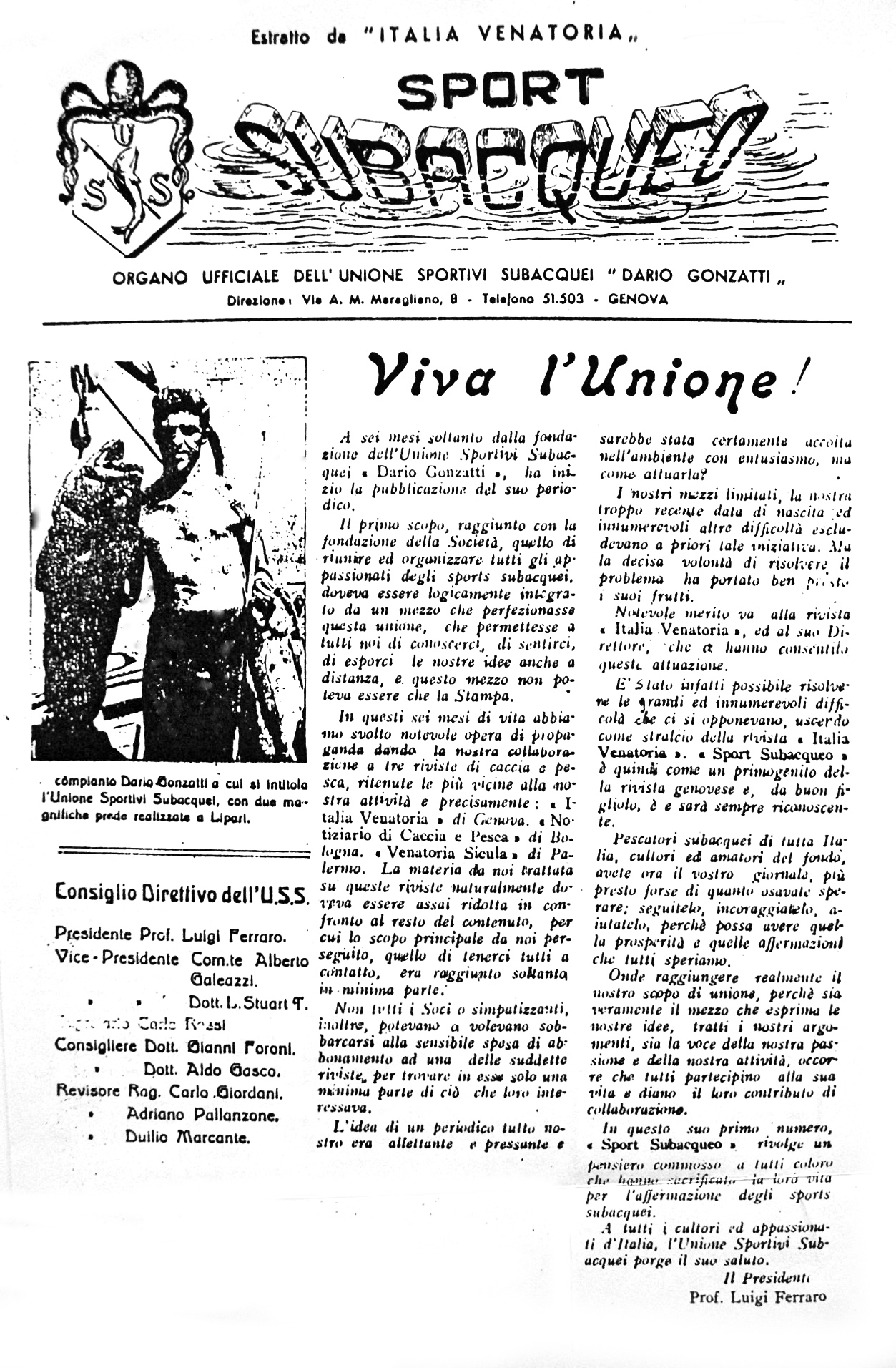
fig. 11 |
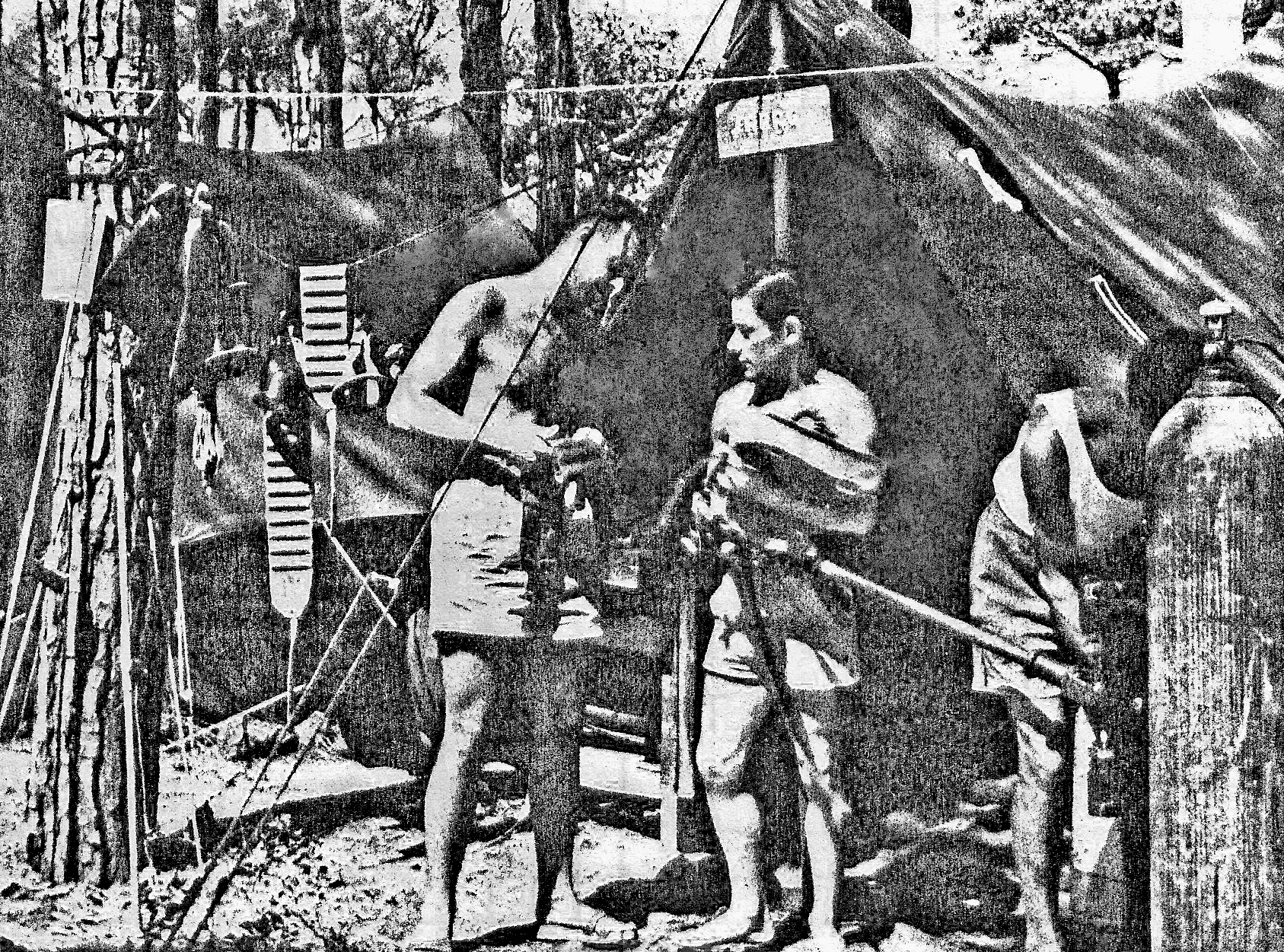
fig. 12 |
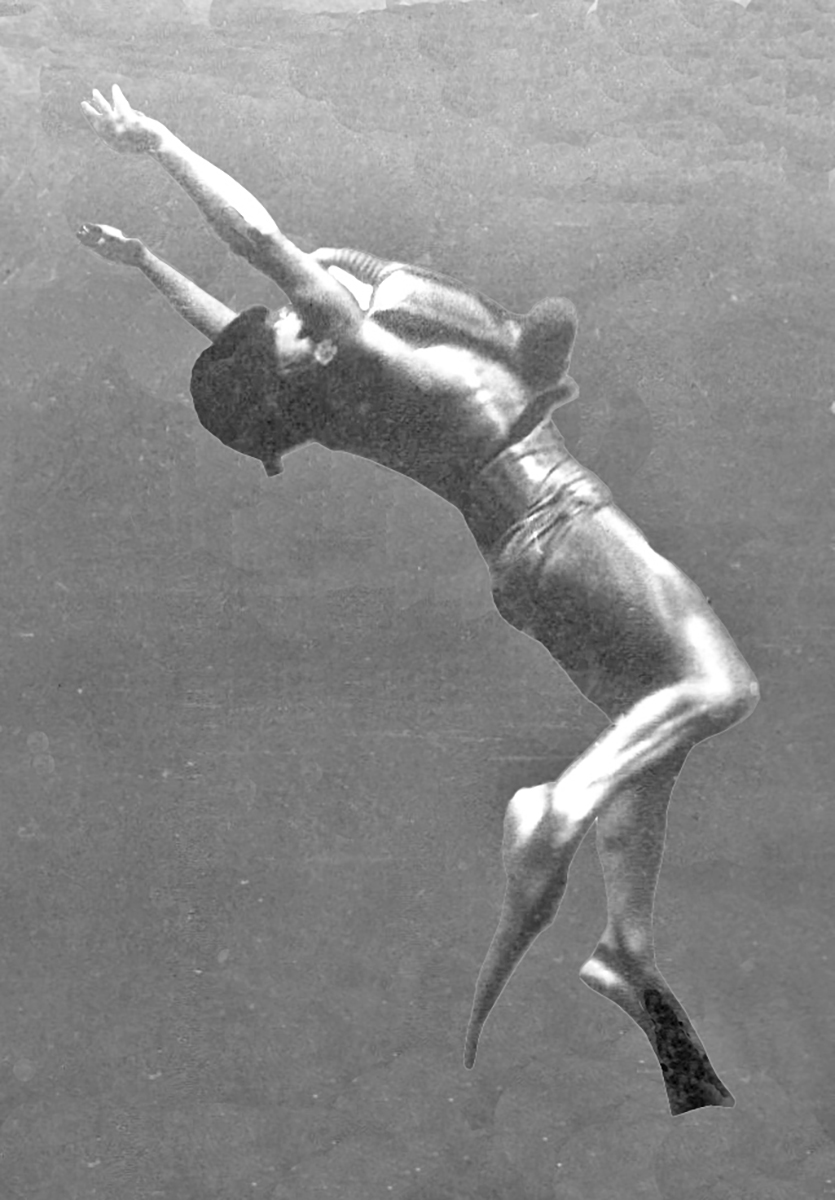
fig. 13 |
The students were also photographed underwater to document their familiarity with the new environment (fig. 13).
Among the divers there was Victor De Sanctis (fig. 14), who would soon become one of the most respected underwater photographers/cinematographers/directors in the world.
He was noted for his rather unusual photographic equipment, but at that time all underwater photography and cinema equipment was unusual, as can be seen in the photo (fig. 15) where J.Y. Cousteau is holding an enormous case. At his side is his friend Frederich Dumas.
The following year, 1950, the organization offered holidays aboard a 20-meter motor cutter, the "BELLA LAURA," with Captain Corazza of Chioggia at the helm. And off to the Tremiti Islands (fig. 16).
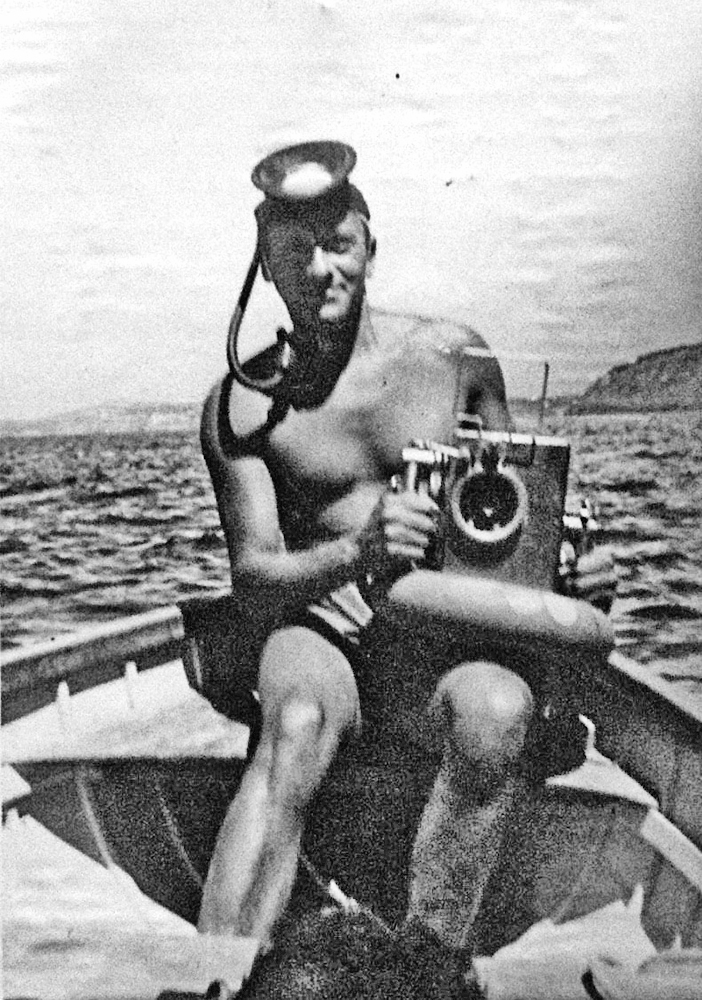
fig. 14 |
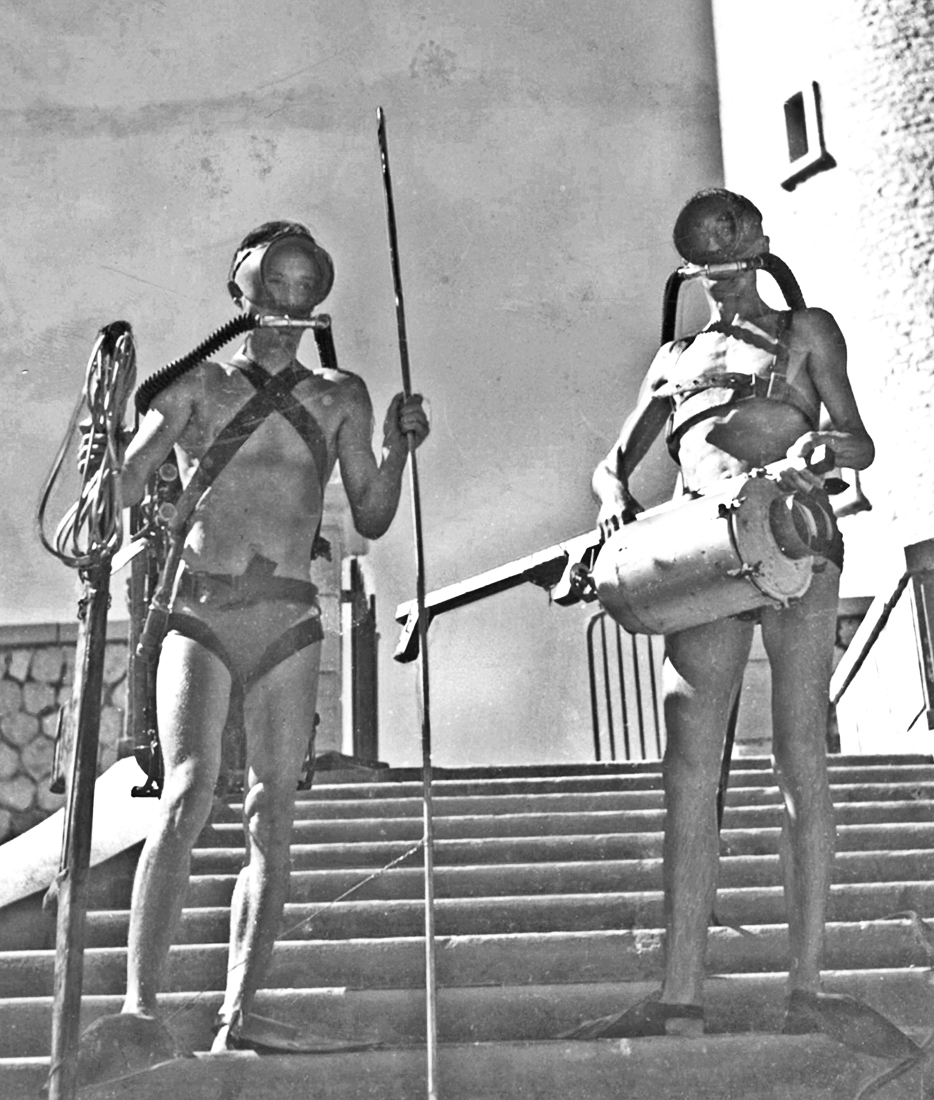
fig. 15 |
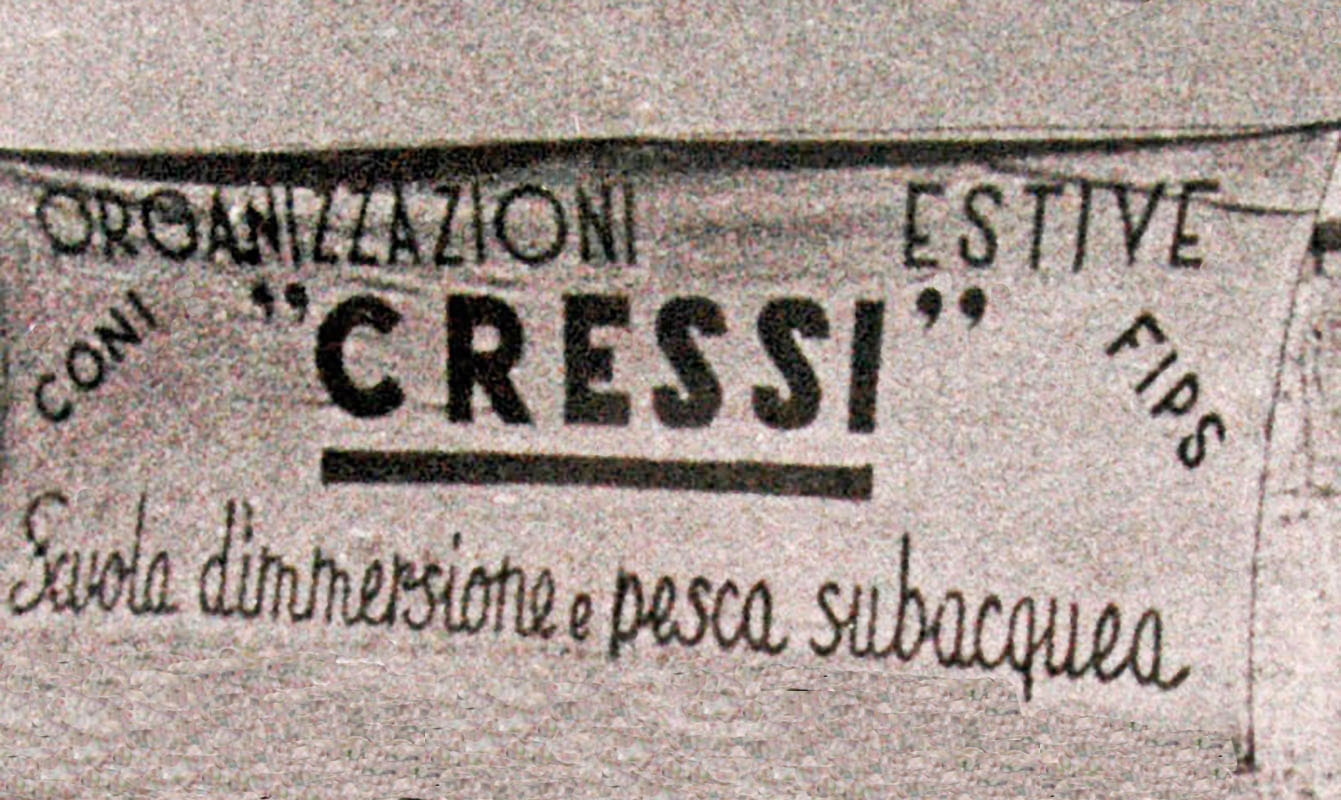
fig. 16 |
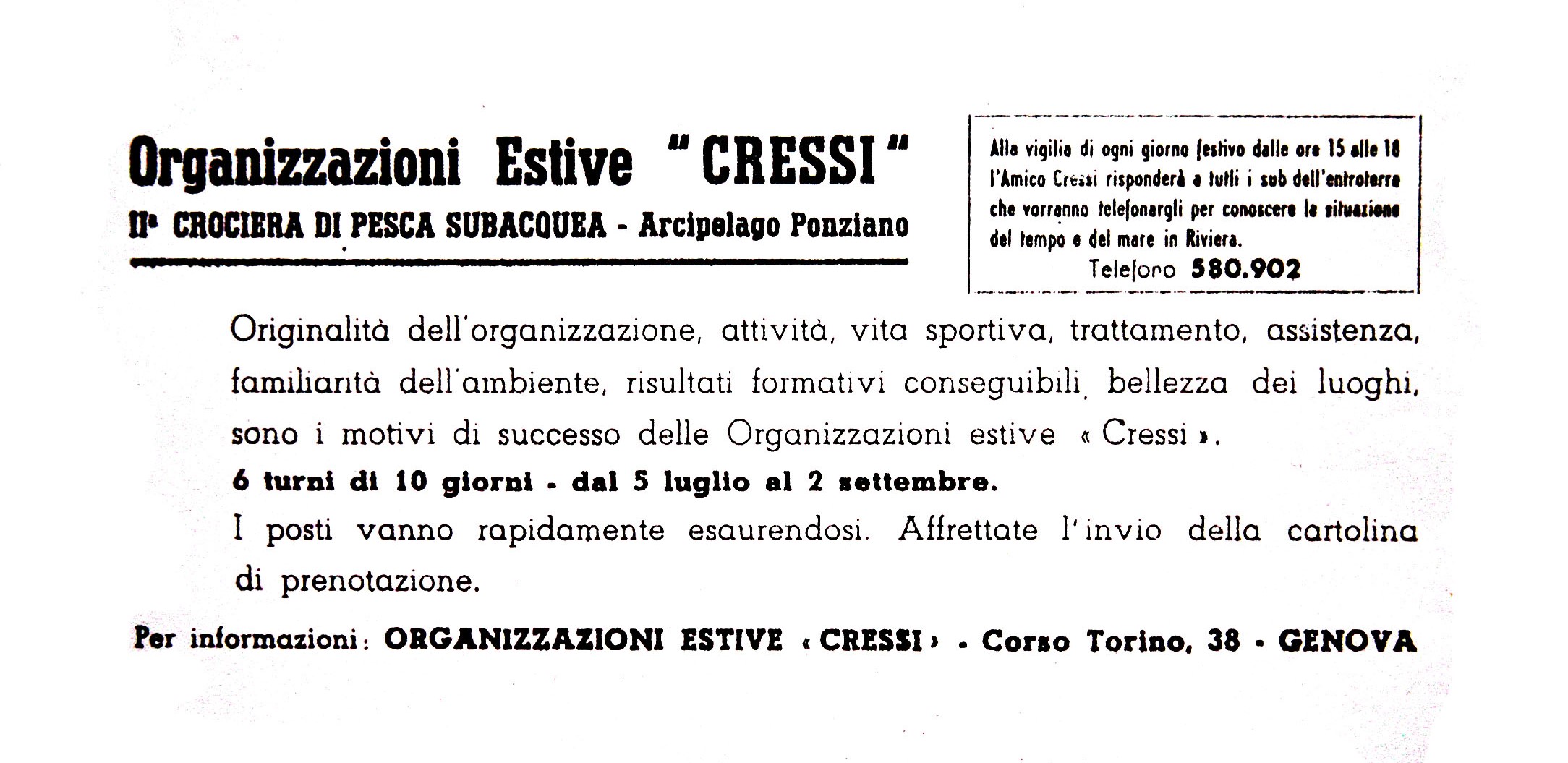
fig. 17 |
The group included Luigi Ferraro, who used a homemade waterproof camera for underwater filming, while among the guests was Roberto Merlo, soon to be known as a talented photographer and writer.
Egidio Cressi, the promoter of the trips (fig. 17), was always active to involve as many people as possible and even made his phone number available in the days leading up to the holidays to inform those from inland who wanted to come to the Riviera about sea conditions. Then, for the Christmas holidays, he sent a greeting card that said it all to everyone who had participated in the diving activities in previous years: "... I hope to see you again next season, please God and Mr. Baffone!" (Giuseppe Stalin, editor's note)
In the summer of 1951, the "BELLA LAURA" would again cruise the Pontine archipelago (fig. 18). There would be six 10-day cruises, from July 5th to September 2nd.
In those years on Ponza, very little was known about the people who went fishing underwater, and some older people still remember hearing about "that group of strange people."
But the U.S.S. didn't limit itself to beach vacations; it also organized epic trips where participants, without actually diving, were introduced to the world of scuba diving.
The three-day trip to Cannes and Monaco-Monte Carlo, March 17-19, 1951, was memorable.
Everyone received a special edition of "SPORT SUBACQUEO" with detailed information about the trip upon departure.
The following month, a report of the event was published in the national edition of the same newspaper, attached as always to "ITALIA VENATORIA."
For the trip, a private bus was used, complete with a coat of arms on the windows and a sign on the side (fig. 19). The nearby cars are clear witnesses to that era.
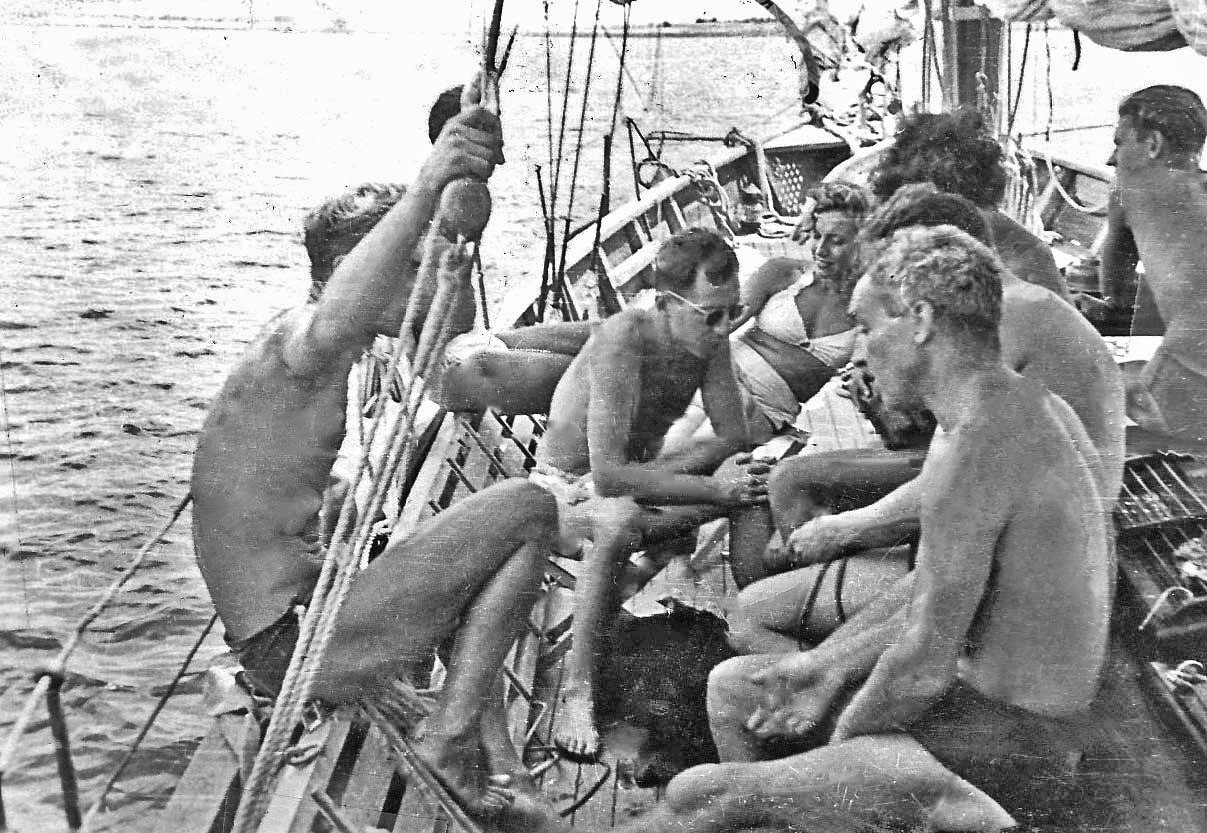
fig. 18 |
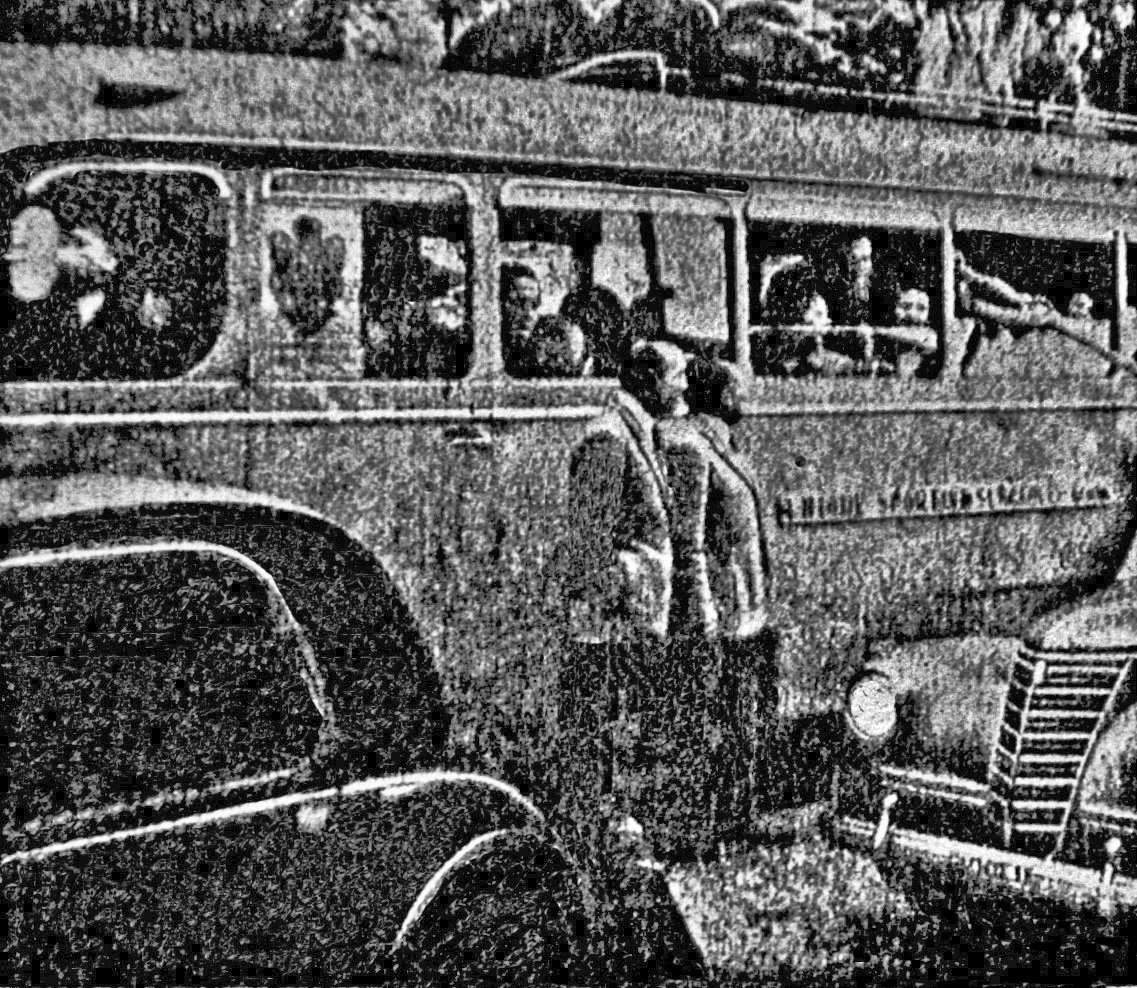
fig. 19 |
Everyone had the opportunity to meet the principality's authorities by attending a gala dinner followed by a meeting with Jacques-Yves Cousteau.In 1952, the first issue of "PESCA SPORT" (fig. 20) was published, a periodical that would publish articles related to scuba diving and pole fishing. It was headquartered in the Galleria Mazzini in Genoa. The Editor-in-Chief was Nicolò Pizzardo, and the Editorial Board included some soon-to-be-famous names: Luigi Stuart-Tovini, Francesco Baschieri-Salvadori, Gianni Roghi, Rinaldo Boscetto, Romeo Dalla Pozza, and Celestino Durando.
At this point, "SPORT SUBACQUEO," the supplement to ITALIA VENATORIA, no longer had any reason to be published.
When the legendary first issue of MONDO SOMMERSO hit newsstands, with Goffredo Lombardo as publisher and Alessandro Olschki as director, it was July 1959 (fig. 21). Underwater tourism is now open to the general public with a major magazine specifically dedicated to those who dive and those who would like to go.
From here on, diving becomes an adult.
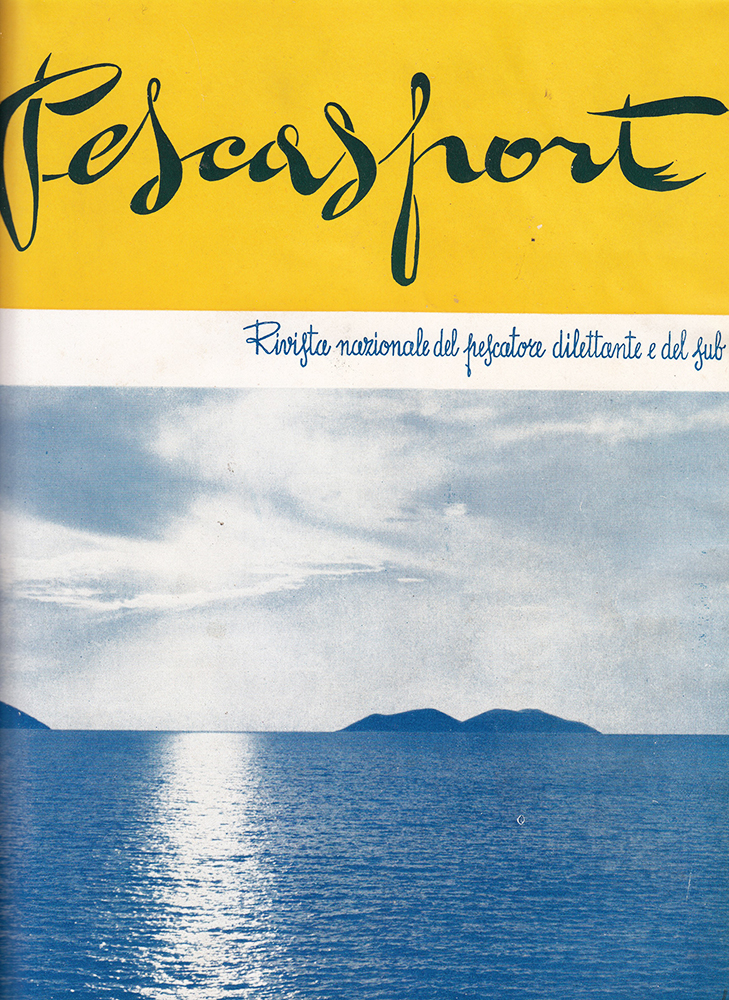
fig. 20 |
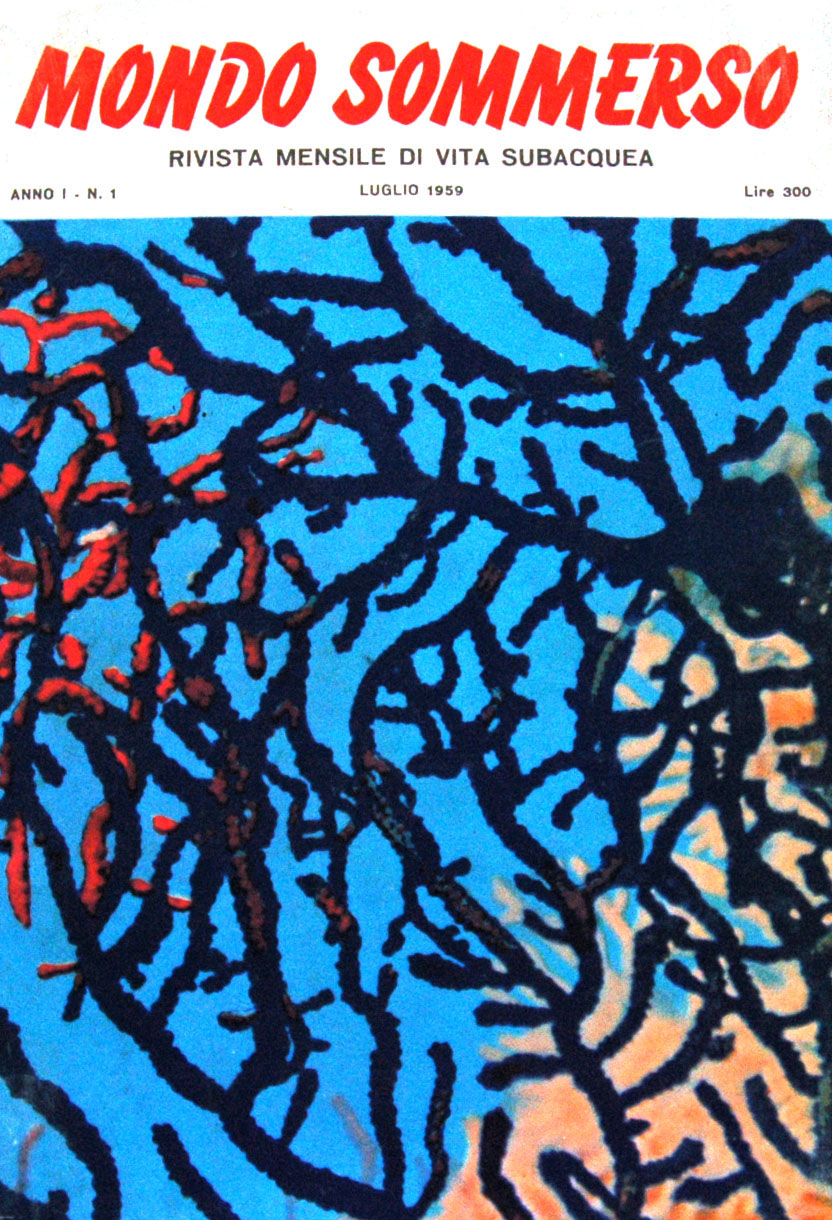
fig. 21 |
_______________